
Last updated September 20, 2026
Free on-site gate assessment - hinges, posts, and your LiftMaster or Nice gate operator checked before anything is quoted
The assessment is free and the quote is the invoice.
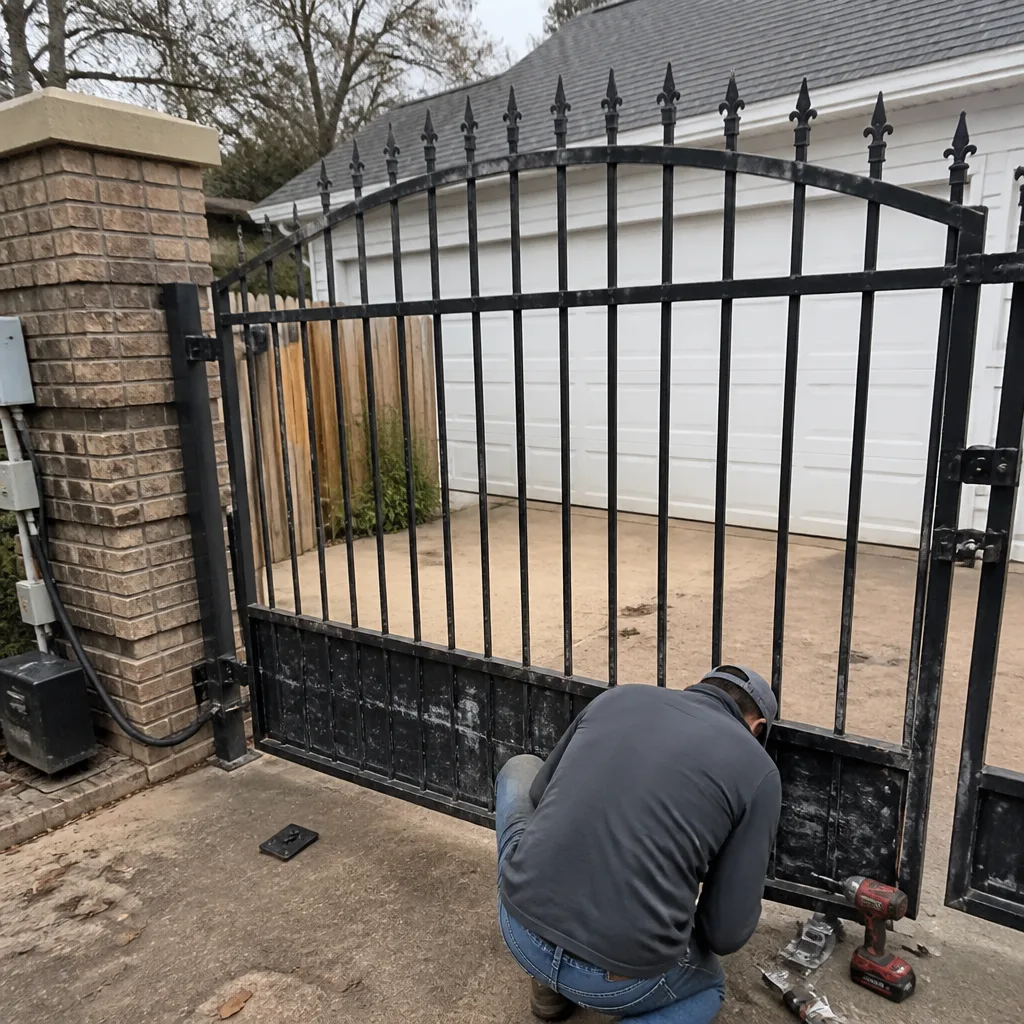 Before
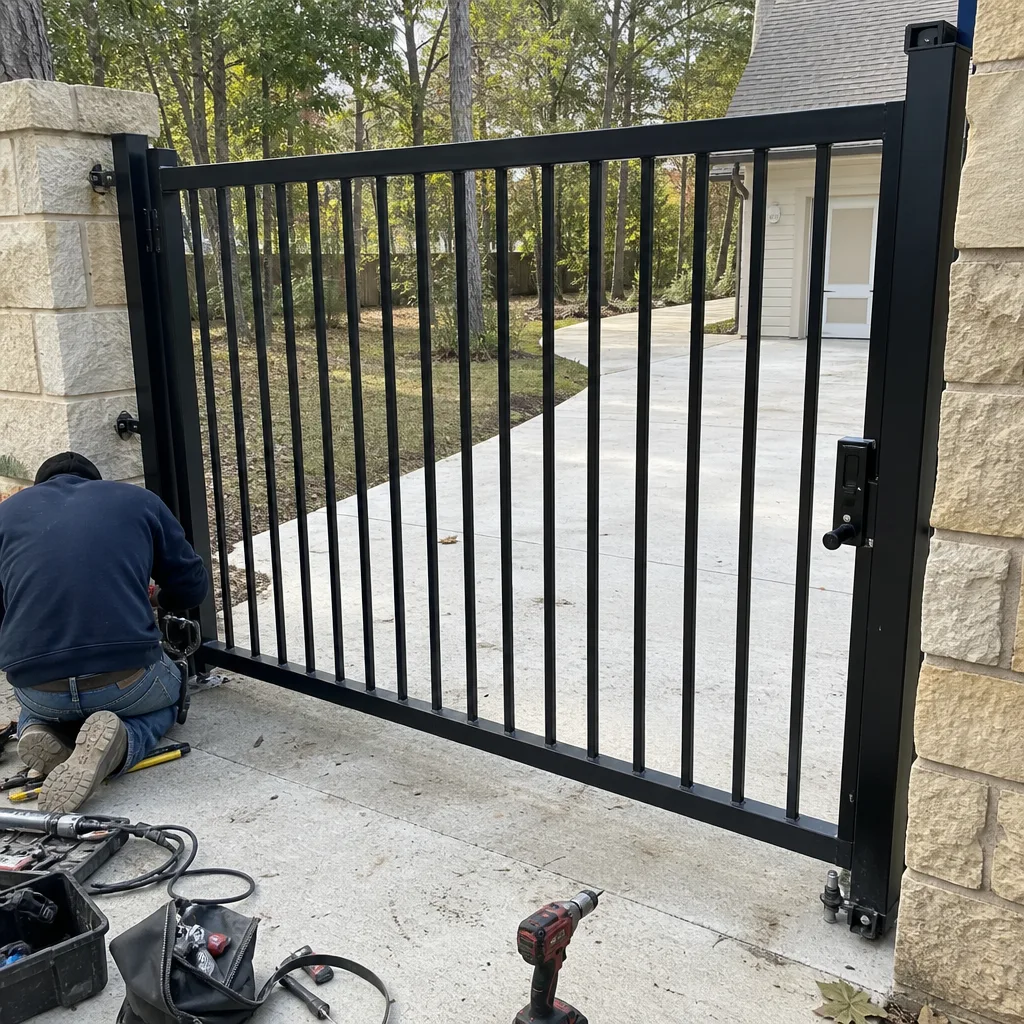 After
After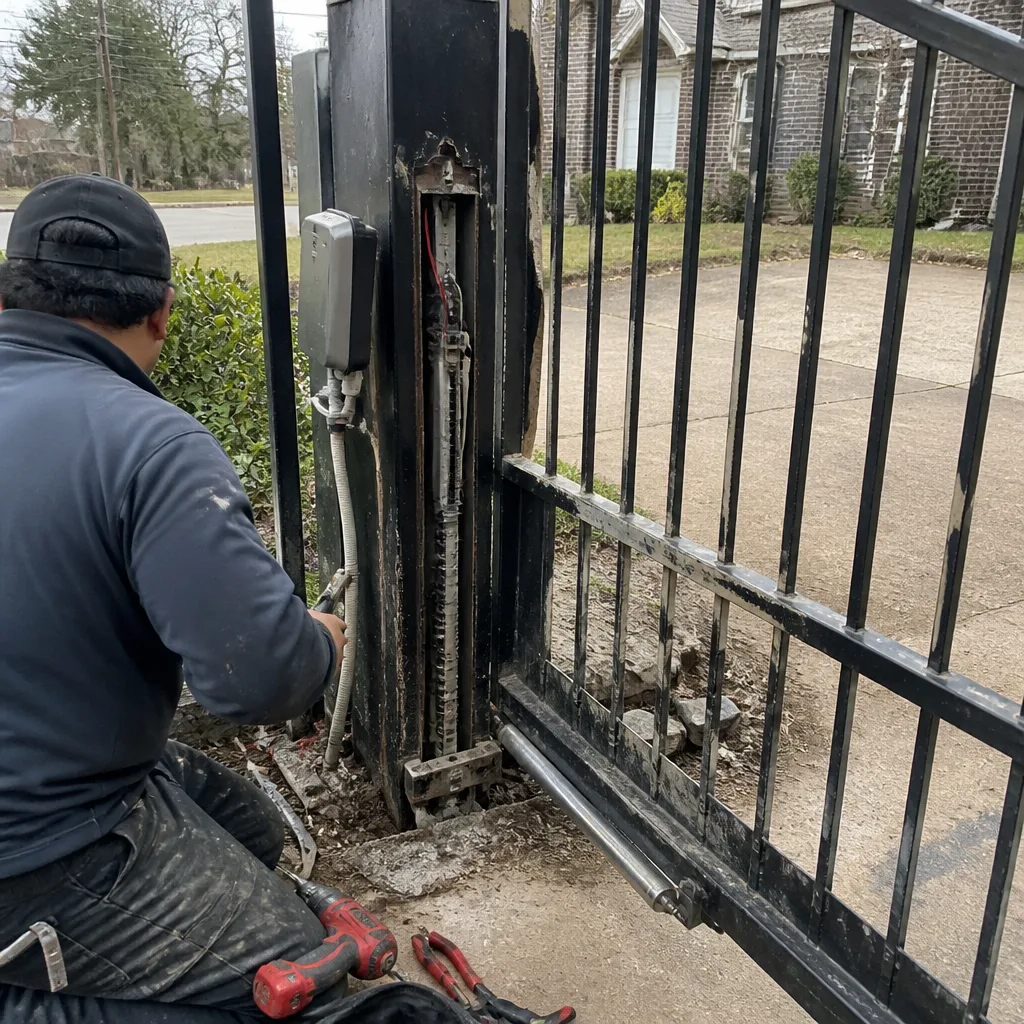 Before
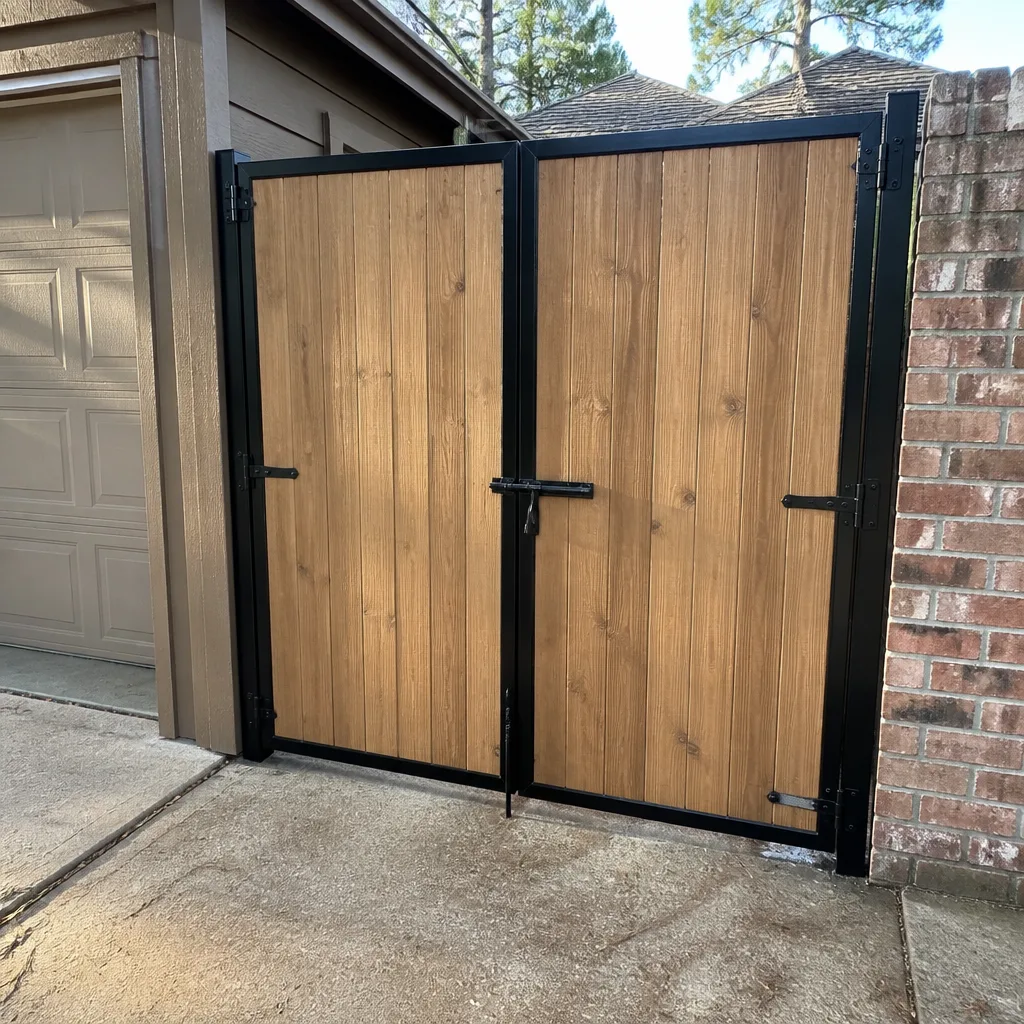 After
After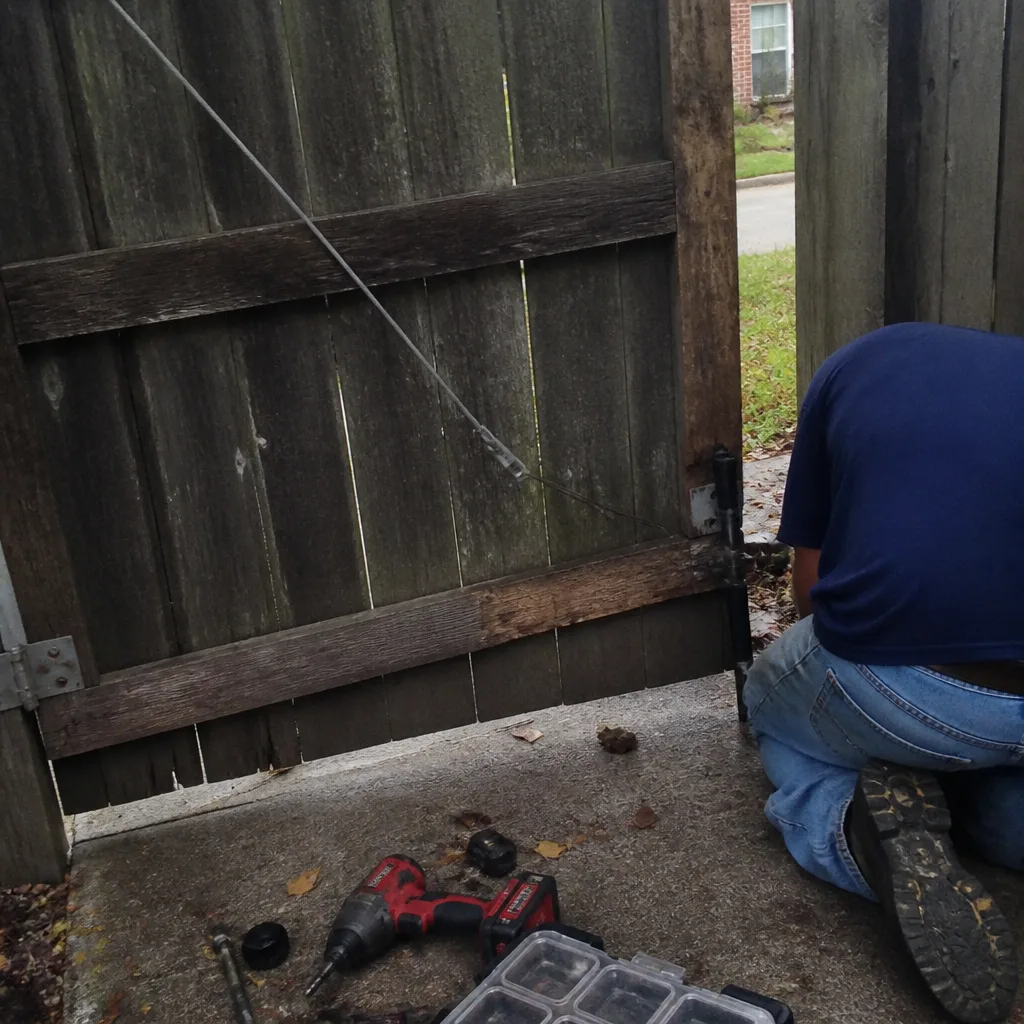 Before
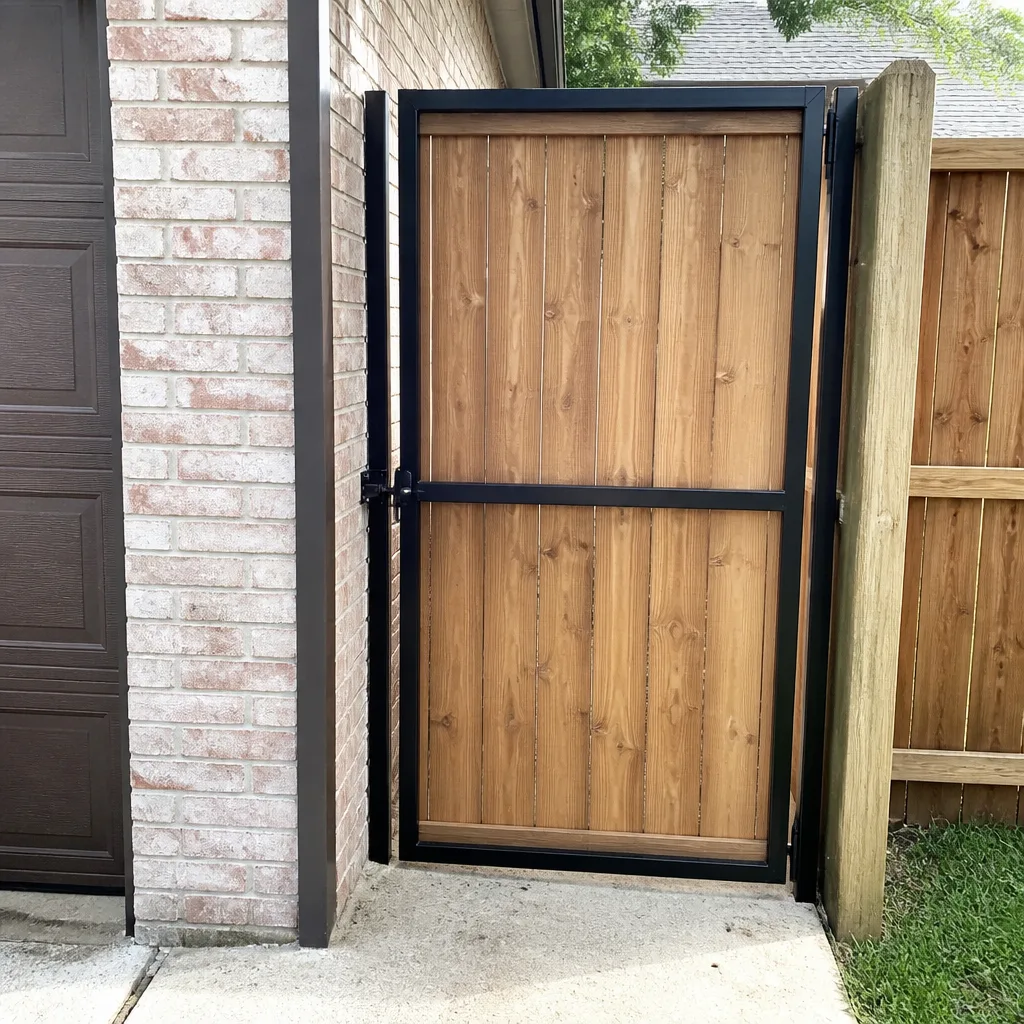 After
AfterSeasonal Gate Repair Care for Humble: Year-Round Homeowner’s Guide
In Humble, the gate failures that happen in July were almost always set up in May. The spring rain season swells wood components and shifts post alignment, then the summer heat locks everything in a stressed position the operator can’t compensate for. By the time a homeowner notices the gate dragging or the motor straining, the damage has been compounding for weeks. This guide walks through the three climate phases that actually govern gate performance in Humble, Texas, what to inspect during each one, and the specific adjustments that prevent the “sudden” breakdowns that aren’t sudden at all. For more guides & resources, see our blog.
Quick Answer
Seasonal gate maintenance in Humble means three distinct inspection cycles: post-rain checks in April through June for wood swelling and post movement, heat-stress checks in July through September for operator boards and battery capacity, and winter battery testing in December through February when low-voltage systems drain faster than owners expect. Most Humble gate failures are preventable with about 45 minutes of seasonal attention.
Table of Contents
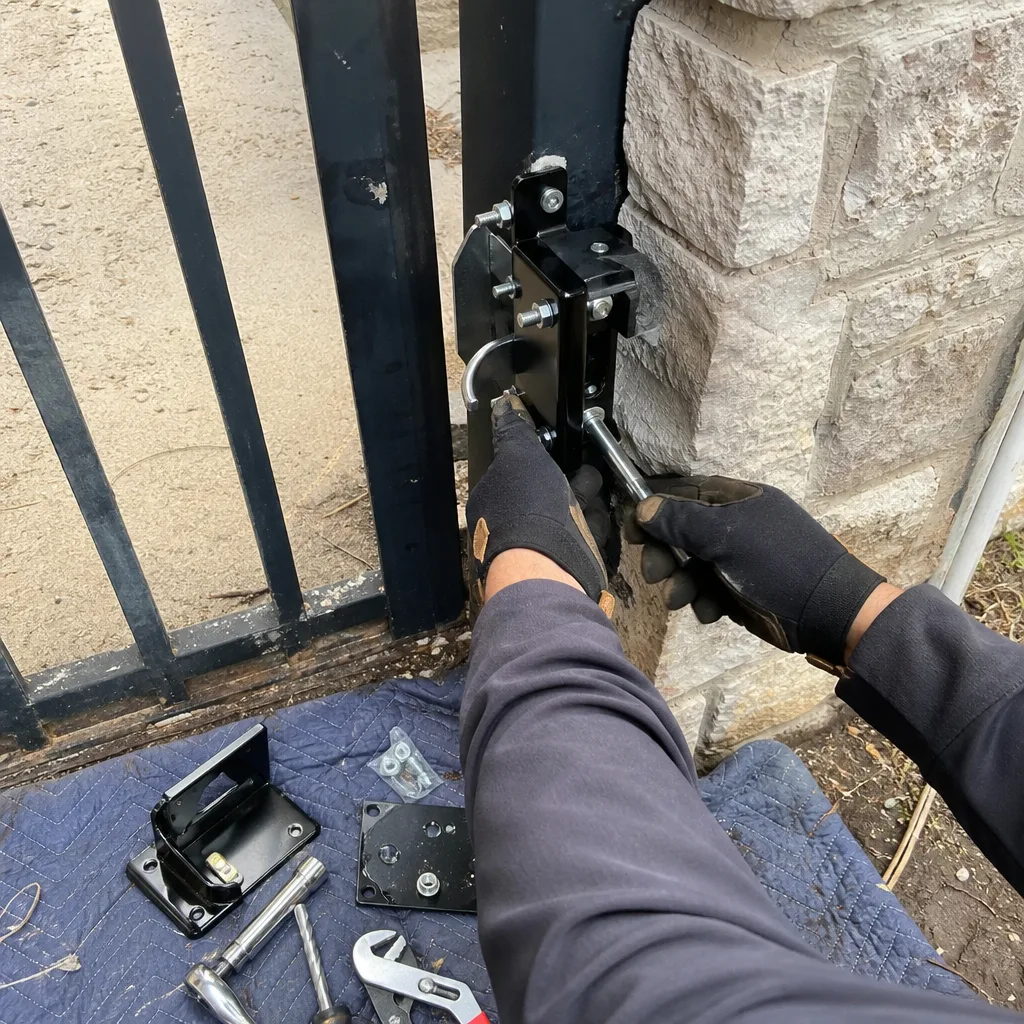
- Why Humble’s Climate Breaks Gates Differently
- Wet Season Care: April Through June
- Heat Phase Care: July Through September
- Winter Window: December Through February
- The Limit-Switch Recalibration Every Rainy Season Demands
- Month-by-Month Task Map for Humble Homeowners
- Common Mistakes to Avoid
- When to Call a Professional
- Frequently Asked Questions
- The Bottom Line
BeforeAfterWhy Humble’s Climate Breaks Gates Differently
Humble sits in a humid subtropical zone, but that label hides what actually matters for a driveway gate: the soil here is a clay-heavy gumbo that expands when saturated and contracts when dry. A gate post set in that soil moves measurably between April and August. The wet season pushes posts outward and upward by fractions of an inch. The heat season bakes the surface layer into a hard crust while the lower soil holds moisture, creating uneven support. Most gate repair work in Humble traces back to post movement, not motor failure. The motor just gets blamed because it’s the component that makes noise when it struggles.
Rainfall in Humble averages around 50 inches annually, but the distribution matters more than the total. Spring thunderstorms deliver sustained saturation over weeks, not a single downpour. That prolonged moisture works into the post concrete, the hinge plates, and the wood pickets far deeper than a fast storm would. Then summer brings stretches of 95°F-plus days that cure the soil unevenly and accelerate oxidation on exposed steel. A gate that was aligned perfectly in March can be out of plumb by July.
The third phase, the winter window, gets less attention but causes a disproportionate share of “gate won’t open” calls. Cold fronts drop temperatures enough that battery chemistry slows down, and a backup battery that tested fine in October can fail to hold voltage in January. We’ll cover that in its own section below.
Understanding these three phases changes how a Humble homeowner schedules maintenance. Instead of asking “does the gate need service this year,” the question becomes “which phase are we entering, and what does that phase stress.” That shift is what separates gates that last decades from gates that limp through two summers. Our Gate Repair in Humble service sees the full range of phase-related failures, and the pattern is consistent enough to schedule by.
Wet Season Care: April Through June
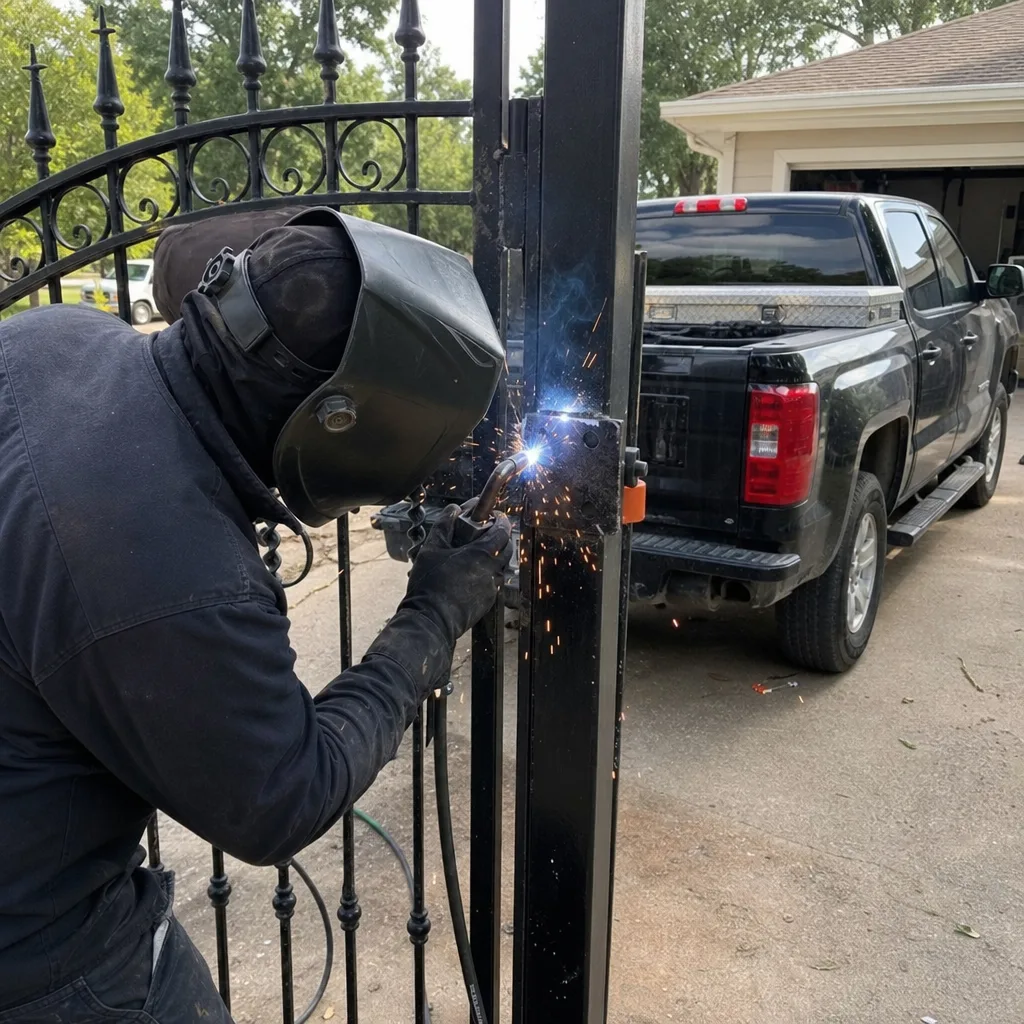
The wet season in Humble runs from roughly April through June, and it’s the most consequential maintenance window of the year. Sustained rainfall does three things to a gate system: it swells wood components, it shifts post alignment in the clay soil, and it accelerates rust on steel hardware that’s already compromised. Each one deserves a specific inspection routine.
Post Movement and Plumb
Clay soil expands when wet, and it doesn’t expand evenly. A post supporting a swing gate can move a quarter inch out of plumb during a wet spring without anyone noticing until the gate starts dragging on the latch side. The check is simple: stand at the hinge side and sight down the gate line. If the gap between gate and post changes from top to bottom, the post has moved. Use a level on both posts if you have one. Any movement over a quarter inch should be corrected before summer heat locks the post into its new position.
In our experience across Humble neighborhoods, the worst post movement shows up in low-lying areas where water pools after heavy rain. Homes near drainage easements see more post shift than homes on higher ground. The correction isn’t always a full post reset. Sometimes a hinge adjustment compensates. Sometimes the post needs to be re-set in new concrete. The key is catching it before the heat season bakes it in.
Wood Component Swelling
Wood gates absorb moisture from the air even when they don’t get rained on directly. Humble’s spring humidity is routinely above 80%, and that moisture makes cedar and pine pickets swell. The swelling widens each picket slightly, which changes the overall gate width and puts pressure on hinges and latches. A wood gate that swings freely in February can bind against the post by late May.
Inspect the gaps between pickets. If the gaps have closed completely, the wood has swollen. Check the latch alignment; if the gate has to be lifted or shoved to engage the latch, swelling is the likely cause. For gates with metal frames and wood infill, check for pickets that have started pushing against the frame rails. The fix is usually straightforward: re-space pickets or plane down an edge. Ignoring it turns a $150 adjustment into a broken hinge or a bent frame by August.
Rust Acceleration and Drainage
Steel hardware rusts in any humid climate, but Humble’s wet season accelerates the process on components that already have a scratch or chip in their coating. Hinge plates, bolt heads, and the bottom rail of ornamental steel gates are the usual suspects. Rust that’s surface-level can be wire-brushed and painted. Rust that has pitted the metal has structurally weakened it, and those components will eventually fail under load.
Drainage at the base of gate posts is the other wet-season priority. If water pools around the post after rain, the post is sitting in saturated soil for days, not hours. That’s how posts start to lean. Look for standing water around the post base 24 hours after a rain event. If it’s still there, the area needs regrading or a drainage channel. In flat sections of Humble where water doesn’t run off naturally, this is a common contributor to post failure.
For homeowners with automatic gates, the wet season is also when operator enclosures get tested. Moisture that finds its way into the control box causes corrosion on terminals and relay contacts. Check the enclosure gasket and the conduit fittings. If condensation is visible inside the box, the enclosure needs attention before the heat season adds thermal stress to already-compromised connections. Our Gate Motor & Opener in Humble service regularly replaces enclosures that look fine from the outside but have been quietly corroding inside.
Heat Phase Care: July Through September
Humidity doesn’t go away in a Humble summer, but the dominant stress shifts from moisture to temperature. Sustained 95°F-plus days with high humidity create a specific set of problems for gate operators, batteries, and rubber components. The failures that show up in July and August are rarely spontaneous; they’re the result of thermal stress compounded over weeks.
Operator Board Thermal Stress
Gate operator control boards are rated for outdoor use, but that rating assumes certain ambient conditions. An operator box mounted on a steel column in direct afternoon sun can reach internal temperatures 20 to 30 degrees hotter than the air temperature. That’s not a number from a spec sheet; it’s what we measure with an infrared thermometer during summer service calls in Humble. At 120°F internal temperature, solder joints expand, electrolytic capacitors age faster, and the board’s protection circuitry gets more conservative. A board that ran fine all spring may start throwing fault codes in July simply because it’s cooking.
The inspection is straightforward: check the operator enclosure for direct sun exposure. If the box is hot to the touch at 4 p.m., it’s running too hot. Solutions include a shade cover, relocating the operator to the shaded side of the post, or adding ventilation. For boards already showing fault codes that reset when the box cools at night, the board is in thermal distress and needs attention before it fails permanently.
Battery Backup Capacity Loss
Battery chemistry degrades faster in heat. A 12-volt sealed lead-acid battery that would last five years in a mild climate might last three in a Humble summer, because every day above 90°F accelerates the internal chemical breakdown. The failure pattern is predictable: the battery passes a load test in June, then in August it can’t hold enough charge to open the gate more than once during a power outage. The operator’s built-in battery test doesn’t always catch this because the battery’s surface voltage looks normal. What drops is capacity, not voltage.
The meaningful test is a capacity test: disconnect the operator from incoming power and run the gate through a full cycle on battery alone. If the gate opens and closes completely on battery, the battery is doing its job. If it slows down, hesitates, or stops partway, the battery needs replacement. In Humble, this test should be done at the start of the heat season, not just ahead of winter.
Rubber Seal and Limit Component Deterioration
Rubber seals, gaskets, and edge-protection strips degrade in two ways in a humid summer. Heat makes them harden and crack. Humidity keeps them wet, which promotes surface breakdown. A seal that was pliable in March can be brittle and split by September, especially on the west-facing side of a gate where afternoon sun hits hardest.
Check the rubber edge-protection strips on any automatic gate. These are the strips that detect an obstruction and reverse the gate. If they’re cracked, dried out, or peeling away from the channel, they won’t make proper contact when the gate hits something, and the safety system degrades. For swing gates, check the rubber stops and the weatherstripping on the latch side. For slide gates, check the rubber wheels and the guide rollers; they take direct sun and wear faster in heat.
Limit switches, which tell the operator where the gate stops, are mechanical components that can drift in extreme heat as metal parts expand. An operator that opens fully in cool weather might stop short by an inch or two in July. That’s usually not a switch failure; it’s thermal expansion changing the gate geometry. The fix is a limit-switch recalibration, covered in the section below.
Anyone with an automatic gate in Humble should consider this heat-phase inspection as important as changing the HVAC filter. The gate may not be inside the house, but it’s running on the same kinds of electronic and mechanical components, and it’s doing it in harsher conditions. Brands like LiftMaster, FAAC, and Elite all publish operating temperature ranges, and a Humble summer routinely pushes against the top of those ranges when the operator box is in direct sun.
Winter Window: December Through February
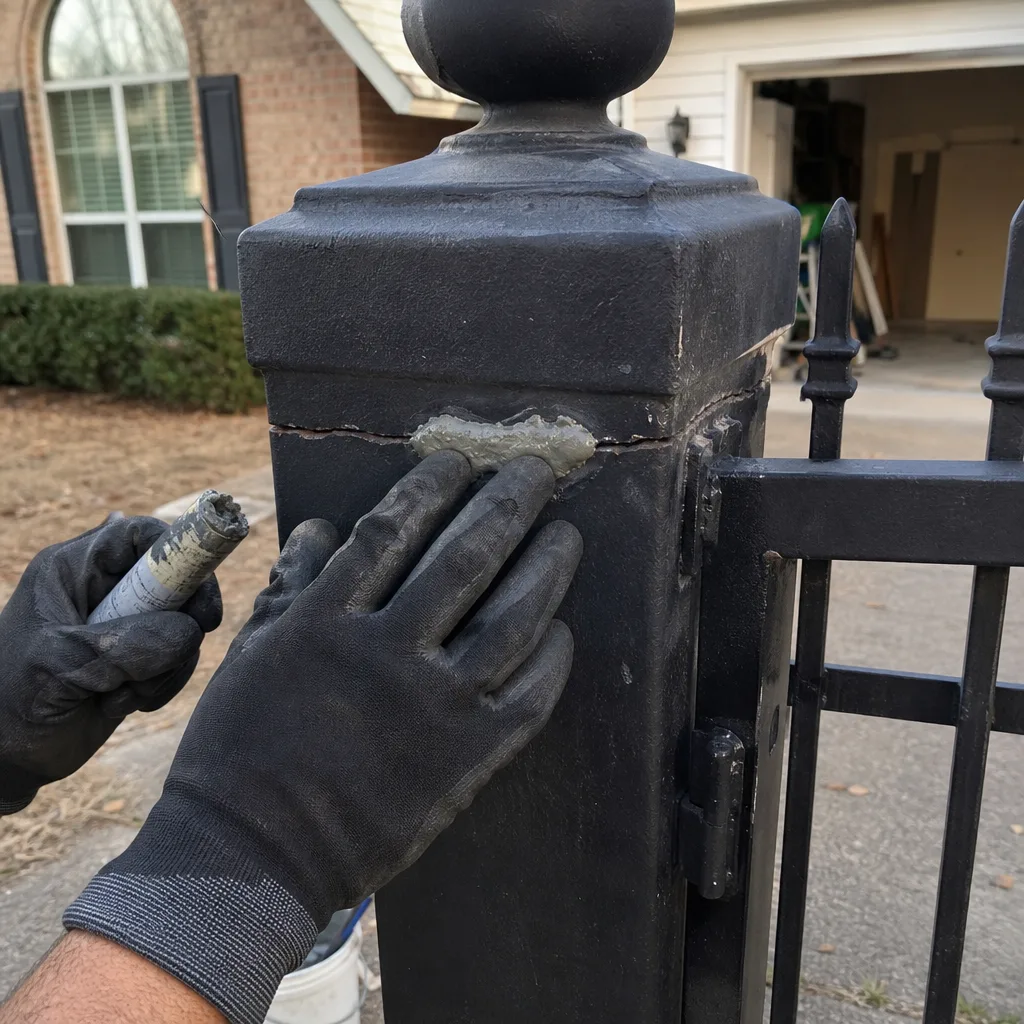
Humble winters are mild by any national standard, but they create a specific failure pattern that catches homeowners off guard: backup battery failures cluster in the winter months. The reason is electrochemical. Sealed lead-acid batteries lose capacity as temperature drops. A battery that holds enough charge to cycle the gate twice at 85°F might hold enough for only one cycle at 40°F. Since power outages in Humble are more common during the cold-front season, the combination of reduced battery capacity and increased outage frequency means the gate fails closed at exactly the moment the homeowner needs it to work.
Why Winter Battery Testing Matters
The operator’s self-test routine does not reliably catch this failure mode. Most operator boards run a voltage check, not a capacity check. A cold battery that’s lost 40% of its capacity still shows a normal resting voltage. The only reliable test is a cycle test on battery power alone, done in January when the battery is actually cold. Disconnect incoming power, run the gate through a full open-close cycle, and watch the speed. A healthy battery moves the gate at near-normal speed. A degraded battery makes the gate noticeably slower on the second half of the cycle or stops it altogether.
The other winter-specific issue is condensation. Cold nights followed by warmer, humid days create condensation inside operator enclosures, especially when the enclosure is mounted on an uninsulated steel post. That moisture collects on the control board and terminals, and when it’s cold enough, it doesn’t dry out between cycles. The result is the same corrosion damage that eventually causes intermittent faults. Checking the enclosure interior for moisture on a cold morning tells you a lot about how well the enclosure gasket is doing its job.
The Freeze Question in Humble
Hard freezes are rare in Humble, but they happen often enough to matter. During the February 2021 winter storm, gates across the Houston metro area failed in specific patterns: battery backups that had never been capacity-tested couldn’t open gates during rolling blackouts, and slide gates that sat in pooled water froze to their tracks. The lesson for Humble homeowners is straightforward: if your gate has a battery backup, test it in December or January, not in October when the weather is still warm. And if your slide gate sits in a low spot that collects water, fix the drainage before the next cold snap.
Wood gates also respond to winter differently than people expect. The cold, dry air pulls moisture out of the wood, which makes pickets shrink slightly. Gates that were binding in the wet season often swing more freely in winter, but the shrinking can also loosen hinge screws and create gaps that weren’t there in September. A quick check of hinge tightness in December prevents a sagging gate by March. For homeowners considering Gate Installation in Humble, winter is often the best time to plan the project, since the ground conditions are more predictable than the spring swell or the summer dry crust.
The Limit-Switch Recalibration Every Rainy Season Demands
Limit switches are the components that tell a gate operator exactly where the gate should stop when it opens and closes. In a perfect world, those settings stay put for years. In Humble, they don’t. Every serious rain season moves something, even if it’s just a few degrees: a post shifts slightly in the clay, a hinge wears a little where the gate now rides differently, a wood gate swells and changes its resting position. The operator compensates until it can’t, and then the gate either overtravels and slams the stop, or undertravels and leaves a gap.
After any major rain event or at the end of the spring wet season, a limit-switch check should be on the maintenance list. The process isn’t a homeowner DIY project on most operators, because the adjustment involves opening the control box and working with live terminals and mechanical stops. But the diagnosis is simple enough to do from outside: open the gate and watch where it stops in the full-open direction. Then close it and watch the full-close position. If the gate stops hard against the mechanical stop and the operator keeps pushing for a second, the limit is set past travel. If the gate stops short and there’s a visible gap at the latch, the limit is set short.
Both conditions put stress on the operator. Over-travel hammers the gearbox and the stop bracket. Under-travel leaves the latch side unsupported, which puts extra load on the hinge side and can distort the gate frame over a season. The correction is recalibrating the limit switches to match the gate’s actual current travel, not its travel from when it was installed or from last year. In our experience in Humble, the limit adjustment is the single most common seasonal correction needed on automatic gates, and it’s also the one most often skipped because the gate still “works.”
One more note on this: if you have a newer operator with electronic limits rather than mechanical limit switches, the same principle applies. Electronic limits are set during programming, and they can drift out of sync with the physical gate as components move. The symptom is the same: the gate stops in the wrong place. The fix is the same: reprogram the limits to match actual travel. Neither version of this adjustment is urgent, in the sense that the gate still operates, but leaving it unaddressed for multiple seasons is how operators get burned out before their time.
Month-by-Month Task Map for Humble Homeowners
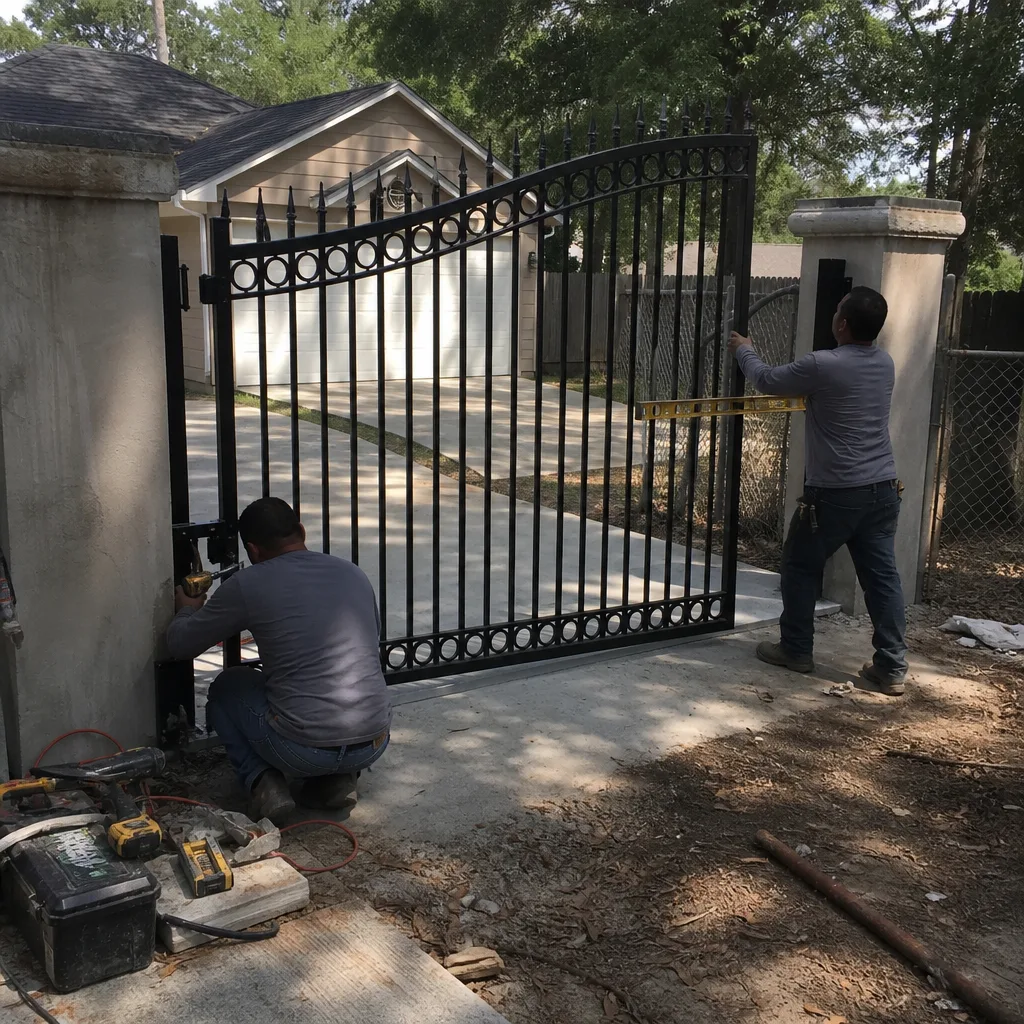
This map is built around Humble’s actual climate pattern, not a generic Southern U.S. template. If you do these tasks in the right month, the seasonal gate care routine takes less than an hour each visit and prevents most of the failures that show up later as emergencies.
- January: Backflow of winter. Test the battery backup with a full cycle on battery power. Check for loose hinge screws, since the dry air shrinks wood and loosens hardware. Look inside the operator enclosure for condensation on a cold morning.
- February: Cold-front preparedness. If freezing weather is forecast, check that the gate isn’t sitting in pooled water that could freeze. Re-torque any hinge bolts that loosened during January’s dry spell. Inspect wire connections at the operator for corrosion.
- March: Pre-rain baseline. This is the month to note the gate’s current operation: how it sounds, where it stops, how much clearance it has. Record it mentally or with a video so May comparisons mean something. Check that drainage around posts is clear.
- April: First rain response. After the first significant rain, check for standing water at post bases and look for new rust spots on hardware. Check wood gates for the first signs of swelling at the latch.
- May: Peak wet season inspection. Full post plumb check. Full wood-swelling check. Inspect the operator enclosure for moisture intrusion. If the gate is dragging or the latch is binding, address it now, before heat locks it in.
- June: Late rain and transition. Run the gate through a complete open-close cycle and watch for hesitation or unusual noise. If the limit position has drifted, schedule a recalibration. Check the operator enclosure gasket after the last big spring storm.
- July: First heat check. Touch the operator enclosure at 4 p.m. on a hot day. If it’s too hot to keep a hand on comfortably, it’s too hot for the board. Consider shade or ventilation. Run the battery cycle test again if the enclosure has been running hot.
- August: Peak heat inspection. Check rubber seals and edge-protection strips for cracking, especially on west-facing gates. Watch the gate through a full cycle for any speed changes. Check that the operator fan or ventilation path is clear.
- September: End-of-heat assessment. Look at the overall gate alignment. The clay soil has contracted through the dry summer, and posts may have shifted again. If the gate is closing hard against the stop, the limit needs attention.
- October: Shoulder season. This is a good month for any repair work that’s been deferred, since the weather is mild and the gate isn’t under moisture or heat stress. Check hinge wear and gate balance.
- November: Pre-winter prep. Verify that the operator’s force settings are appropriate for colder operation. Check that any exposed wiring is in good condition. Inspect the gate for play or looseness that developed during the year.
- December: Battery test in actual cold. Run the cycle test again, now that temperatures are lower. If the battery hasn’t been replaced in three-plus years and this test shows any hesitation, replace it before the next cold front, not after.
Common Mistakes to Avoid
- Testing the backup battery only when the power goes out. The first time a battery is tested should not be during an actual emergency. A battery that hasn’t been cycle-tested in years will often fail exactly when it’s needed, and in Humble’s winter outage season, that means failing during a cold front rather than on a pleasant afternoon.
- Ignoring a gate that “still works.” A gate that drags, hesitates, or makes a new noise is communicating. Waiting until it stops working entirely turns a $200 adjustment into a $1,200 motor replacement. The most expensive gate repairs in Humble are the ones that were postponed through two seasons of warning signs.
- Painting over rust without treating it. A coat of paint doesn’t stop active rust; it hides it. The rust continues underneath, and by the time it reappears, the metal is thinner than it would have been if the surface had been treated first. Surface prep matters more than the paint.
- Assuming the operator is the problem when the gate is out of alignment. Post movement and wood swelling are more common in Humble than motor failure, but when a gate starts acting up, the operator gets the blame. If the gate is dragging or the latch is binding, check the physical gate first, not the electronics.
- Scheduling maintenance on a fixed calendar without looking at the weather. A generic “twice a year” schedule doesn’t match Humble’s climate. The wet season and the heat season each deserve their own inspection timing, and the winter battery test is a third touchpoint. Maintenance that’s mistimed is maintenance that misses the failure.
- Replacing parts without documenting what was done. Without a record of what was adjusted or installed, every future technician starts from scratch, and the homeowner pays to rediscover the same problem. A written record on every gate visit is the difference between a repair that lasts and a repair that gets repeated.
When to Call a Professional
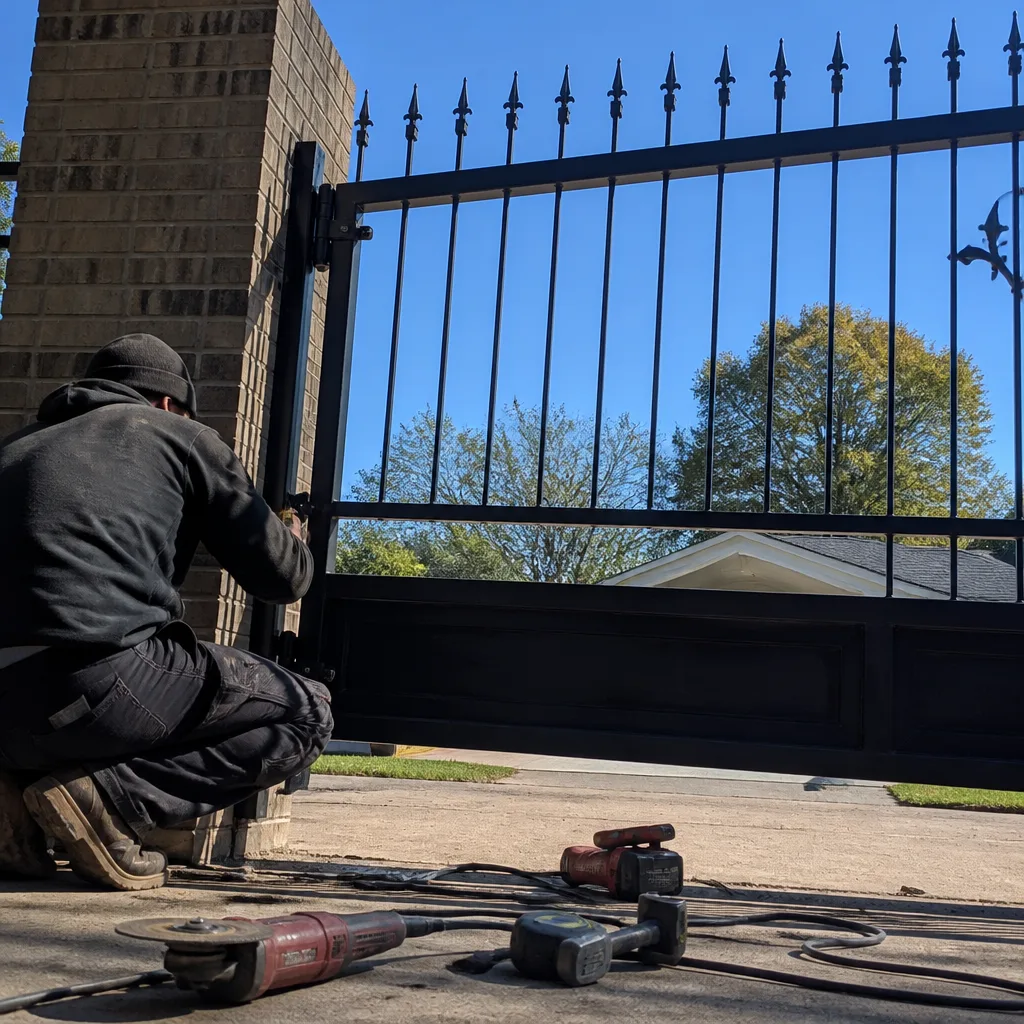
Some seasonal gate work is inspection and observation. Some of it requires test equipment, experience, and the understanding of what normal operation looks like across different operator brands. A gate that posts its own fault codes bypasses guessing: when the operator flashes a code on the control board, that’s the system telling you something specific. Working on a live gate operator is different from working on a fence post. The high-tension risks are real: a gate under power can move without warning, and a misadjusted force setting can turn a routine cycle into a hand injury or worse. If the gate is out of alignment enough to need post work, if the operator is throwing codes, or if the battery backup has failed a capacity test, that’s the moment to call someone who does this every day. Vance Gate Repair Humble home service area covers the full range of seasonal gate issues, and we provide free estimates in Humble. Call (346) 423-6136 for a written price before any work starts.
Frequently Asked Questions
For an automatic gate in Humble, three seasonal checkpoints per year matches the actual climate: one after the spring wet season, one during the peak heat, and one battery test in the winter window. Manual gates with no automation can typically get by with two checks per year, but the post-rain inspection is non-negotiable for any gate sitting in clay soil. For The Complete Guide to Gate Repair in Humble, see our detailed resource. Call (346) 423-6136 to schedule a seasonal inspection with Vance Gate Repair Humble; written pricing is provided before any work begins.
Heavy rain saturates the clay soil around the post, which expands and shifts the post position slightly, and it swells wood gate components that then bind against the latch or post. The operator feels both changes and works harder to compensate. The fix is a realignment after the soil stabilizes, plus a limit-switch recalibration if needed.
A seasonal inspection that includes a limit check, battery cycle test, and hardware inspection typically runs in the $125 to $250 range for most automatic gates in the Humble area, depending on the type of gate and how much correction the alignment requires. If the inspection turns up a needed repair, you’ll get a written price for that repair before anyone picks up a tool. Call (346) 423-6136 for a specific quote on your gate; estimates are free.
Same-day response for a gate that won’t open is available in Humble, including emergency calls. A live person answers the phone 24 hours a day, so you’ll speak to someone immediately, not a callback queue. Tell us the symptom and we’ll get a technician dispatched with the right parts on the truck.
A full seasonal visit includes checking the post alignment and plumb, inspecting hinges and latch components, cycling the gate through full travel while watching for speed changes or noise, testing the battery backup under load, checking the limit positions, inspecting rubber seals and edge protection, and documenting everything with photos. You get a written record of what was found, what was adjusted, and what was replaced, plus a photo log at no additional charge.
We service LiftMaster, FAAC, BFT, Linear, Viking, Ghost Controls, DoorKing, Elite, and Mighty Mule operators in the Humble area, so the brand already on your property doesn’t determine whether we can repair it. Most seasonal issues are brand-independent anyway: post movement, battery degradation, and limit drift happen to every operator regardless of manufacturer. Call (346) 423-6136 and tell us what you have; we’ll tell you what it needs.
The Bottom Line
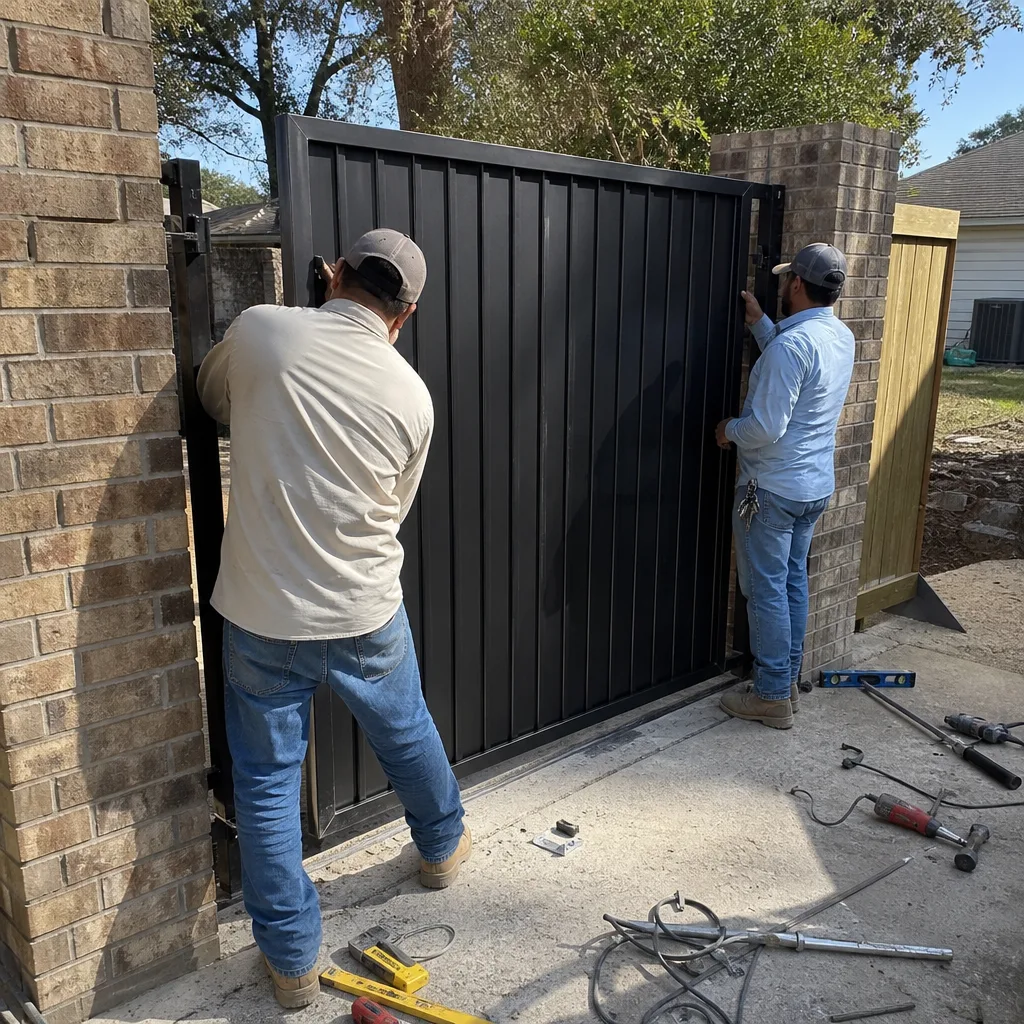
Seasonal gate care in Humble isn’t a calendar ritual; it’s a response to the climate that’s actually here. The wet season moves posts and swells wood. The heat season stresses operator boards and eats battery capacity. The winter window catches degraded batteries at their weakest. The gate doesn’t care what month the manufacturer recommends for service. It cares what the soil, sun, and humidity are doing right now. A homeowner who keeps an eye on those things, tests the battery when it’s actually cold, and recalibrates limits after the rain season will get years of quiet, reliable operation from their gate. A homeowner who waits for the gate to fail will pay more for the same outcome and lose the gate at the worst possible moment. For a free second opinion on any written estimate or a free seasonal inspection quote in Humble, call Vance Gate Repair Humble at (346) 423-6136.
Written by Adrian Vance, Owner at Vance Gate Repair Humble, serving Humble since 2014.