
Last updated September 20, 2026
Free on-site gate assessment - hinges, posts, and your LiftMaster or Nice gate operator checked before anything is quoted
The assessment is free and the quote is the invoice.
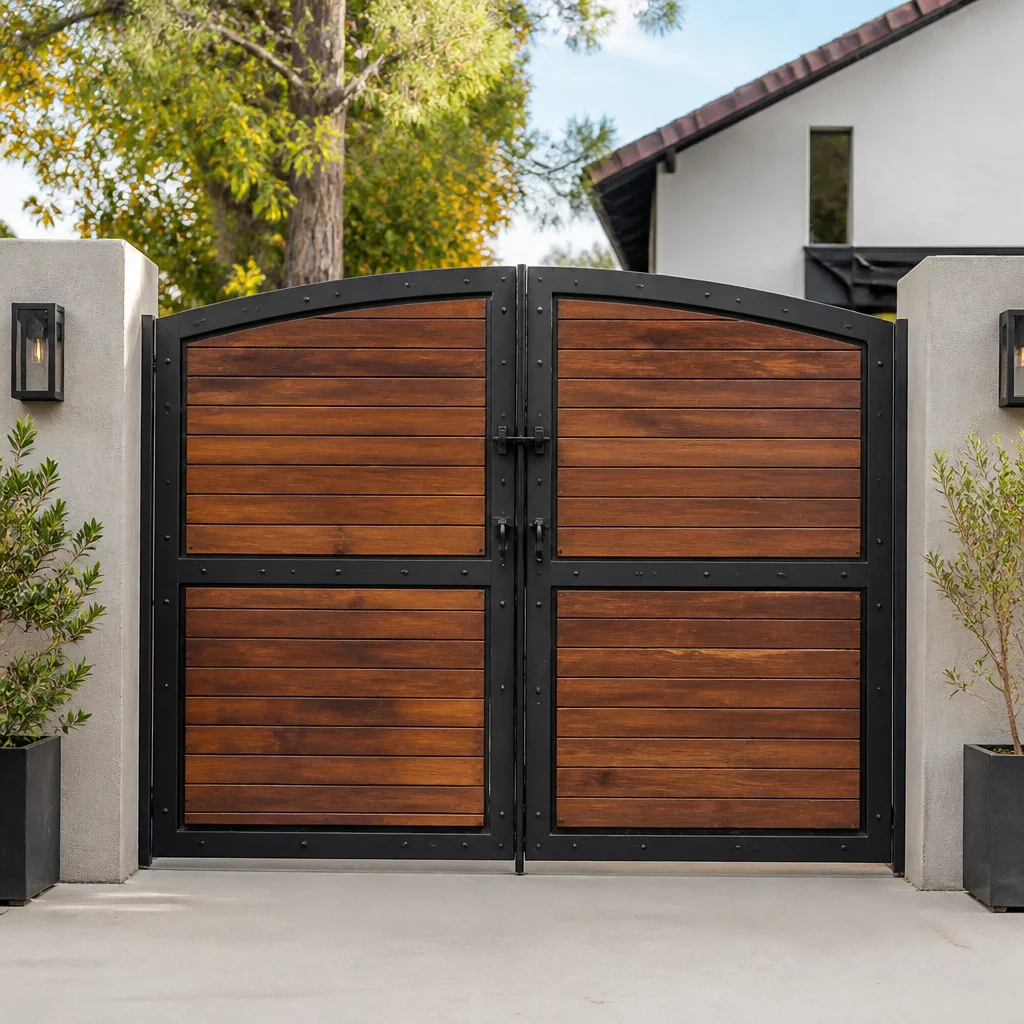

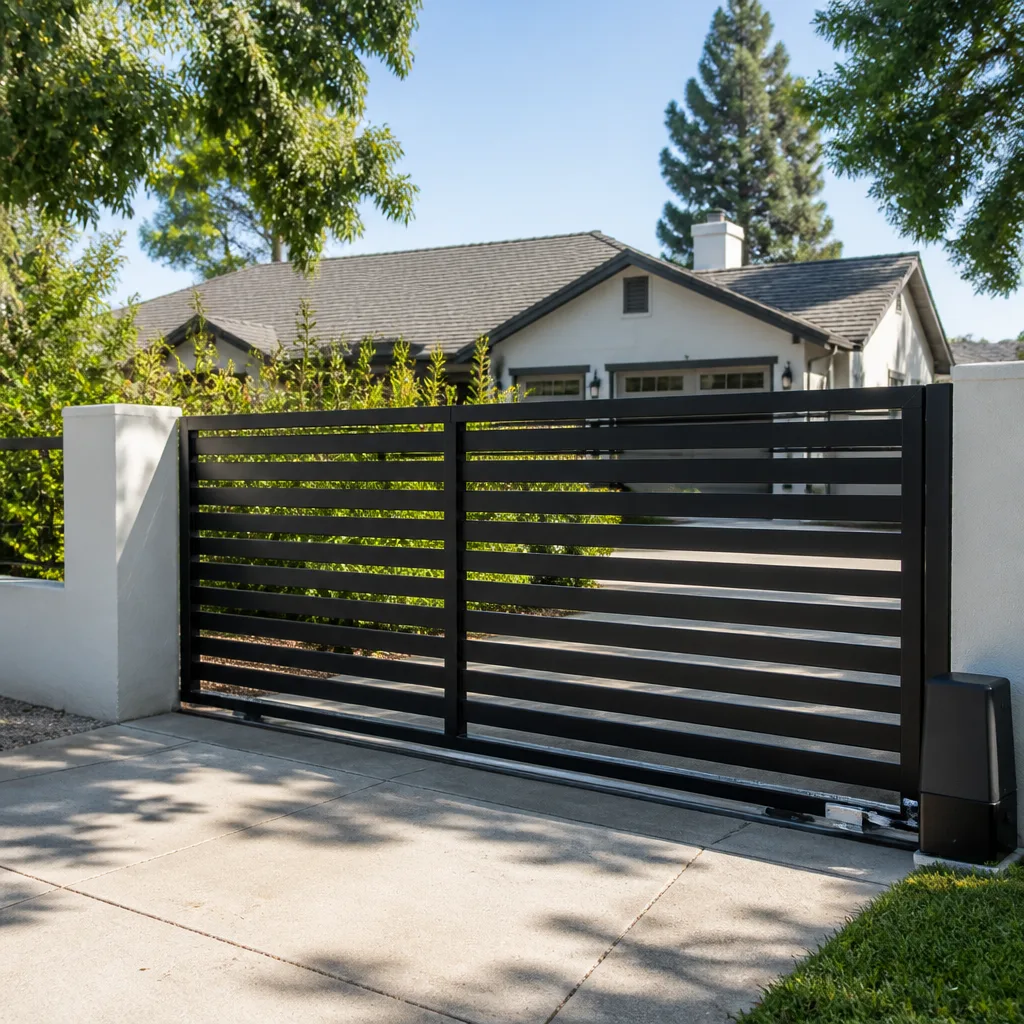

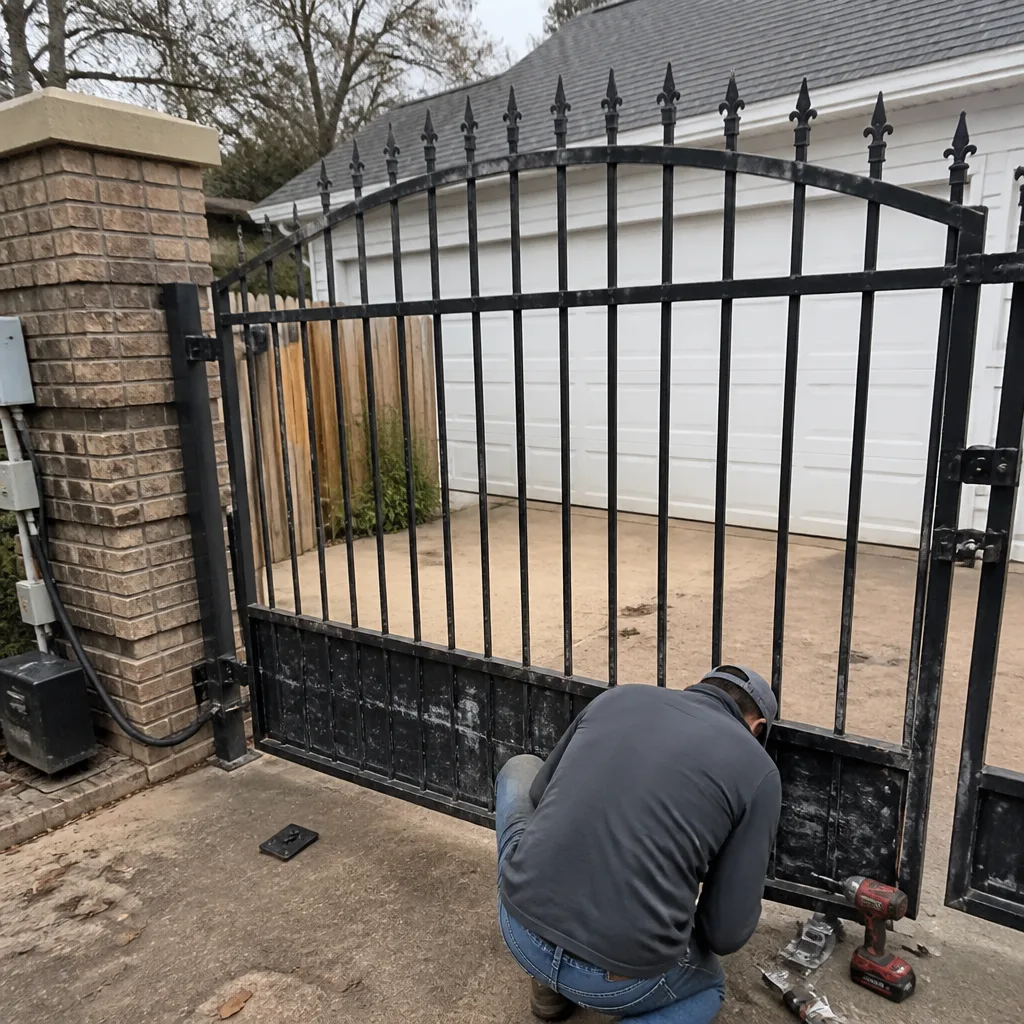 Before
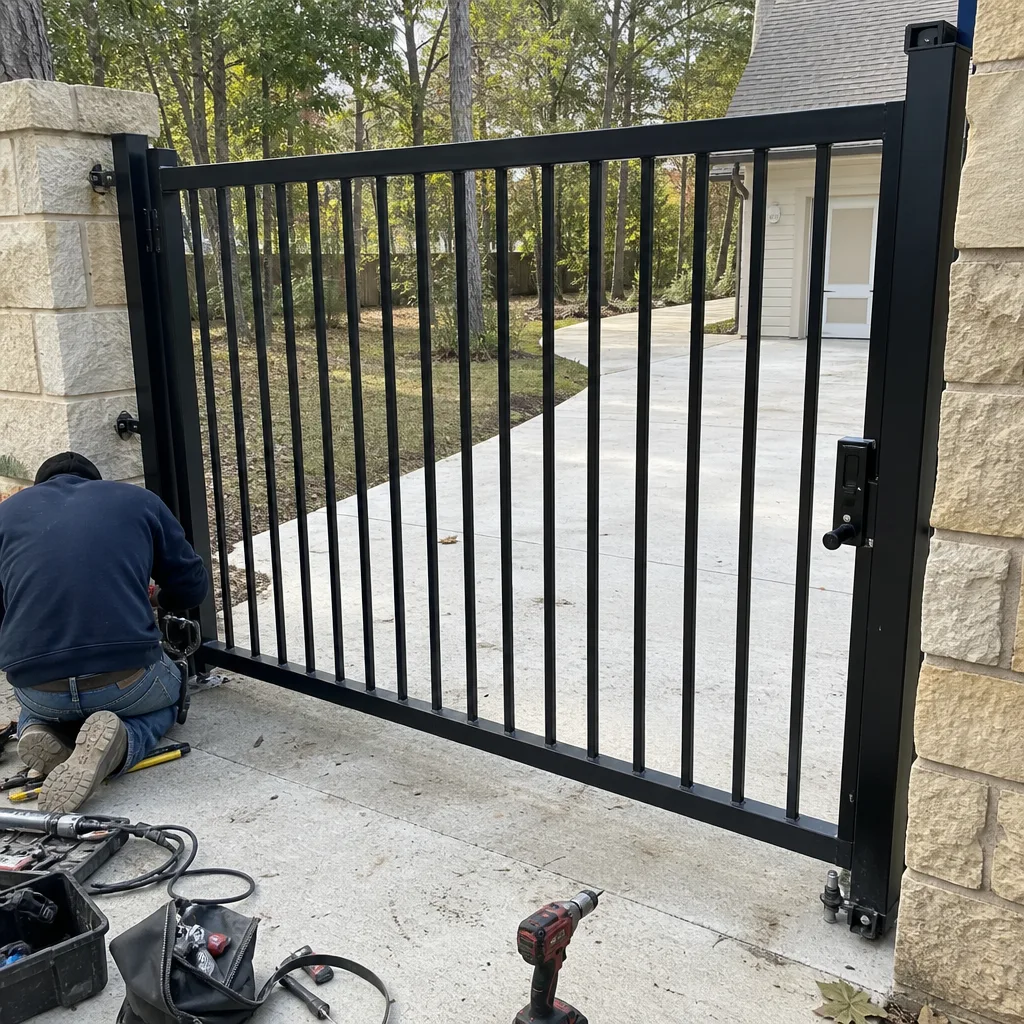 After
After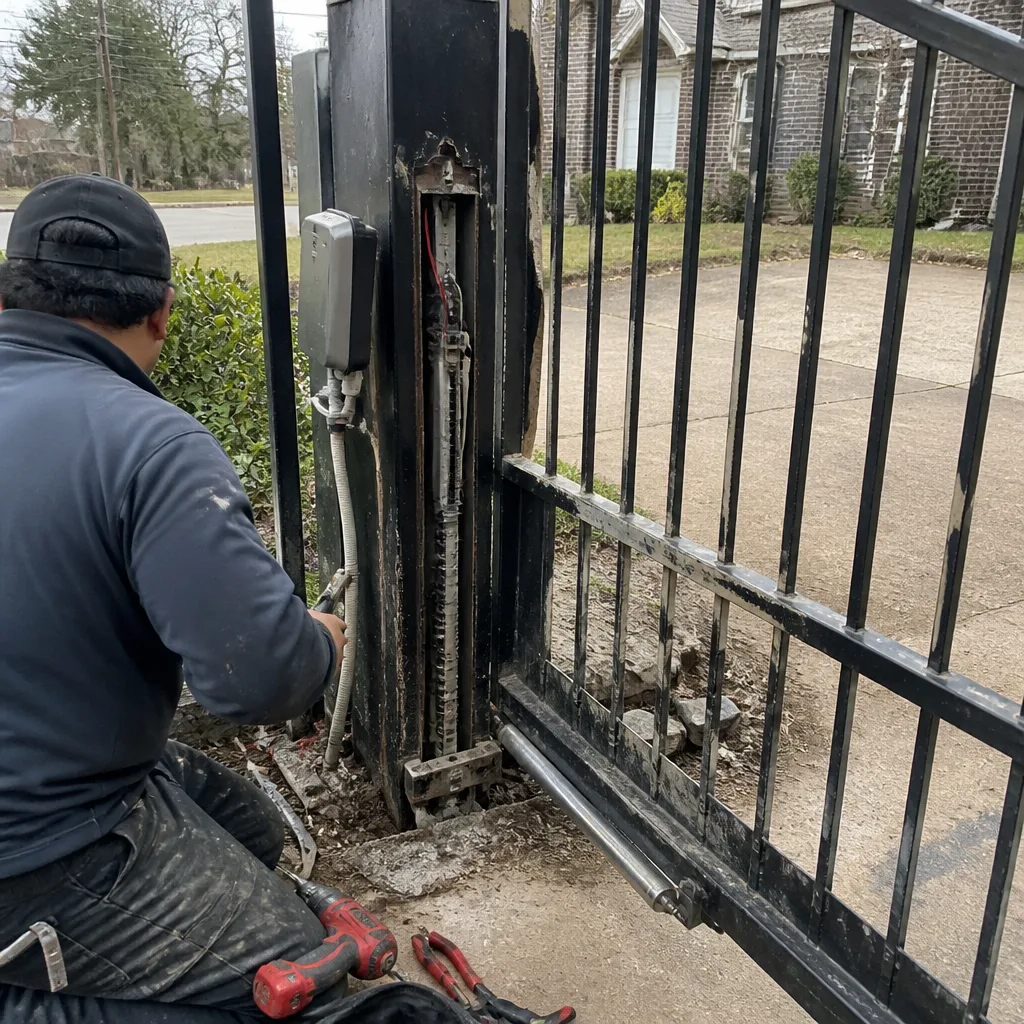 Before
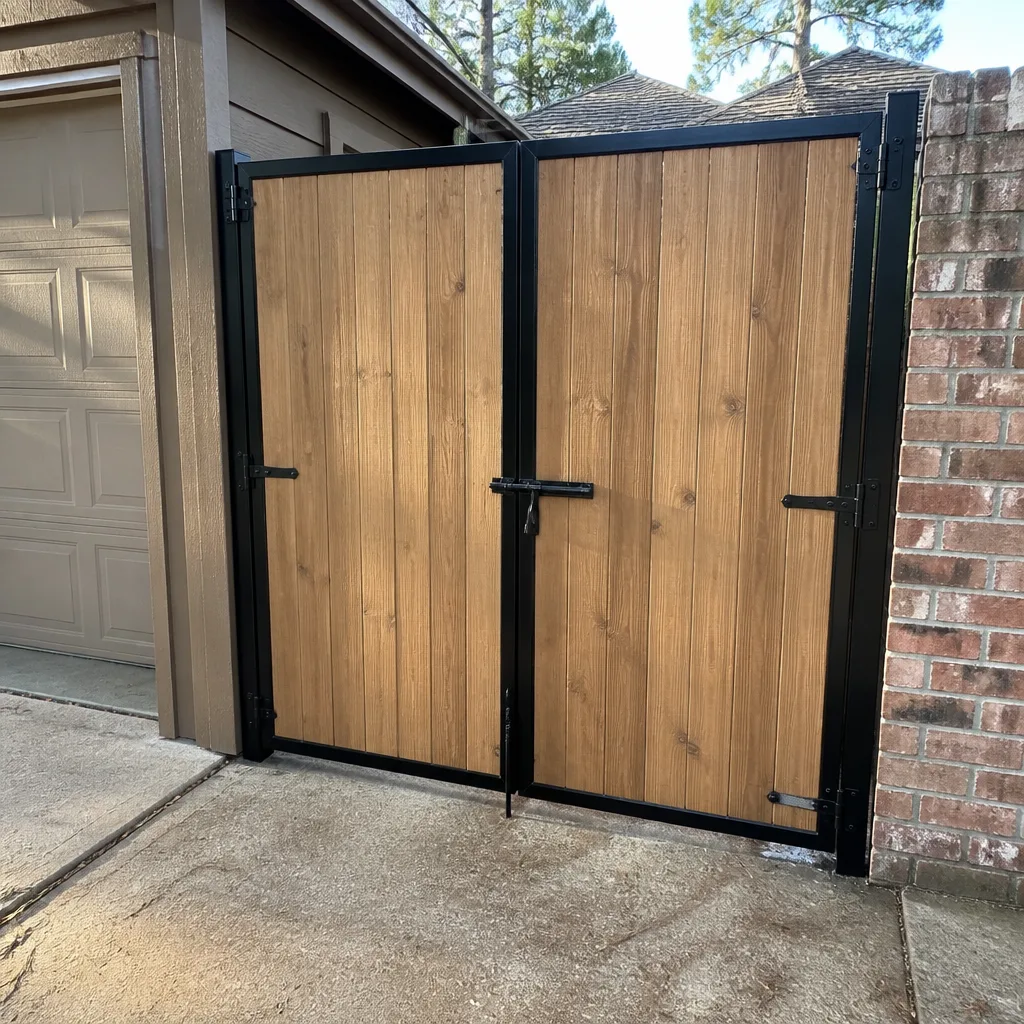 After
After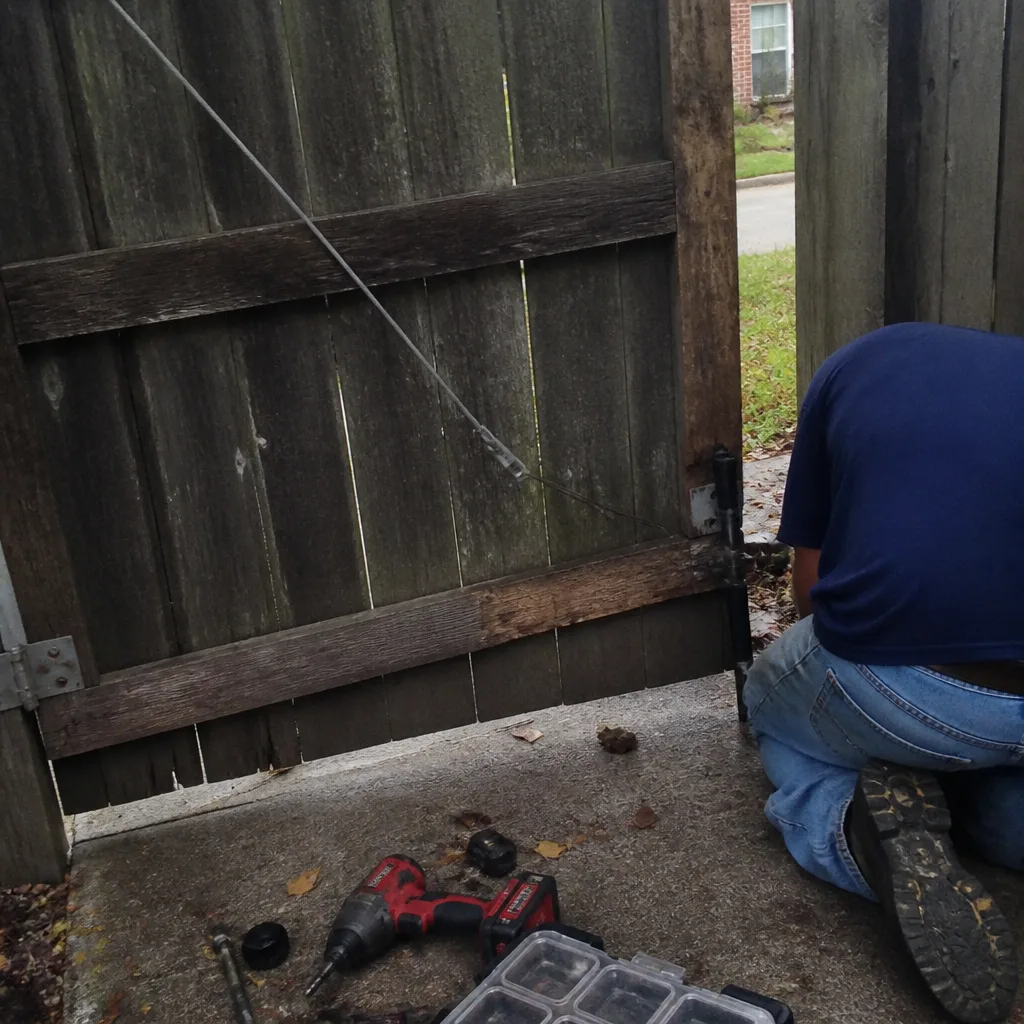 Before
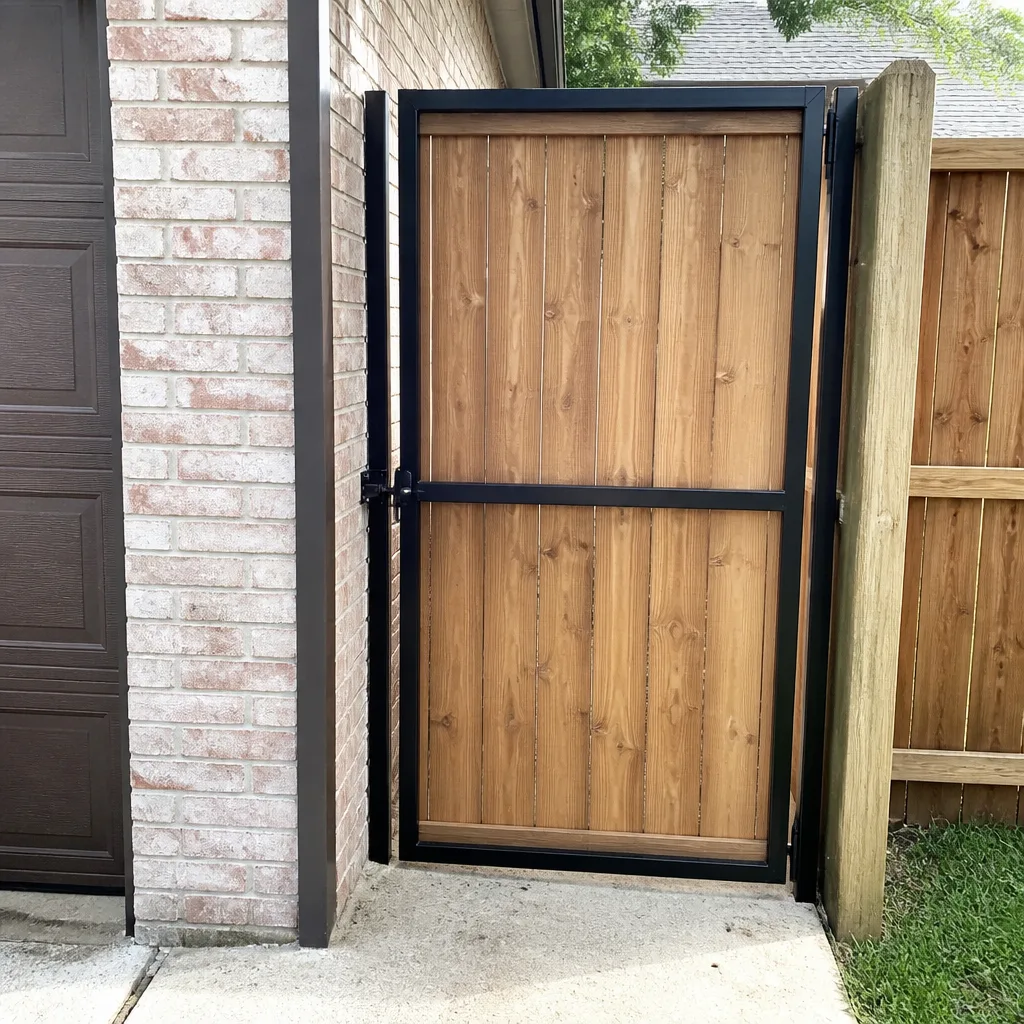 After
AfterThe Complete Guide to Gate Repair in Humble
Here’s something that surprises most Humble homeowners: the majority of gate failures we’re called to fix were not caused by the part that finally stopped working. A “dead motor” is usually a motor that burned itself out fighting a gate that no longer moved freely because a hinge wore down six months earlier. A “sensor problem” is typically a limit switch that drifted after the gate’s stop position changed, which happened because the post leaned a quarter inch in Humble’s clay soil. This guide walks through the three components behind most gate failures, how they interact, and what that means for what you’ll actually pay to fix it.
Quick Answer
Gate repair in Humble typically costs between $90 and $900 depending on whether the failure is a simple adjustment, a worn mechanical part, or a full operator replacement. Most repairs fall into one of three root causes: the operator, the limit switches, or the hinge and roller hardware. A gate that misbehaves almost always traces back to one of these three, and identifying which one it is before calling anyone determines whether you’ll spend under $200 or over $800.
Table of Contents
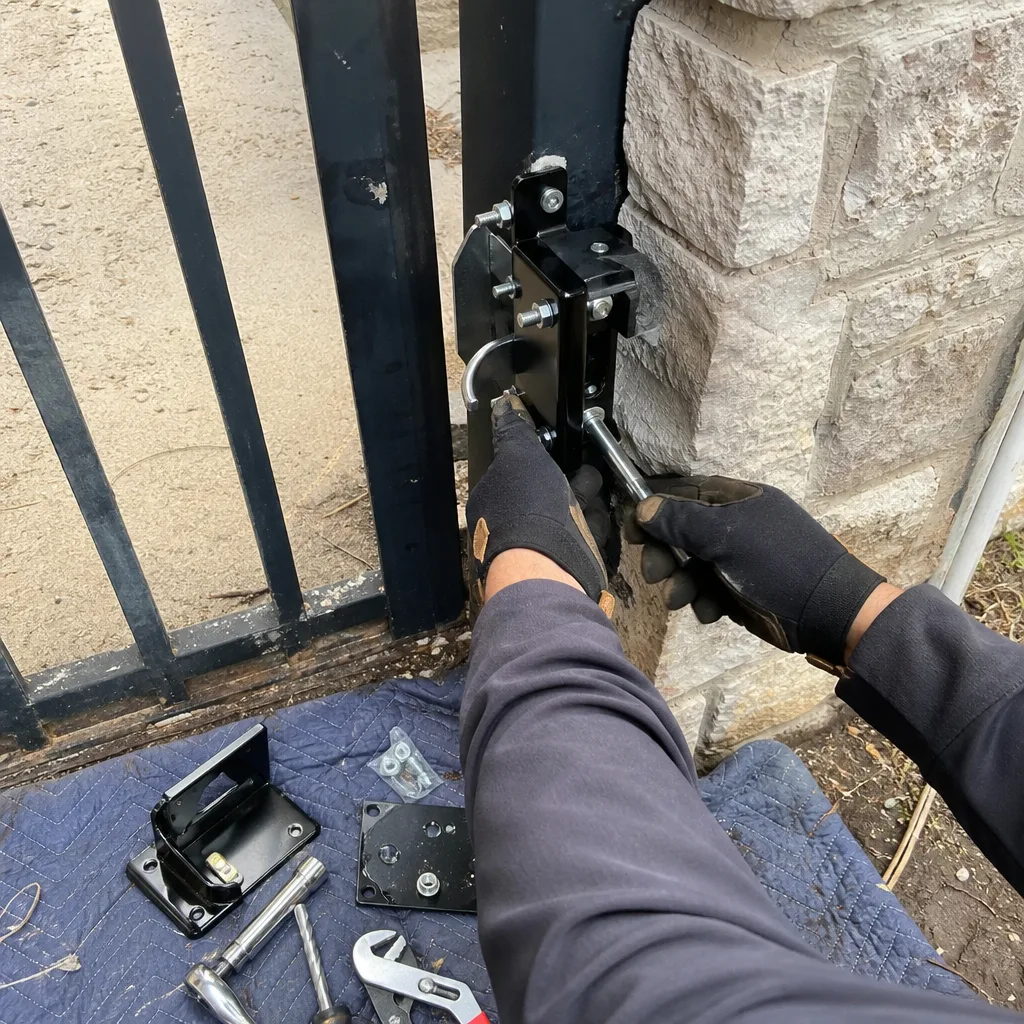
- The Three Components Behind Most Gate Failures
- Why Humble’s Clay Soil Causes More Gate Failures Than Rain or Wear
- The Repair Decision Tree: Operator Fault vs. Mechanical Fault vs. Access-Control Fault
- Slide Gates vs. Swing Gates in Humble: Different Failures, Different Fixes
- What a Complete Repair Record Should Contain
- Three Field Checks to Verify a Repair Before You Sign Off
- What Gate Repair Costs in Humble, Line by Line
- Common Mistakes to Avoid
- When to Call a Professional
- Frequently Asked Questions
- The Bottom Line
BeforeAfterThe Three Components Behind Most Gate Failures
Every automatic gate, whether it slides or swings, depends on three systems working together: the operator (the motor and control board that move the gate), the limit switches (the mechanical or magnetic stops that tell the operator when the gate has traveled far enough), and the hinge or roller hardware (the physical components that let the gate move). When one of these three starts to fail, it rarely fails in isolation. A worn hinge forces the operator to work harder, which causes the limit switch to fall out of calibration, which makes the gate reverse mid-cycle or slam against the stop. This is why a “sensor repair” that doesn’t address the underlying hinge wear will fail again in a few weeks.
We see this pattern constantly in Humble. A gate that reverses without warning is rarely a sensor problem. Nine times out of ten, it’s a limit switch that drifted because a hinge wore and changed the door’s stop position. Understanding which of the three components actually failed, not which symptom appeared, is the difference between a $90 adjustment and a $900 replacement.
The Operator
The operator is the motor, gearbox, and control board inside the metal box mounted on or near the gate. Operators fail in two predictable ways. First, they burn out from overwork: a motor pushing against a gate that has become difficult to move will draw more current, run hotter, and eventually destroy its own windings or capacitor. Second, their control boards fail from electrical issues: power surges, lightning strikes, or water intrusion through cracked housing. In Humble, where afternoon thunderstorms and humidity are constant from April through October, control board failures from moisture and surge damage happen more often than in drier parts of Texas.
When the operator is genuinely dead, the repair path is straightforward: replacement of the operator or the failed board. The key question is always whether the underlying mechanical problem that killed the first operator has been addressed. Installing a new operator on a gate that still doesn’t move freely is how you spend $900 twice.
The Limit Switches
Limit switches are the least understood and most commonly misdiagnosed component in residential gates. Their job is simple: tell the operator when to stop. On a swing gate, they’re usually magnetic reed switches on the operator arm or mechanical stops inside the gearbox. On a slide gate, they’re typically magnetic limit sensors mounted along the gate track. When the gate’s travel distance changes, even by half an inch, the limit switch that was set for the old travel distance now stops the gate too early or too late.
A gate that stops six inches short of fully closed, or that reverses immediately after reaching the closed position, is almost always a limit switch calibration problem, not a motor problem. The fix is usually under $150: a technician repositions the limit, resets the travel parameters, and verifies the gate stops correctly through several full cycles.
The Hinge and Roller Hardware
On swing gates, the hinges carry the entire weight of the gate leaf. On slide gates, rollers and a guide track do the same job. This hardware is exactly where gate failures begin. A gate leaf weighing 400 pounds supported by three hinges is putting more than 130 pounds of load on each hinge point. When one hinge starts to wear, the gate sags slightly, the gap at the latch side closes up, and the operator has to push against that misalignment every single cycle.
In Humble specifically, the clay-heavy soil compounds this. Posts set in expansive clay move with seasonal moisture swings, and that movement transfers directly into the hinge alignment. We regularly see gates in neighborhoods like Fall Creek and Atascocita that were perfectly aligned when installed and are now out of square by a full inch or more, all because the post has shifted in the soil.
Why Humble’s Clay Soil Causes More Gate Failures Than Rain or Wear
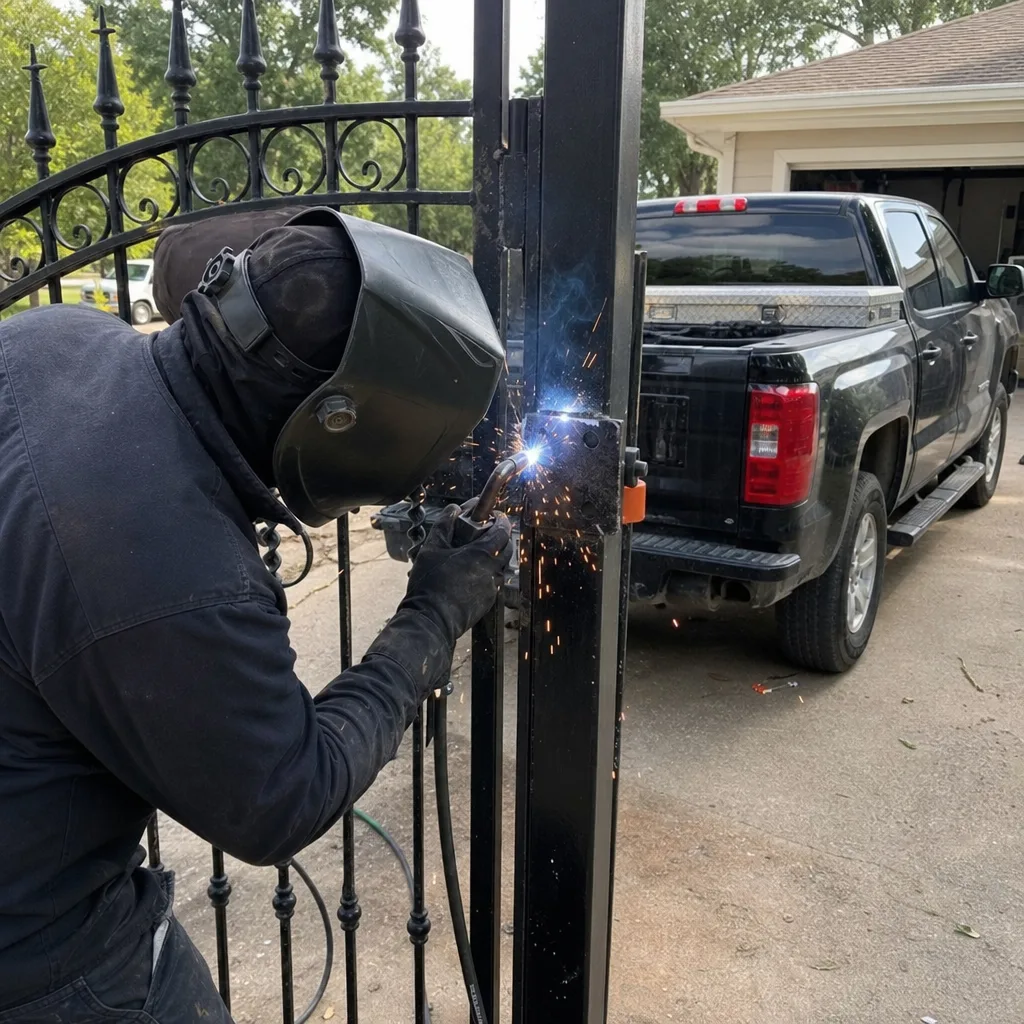
Humble sits on the Beaumont and Lake Charles clay formations, which are expansive soils. Expansive clay swells when wet and shrinks when dry, and it does so unevenly. A gate post set in concrete at the standard 36-inch depth in Humble will experience seasonal movement of a quarter inch to a full inch, year after year. That movement tilts the post, which tilts the gate leaf, which changes the hinge alignment, which forces the operator to work harder, which throws the limit switches out of calibration. It’s a five-step cascade that starts in the dirt.
Here’s what the cascade looks like in practice:
- Seasonal soil movement shifts the post. Spring rains saturate the clay; July and August dry it out. The post leans slightly toward the wet or dry side depending on drainage and grading around the gate.
- The gate leaf tilts with the post. On a swing gate, the latch side drops. On a slide gate, the gate rails no longer sit level on the rollers.
- The operator fights the misalignment. The motor draws more current to push or pull against friction it was never designed to overcome. Run time increases. Heat builds up.
- The limit switches fall out of calibration. As the gate’s actual travel position shifts, the switch that used to signal “fully closed” is now signaling “closed, plus half an inch of daylight,” or the gate physically binds before reaching the switch.
- The homeowner sees the symptom. The gate reverses, stops short, makes a grinding noise, or trips the breaker. By this point, the root problem has been developing for months.
This is why gate repair in Humble has a seasonal rhythm. We get the first wave of “my gate stopped working” calls in late May and early June, after the spring rains have fully saturated the soil and the posts have shifted. We get a second wave in September and October, after the summer drought cycle and the first autumn rains. The timing is not a coincidence. The soil is writing the service schedule.
When we repair a gate that has failed due to post movement, the repair is not just about resetting the limit switches. We check the post itself. If it has moved more than a quarter inch from true, the fix may involve re-shimming the hinges, replacing a worn hinge barrel, or in the most severe cases, resetting the post in a deeper concrete footing with proper drainage gravel. A technician who only resets the limit switches without checking the post is treating the symptom. The gate will fail again in the next wet or dry cycle.
The Repair Decision Tree: Operator Fault vs. Mechanical Fault vs. Access-Control Fault
Before you call anyone, you can narrow the problem down with a simple set of observations. Every gate failure falls into one of three categories, and each has a different first step.
Step 1: Identify the Category
Operator fault: The gate does nothing at all, or it hums without moving, or it moves a few inches and stops. No response from the remote or the keypad. A burning smell, a tripped breaker, or visible damage to the control board. This is an operator problem, and the first step is to verify power to the operator and check whether the motor turns freely by disengaging it from the gate. On most residential operators, there is a manual release lever or key. If the motor spins freely when disengaged but the gate won’t move when engaged, the gate itself is binding, not the motor.
Mechanical fault: The gate moves but with effort. It grinds, squeals, sags, scrapes the ground, or visibly tilts. One side of a swing gate drops when it opens. A slide gate jumps the track or rides up on the roller. This is a hardware problem. The operator is probably fine and is just being forced to work against a mechanism that needs repair. The first step is to inspect the hinges, rollers, and track for visible wear, and to check the gate’s alignment with a level.
Access-control fault: The gate works fine when opened manually or with the interior button, but the remote, keypad, or intercom does not trigger it. This is an access-control problem, not a gate problem. The first step is to check batteries in the remote, verify the keypad code, and confirm the access-control wiring is intact at the operator. This category is often the cheapest fix: a $4 battery or a reprogrammed remote can resolve what looked like a complete gate failure.
Step 2: Apply the Decision Tree
- Does the gate respond to any input at all? If no, check power and access control. If yes, move to step 2.
- Does the gate move at all, even briefly? If yes, check limit switches and mechanical alignment. If no, suspect the operator.
- Does the gate move but stop short or reverse? Check limit switches first, then mechanical binding.
- Does the gate move and stop correctly, but only sometimes? Check access-control wiring, remote batteries, and the operator’s internal relay.
In our experience, roughly half of the service calls we answer in Humble are mechanical faults disguised as operator faults. The homeowner hears the motor struggling and assumes the motor is the problem. When we disengage the operator and find the gate itself is hard to move by hand, the diagnosis is mechanical, and the repair is often under $300 rather than $700 or more for a new operator.
Slide Gates vs. Swing Gates in Humble: Different Failures, Different Fixes
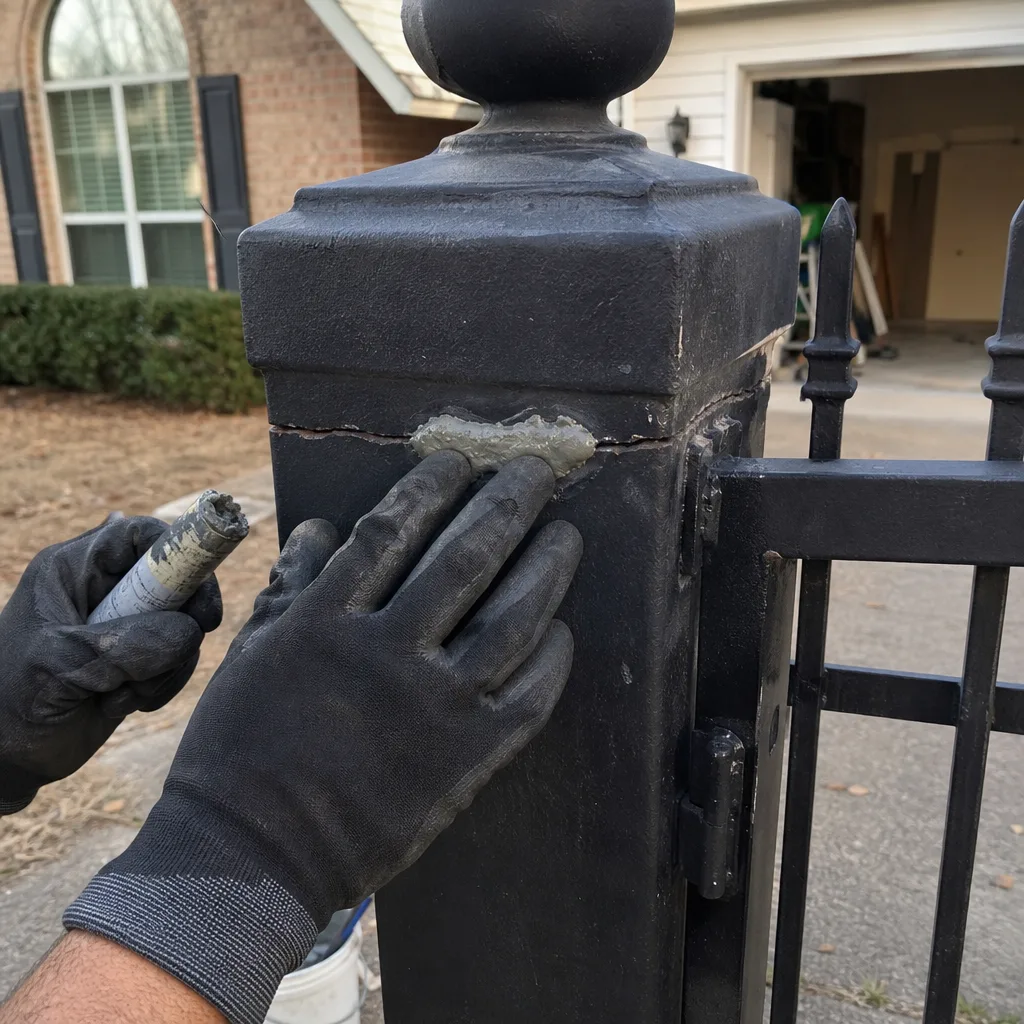
Humble’s suburban lots create two distinct gate populations. Driveway gates in master-planned communities like Fall Creek, Eagle Springs, and The Groves tend to be slide gates, chosen for wider driveways and modern aesthetics. Sideyard and pedestrian gates are typically swing gates, common on older homes in Town Center and on properties where space is tight.
The failure patterns are different, and it’s worth knowing which one applies to your gate.
Swing Gate Failures
- Hinge wear on the top hinge first: The top hinge carries the highest tension load, and it wears first. When the top hinge develops play, the latch side of the gate drops, and the gate begins to catch or bind at the latch post.
- Post lean from soil movement: As described above, Humble’s clay soil shifts gate posts seasonally. A swing gate with a leaning post will show a gap at the top hinge that is wider than at the bottom, and the gate will swing open or closed on its own after being moved halfway.
- Operator arm bracket fatigue: The bracket that connects the operator arm to the gate leaf takes repeated stress at the weld or bolt points. We see cracked brackets and sheared bolts regularly, especially on gates that were installed with the arm bracket mounted too close to the hinge, which multiplies the torque on the bracket.
Slide Gate Failures
- Roller and bearing wear: Slide gates ride on steel rollers that wear over time, especially on the wheel that carries the most weight, which is usually the one nearest the motor. A worn roller makes the gate ride rough and eventually wear a groove in the gate rail or damage the guide wheels at the top.
- Guide wheel failure at the top: The top guide wheels keep the gate upright. When they fail, the gate leans inward or outward, and the bottom edge starts to scoop dirt and debris from the track. A gate that’s dragging debris is often misdiagnosed as a track obstruction when the real issue is a failed guide wheel allowing the gate to drop.
- Track settling from soil movement: The concrete pad under a slide gate track can settle unevenly in Humble’s expansive clay, especially if the pad was poured without proper rebar reinforcement. A settled track means the gate travels slightly uphill or downhill, which throws off the limit switch calibration and makes the operator work harder every cycle.
For both gate types, the fix path is the same: identify the mechanical failure, correct it, then re-calibrate the operator and limit switches to the corrected gate position. Replacing the operator without fixing the mechanical issue is the most expensive mistake a homeowner can make, and unfortunately one we see from other companies’ prior work too often.
What a Complete Repair Record Should Contain
Every gate repair should leave behind a written record, not just a verbal handshake. Without a record, the next technician who shows up has to re-diagnose the gate from scratch, and you pay for that diagnosis twice. We’ve built our Vance Gate Repair Humble home service approach around documentation because Adrian Vance learned it working commercial access-control sites starting in 2014, where no gate gets touched without a work order, a wiring diagram, and before-and-after photos. Residential gates deserve the same standard.
A complete repair record contains:
- What was found: The initial complaint in the customer’s words, plus the technician’s diagnostic findings. This should be specific, not vague. “Limit switch set 12 degrees past travel” is a finding. “Sensor issue” is not.
- What was done: The exact adjustments, replacements, or repairs performed, including manufacturer part numbers where applicable. If a Linear limit switch was replaced, the record should say which model.
- Before and after photos: Photos of the failed component in place, the repair in progress if it’s non-obvious, and the finished repair. These photos belong to the homeowner and should be left with them, not filed away where no one can see them.
- Limit switch readings: The final travel positions, measured and recorded. When the next technician comes out in two years, they can compare readings instead of re-deriving them.
- Wiring changes or notes: Any modification to the low-voltage wiring at the operator, the access-control devices, or the photo-eyes should be noted and documented. A hand-drawn diagram or a clear photo of the terminal block is sufficient for residential work, but it needs to exist.
- Brand and model of every component touched: Not just “the operator,” but “Viking G-5 operator, board revision 2.1.” When the next failure happens, knowing exactly what was installed last time eliminates guesswork.
If a gate company cannot or will not provide this record, the repair is incomplete regardless of whether the gate works today. A working gate with no record is a gate that will cost more to fix next time. A working gate with a documented record is a gate that can be maintained efficiently for years. That’s the practical difference between a real repair and a handshake.
Three Field Checks to Verify a Repair Before You Sign Off
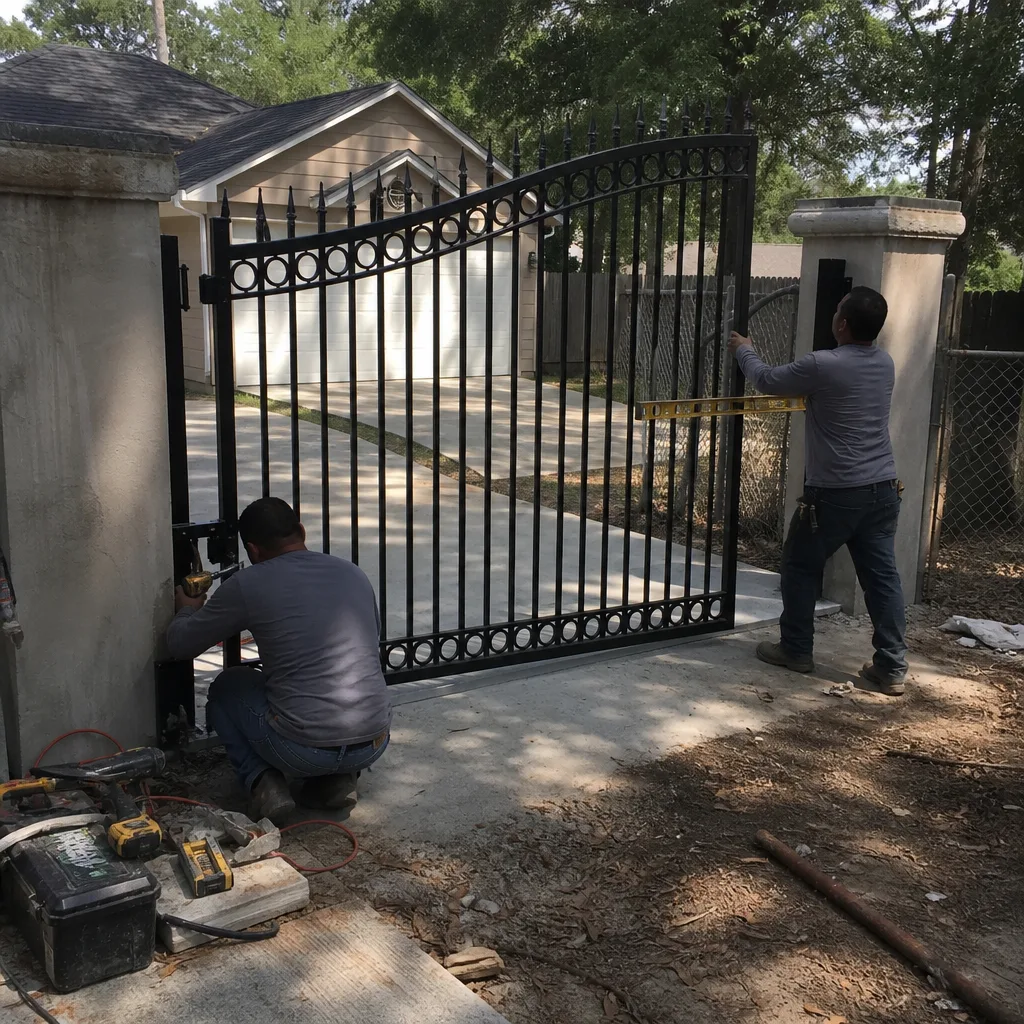
When a technician says the repair is done, you should verify it yourself with three simple checks. These don’t require tools beyond your eyes and hands, and they catch most incomplete or sloppy work before the tech drives away.
Check 1: The Mid-Cycle Obstruction Test
With the gate in motion, place a gloved hand or a broomstick in the gate’s path midway through its travel. The gate should stop and reverse immediately. If it pushes against the obstruction without reversing, the safety system (photo-eyes, edge sensors, or current-sensing obstruction detection) is not working. On a swing gate, stand clear of the arc and use a long object. On a slide gate, place the object in the track path. The gate should never push against you, your vehicle, or a child. Every gate in Humble with an automatic operator is required by code to have functional entrapment protection, and this is the test that verifies it.
Check 2: The Limit Position Verification
Run the gate through three full open-close cycles. Watch where it stops each time. The gate should stop in exactly the same position on every cycle. On a swing gate, it should sit flush or nearly flush with the latch post. On a slide gate, it should fully cover the opening and contact the closed stop without bouncing or reversing. Gates that stop short by a few inches, or that stop at a different position each cycle, have limit switch problems that were not resolved. The fix might be simple, but it still needs to be done correctly before you sign.
Check 3: The Sound and Vibration Check
Stand next to the operator while the gate runs. You should hear a smooth motor hum and a consistent gear noise. Anything that sounds like grinding, chattering, or a rhythmic knock indicates a mechanical problem that has not been addressed. The same applies to the gate hardware: a squealing hinge or a rumbling roller during operation is a failure in progress. A completed repair should leave the gate running quietly and smoothly, because the underlying mechanical issues have been corrected. If the noise is still there, the repair didn’t fix the root cause.
If the gate passes all three checks, the repair is likely solid. If it fails any one of them, don’t sign the completion form. Ask the technician to address the issue while they’re still on site. A good technician will not argue with these checks. They’re the same ones we perform before we call any job complete.
What Gate Repair Costs in Humble, Line by Line
Here’s what you can expect to pay for gate repair in Humble based on the work we do, the prices we see across the market, and our Gate Repair Cost Breakdown: The Humble Homeowner’s Reference for 2026. These are flat ranges, written and agreed before any work starts, not estimates that balloon after the fact.
| Repair Type | Typical Price Range | What It Includes |
|---|---|---|
| Limit switch adjustment or replacement | $90-$180 | Reset or replace magnetic or mechanical limit switches, re-calibrate travel, verify three full cycles |
| Photo-eye alignment or replacement | $80-$160 | Realign or replace safety photo-eyes, test obstruction reversal |
| Hinge replacement (single swing gate) | $180-$350 | Remove old hinges, install new, re-square gate leaf, adjust operator travel |
| Roller replacement (slide gate) | $150-$300 | Replace worn rollers, inspect track, adjust guide wheels, test operation |
| Operator capacitor or control board replacement | $120-$400 | Diagnose electrical fault, replace failed component, verify all safety systems |
| Full operator replacement (residential swing or slide) | $600-$1,200 | Remove old operator, install new, program remotes, set limits, comprehensive safety test |
| Post reset or reinforcement | $400-$900 | Excavate around post, correct alignment, pour new reinforced footing, reinstall gate and operator |
Most swing-gate motor replacements in Humble run between $600 and $1,100, depending on the brand and whether the arm bracket is intact. If the bracket is cracked or the post has moved, the job is more involved and the price reflects that. We service nine major gate-automation brands including LiftMaster, Linear, and Viking, and we’ll work on whatever motor is already on the property rather than steering you toward a replacement you don’t need.
Every price we quote is a flat, written number delivered before any work begins. Under Clause 1 of our Gate Repair in Humble operating standard, the written price before work starts is non-negotiable. The number you approve is the number you pay. If we find something additional during the repair, we stop, explain what we found, and get written approval before proceeding. No surprise invoice at the end.
Common Mistakes to Avoid

- Replacing the operator without fixing the mechanical problem. If the gate binds because of a worn hinge or a shifted post, a new operator will fail the same way the old one did. The operator is almost never the root cause. We see this mistake constantly in Humble, especially on gates installed 8-10 years ago that are now showing soil-related post movement.
- Adjusting limit switches without checking the gate alignment first. If the gate’s travel position changed because a hinge wore, recalibrating the limit switch to the new wrong position masks the problem for a few weeks and guarantees another service call. The mechanical issue must be addressed first, then the limits set to the corrected position.
- Treating a reversing gate as a sensor problem. A gate that reverses mid-cycle is usually a limit switch and mechanical alignment problem, not a photo-eye problem. Replacing or realigning the photo-eyes without checking the limits and hardware just buys a few weeks before the gate starts reversing again.
- Ignoring post movement because the gate still works. In Humble’s expansive clay, gate posts move slowly over years. By the time the gate fails, the post has often been out of true for two or three seasons. Addressing post lean early, with a reinforcement or drainage correction, prevents the cascade that eventually kills the operator.
- Accepting a verbal estimate without a written record. Any gate company that won’t put the price in writing before starting work has not committed to the price. A verbal estimate is an invitation to a surprise invoice. Get it in writing, and keep the receipt for the repair record.
- Skipping the safety verification after any repair. Every automatic gate repair, even a simple hinge replacement, should end with a safety test of the entrapment protection. If the technician doesn’t test the obstruction reversal before leaving, the repair is incomplete.
- Not documenting the repair for the next time. Gates fail again eventually. If you don’t have a record of what was done last time, the next technician starts from zero, and you pay for diagnosis that was already done once. A good repair leaves a paper trail.
When to Call a Professional
If the gate fails any of the three field checks above, or if you hear grinding, see visible sag, smell burning, or find the gate has tripped its breaker, a professional should look at it. Gate operators contain high-tension springs on swing-gate arms and high-torque gearboxes that can cause serious injury if serviced incorrectly. The motor itself operates at 120V or 240V. If the problem involves the operator’s electrical components, the limit switches, or a post that has moved out of alignment, this is not a weekend project. See our DIY vs Professional Gate Repair: The Humble Homeowner’s Decision Guide for why. A trained technician can diagnose the root cause in the first visit and perform the repair without putting you or the gate at risk.
Gate Motor & Opener in Humble failures in particular should always be handled by someone who can test the motor’s current draw, verify the capacitor, and inspect the control board safely. That work requires tools and knowledge most homeowners don’t have, and the cost of a service call is cheaper than the cost of a botched DIY repair that damages the operator. Vance Gate Repair Humble offers free estimates in Humble. Call (346) 423-6136 and we’ll come out, diagnose the gate, and give you a written price before any work starts.
Frequently Asked Questions
Gate repair in Humble typically costs between $90 and $350 for most mechanical and limit switch repairs, while full operator replacement runs $600 to $1,200 depending on the brand and the condition of the gate hardware. Simple limit switch adjustments start around $90, hinge replacements run $180 to $350, and control board replacements fall between $120 and $400. Call (346) 423-6136 for an exact quote, it’s free and delivered in writing before any work starts.
A gate that reverses before fully closing is almost always a limit switch calibration problem caused by a mechanical change in the gate’s travel position, such as a worn hinge or a shifted post. The gate reaches its limit switch too early because the physical stop position changed, and the operator responds by reversing as if it hit an obstruction. The fix is to correct the underlying mechanical issue first, then reset the limit switches to the corrected position.
Yes, most gate repairs in Humble can be completed the same day they’re diagnosed, especially limit switch, hinge, roller, and photo-eye repairs where the parts are standard and carried on the truck. Full operator replacements may take an extra day or two if a specific brand or model needs to be ordered. You can reach a live person at (346) 423-6136 any hour, day or night, and we’ll get a technician scheduled for the soonest available time.
Humble sits on expansive clay soil that swells when wet and shrinks when dry. Heavy rain saturates the clay, causing it to expand unevenly around the concrete footing, which tilts the post slightly. This movement changes the gate’s alignment and stop position, cascading into hinge wear, operator strain, and limit switch failures. A post that has moved more than a quarter inch should be evaluated for reinforcement or reset.
We service nine major gate-automation brands including LiftMaster, Linear, Viking, Ghost Controls, and DoorKing, among others. There’s no need to replace your existing motor just because it’s a brand another company doesn’t work on. We’ll repair and calibrate whatever operator is already on the property, and if it does need replacement, we’ll quote a direct swap for the same brand before recommending anything different.
A gate needs a full replacement only when the structural frame itself is rusted through, the gate leaf is warped beyond safe operation, or the cost of repairing multiple failed components exceeds 60-70% of the cost of a new gate. Most problems in Humble are repairable: hinge wear, roller failure, limit switch drift, and operator electrical faults are all serviceable. Gate Installation in Humble is the right path when the gate structure itself is finished, not when the operator or hardware needs service.
The Bottom Line
Gate repair in Humble comes down to three components and one principle: find the root cause before touching anything else. The operator, the limit switches, and the hinge or roller hardware interact in a chain of failure that usually starts with mechanical wear and ends with a symptom that looks like a motor or sensor problem. Fixing the symptom without the root cause is how you pay twice for the same repair. The right fix starts with a correct diagnosis, produces a written price before work begins, and leaves behind a documented record of what was found, what was done, and how to verify it. That’s the standard we hold ourselves to on every gate we touch, and it’s the standard Humble homeowners should expect from any gate company they call. For more guides & resources, visit our blog.
Written by Adrian Vance, Owner at Vance Gate Repair Humble, serving Humble since 2014.