
Last updated September 20, 2026
Free on-site gate assessment - hinges, posts, and your LiftMaster or Nice gate operator checked before anything is quoted
The assessment is free and the quote is the invoice.


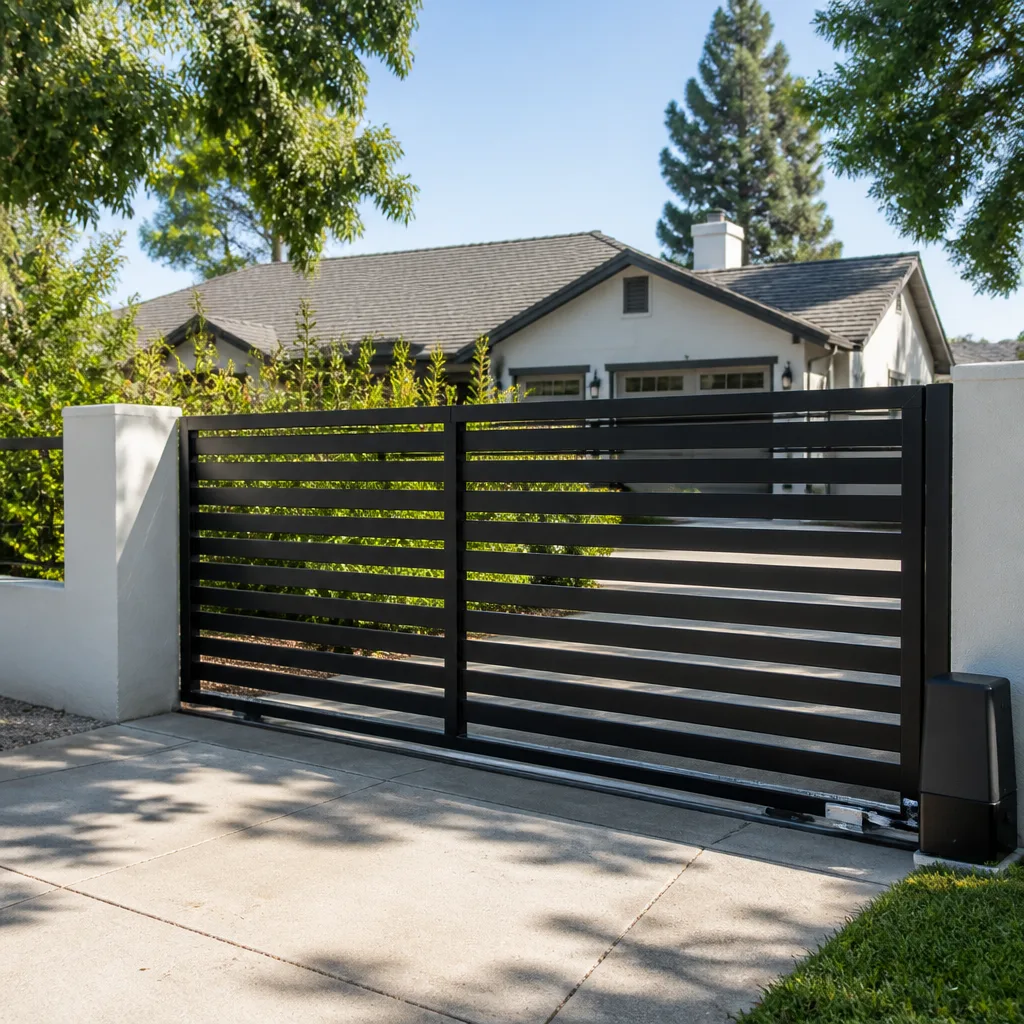

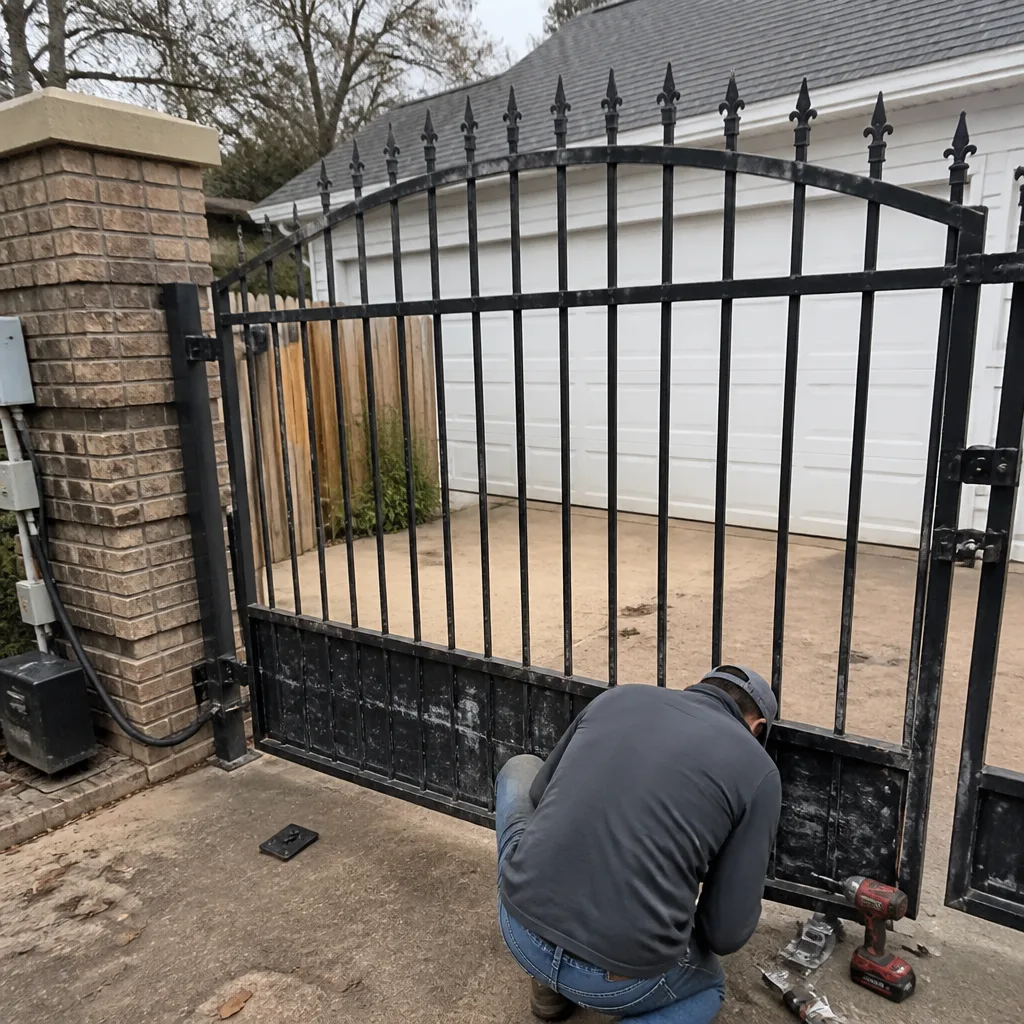 Before
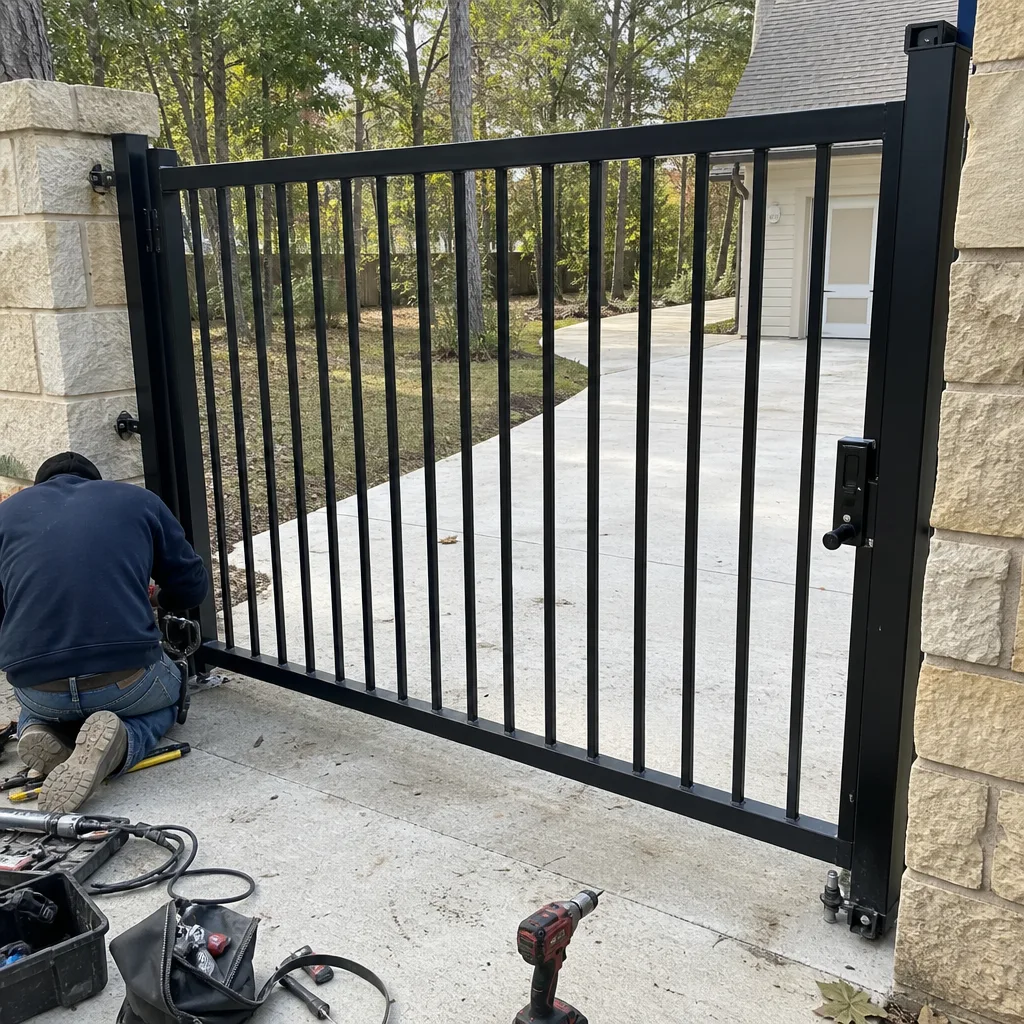 After
After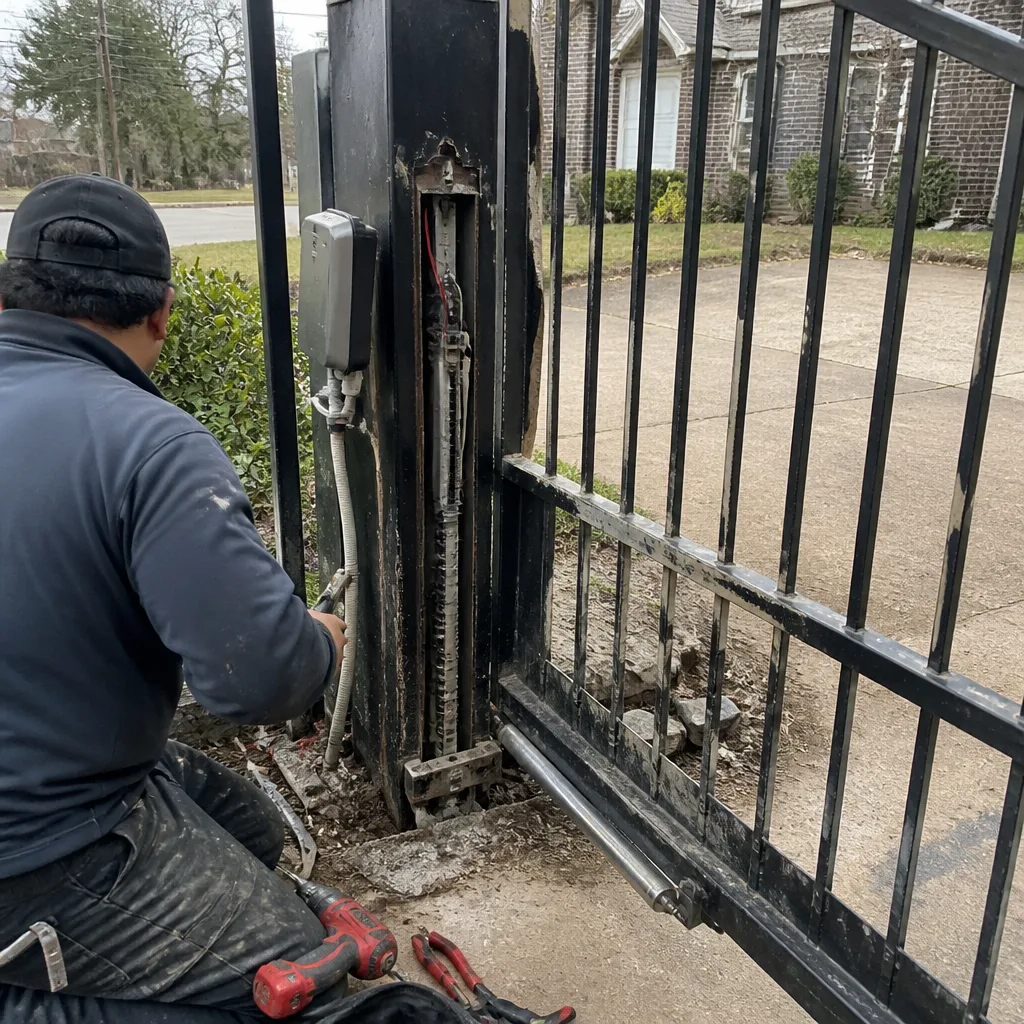 Before
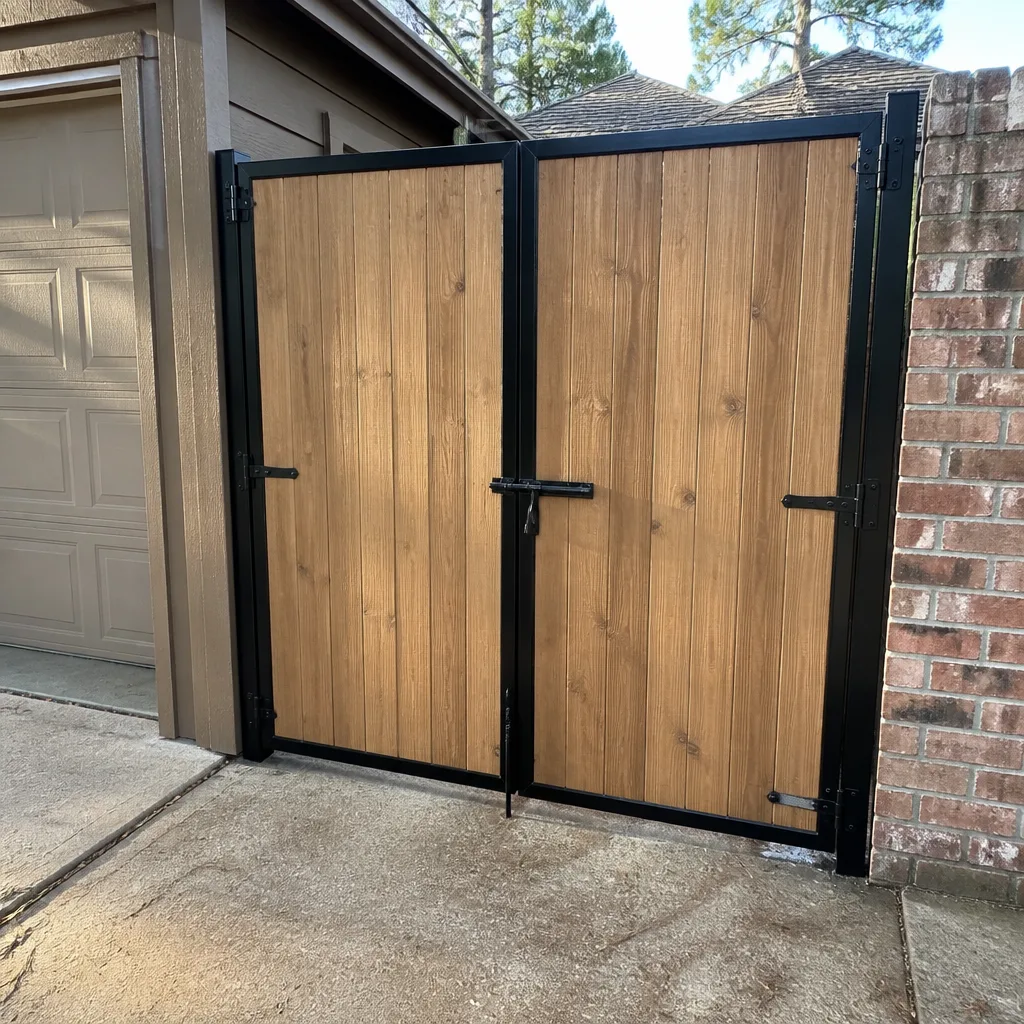 After
After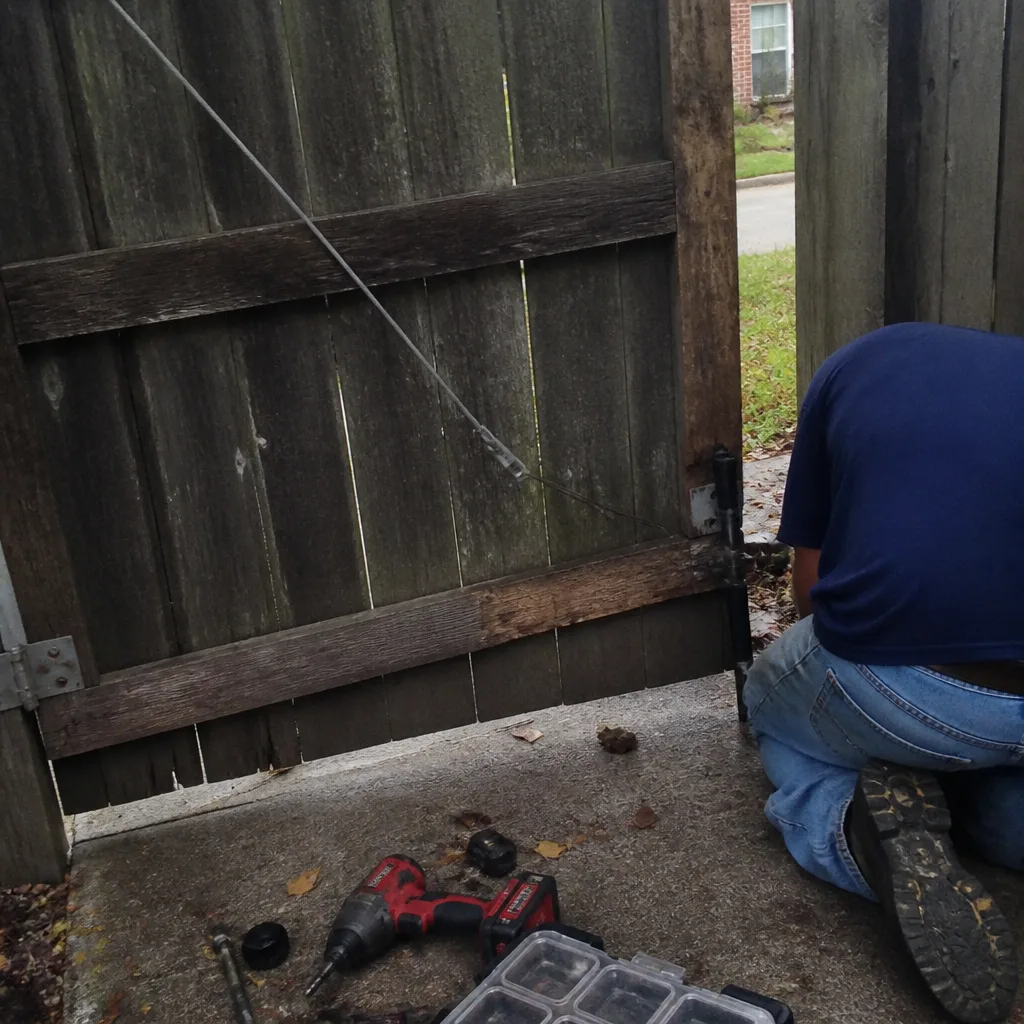 Before
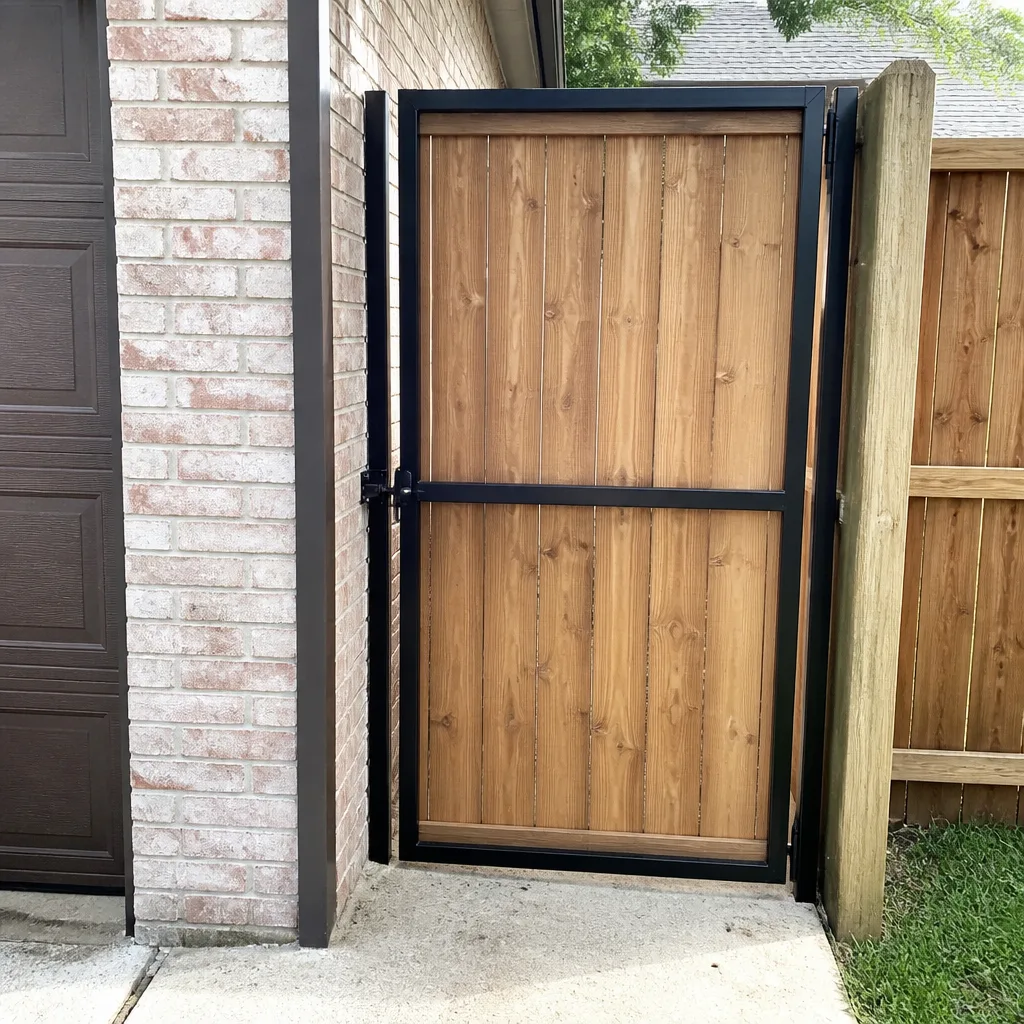 After
AfterGate Repair Maintenance Checklist for Humble Homeowners
Most gate maintenance checklists fail for a simple reason: they ask you to “check the hinges” without ever telling you what the hinge looked like, measured, or sounded like the last time. Without a baseline, you’re not maintaining anything. You’re just looking at hardware and hoping. In Humble, where Gulf humidity cycles attack metal year-round, hoping is expensive. This guide gives you a maintenance system built around documentation: recording measurements, photographing reference points, and creating a record any future technician can use to spot drift or wear without guessing. You’ll learn what to record at each visit, which Humble-specific schedules actually matter, and how to request written proof that the checklist was genuinely completed.
Quick Answer
A gate maintenance checklist for Humble homeowners should record baseline measurements at every visit: limit-switch positions, battery float voltage readings, hinge-bolt torque specifications, and dated photo references of all wear points. The checklist is only as reliable as the documentation behind it. In Humble’s heat and humidity, plan a light quarterly inspection plus a deeper rust-check and component-log review every six months, anchored to the region’s late-summer storm season rather than a generic annual calendar.
Table of Contents
- Why Most Gate Maintenance Checklists Fail
- The Baseline: What to Record Before You Do Anything
- Humble-Specific Rust Check: Timing Matters More Than Frequency
- Building a Photo Log That Actually Works
- Preventive Tasks vs. “Looks Maintained” Tasks
- The Written Sign-Off: What to Ask For After Every Service
- A Humble Seasonal Maintenance Schedule That Holds Up
- Common Mistakes to Avoid
- When to Call a Professional
- Frequently Asked Questions
- The Bottom Line
BeforeAfterWhy Most Gate Maintenance Checklists Fail
The typical homeowner checklist reads like a to-do list from a hardware-store pamphlet: lubricate hinges, check bolts, listen for noise. Nothing wrong with any of those tasks, but none of them create a record. Six months later, when the gate starts binding, you have no idea whether that hinge was already stiff in March or whether the bolt was loosening before the last storm. You are back to square one, paying a technician to diagnose from scratch.
The fix is not more tasks. The fix is documentation. A maintenance checklist protects you only if it records what was there before. That means torque readings, not just “tightened bolts.” It means limit-switch positions, not just “motor sounds fine.” It means a photograph of the hinge plate from the same angle every quarter, so wear shows up as drift between images. This is the same discipline Vance Gate Repair Humble home brings to every job: written evidence, not verbal assurance.
In Humble, this matters more than in drier climates. Galvanized steel oxidizes faster in high humidity, and the seven-month stretch from April through October pushes rust into hinges, brackets, and motor housings at a rate most national checklists do not account for. A checklist that says “inspect annually” will miss corrosion that formed in May and caused a failure in September. Your checklist needs to be local, and it needs to be evidence-based.
Here is the core distinction: task-based maintenance tells you what you did. Record-based maintenance tells you what you had. The second one is the only kind that helps you catch a failure before it strands you outside your own driveway.
The Baseline: What to Record Before You Do Anything
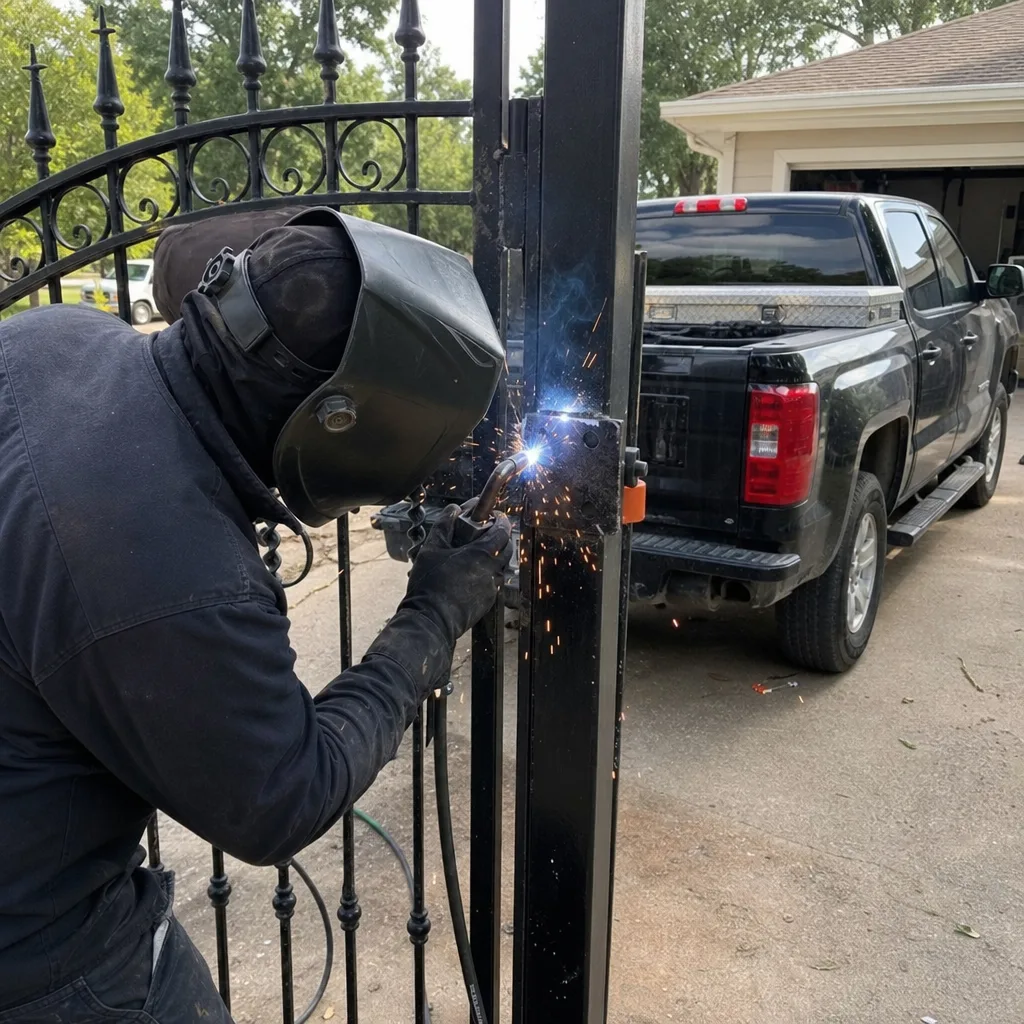
Before you tighten, lubricate, or adjust anything, write down what you are starting with. If this is your first maintenance pass, accept that the baseline you create today is partial. It becomes more useful every time you update it. Here is what to record.
1. Limit-Switch Positions
The limit switch tells the motor where to stop. On a swing gate, it sets the open and closed angles. On a slide gate, it sets travel distance. If the position drifts, the gate over-travels and slams into the post, or under-travels and leaves an opening. Write down the current setting in degrees for swing gates or in inches of travel for slide gates. Most FAAC and BFT control boards display these settings digitally; write down the exact number on the display. If your motor is a Linear or Viking model with physical limit cams, photograph the cam position before touching anything.
Why this matters: six months later, a technician can read your log, compare it to the gate’s behavior, and know instantly whether the limit shifted or the motor controller is compensating for mechanical wear. Without the baseline, that diagnosis takes longer and costs more.
2. Battery Float Voltage
Many Humble residential gates run on DC motors with battery backup. The float voltage, measured at the battery terminals while the charger is active, should typically read between 13.2 and 13.8 volts for a 12-volt system. Record the exact number, not just “looks fine.” A reading of 12.4 might still open the gate, but it signals a battery that is no longer holding a full charge. That is the difference between replacing a $60 battery on your schedule and discovering a dead opener after a summer thunderstorm knocks out line power.
If you are uncomfortable probing battery terminals, note that in your log and ask a technician to add the reading to their service record. Gate Motor & Opener in Humble service visits should always include this measurement, and you have a right to see it in writing.
3. Hinge-Bolt Torque Spec
Every hinge bolt on a swing gate has a manufacturer torque spec, usually between 25 and 45 foot-pounds depending on bolt diameter and plate material. Tightening “until it feels snug” is not a spec. Get an inexpensive click-type torque wrench, find the spec for your gate’s hinge hardware, and record the actual number you applied. If a bolt required more than a quarter-turn, note that too. Repeated loosening between visits tells you something: the post is flexing, the gate is out of balance, or the threads are pulling. All three require correction before they become failures.
4. Photo References
Photograph the same six points every visit: each hinge plate, the motor mount, the chain or belt tensioner, the photo-eye housings, and the control board. Same angle, same distance. These are your reference points for spotting drift. More on this in the photo log section below.
Humble-Specific Rust Check: Timing Matters More Than Frequency
National checklists say “check for rust annually.” That advice is wrong for Humble. Our climate produces two distinct rust pressures. The first is the long humid stretch from April through September, when ambient moisture sits on metal for months. The second is the post-storm flush: after a heavy system pushes salt-laden Gulf air inland, any exposed iron, steel, or poor-quality galvanized coating oxidizes rapidly.
Run your rust check twice: once in March, before the humidity locks in, and once in late September or early October, after the storm season begins to fade. Both checks should cover the same five zones.
- Hinge pins and plates: surface rust here is reversible; pitting is not. Record severity with a photo and a one-word grade: clean, haze, scale, flake, pit.
- Motor housing and mounting bolts: rust at the mount means water is pooling or running along the frame. Find the path, not just the symptom.
- Weld seams: gates fabricated with MIG welds rust at the seam first. Grade the seam condition and photograph it.
- Chain or belt tensioner threads: if the adjuster threads are corroded, tension adjustments become impossible. Treat or replace before you need to adjust.
- Photo-eye and safety-edge wiring fittings: corroded fittings cause intermittent safety faults. These are the most common source of “gate reverses for no reason” calls we see in Humble.
When you find rust, record what you did: wire-brushed, primed, painted, replaced. If your log shows a component degrading across consecutive checks despite treatment, replace it. Cleaning rust off the same bracket every six months is not maintenance; it is postponing a $40 bracket until it snaps.
Building a Photo Log That Actually Works
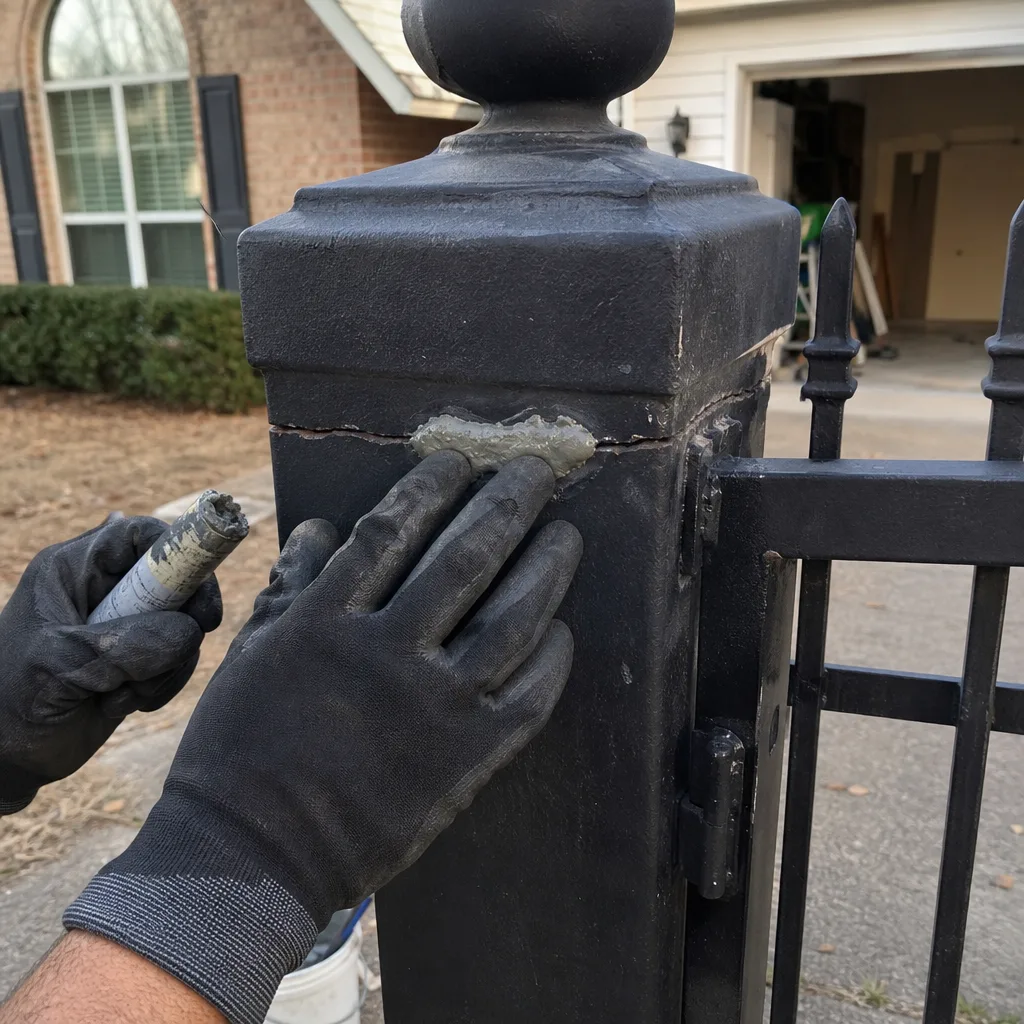
A photo log fails when it is a folder of random gate pictures on your phone. It works when it is structured: consistent positions, consistent lighting, consistent file names, and notes attached to date and finding. Here is the method we recommend to Humble homeowners, and it takes about 10 minutes per visit once you get the rhythm.
Step 1: Pick Your Six Reference Points
Choose the same six points every time: left hinge plate, right hinge plate (for swing gates) or both end posts (for slide gates), motor mount, tensioner, both photo-eye housings, control board. These points capture the wear that leads to real failures.
Step 2: Take the Photo From the Same Spot
Stand in the same position, aim at the same angle, use the same orientation. Your phone’s camera roll will timestamp the image. If lighting changes seasonally, that’s fine; the point is consistency, not beauty.
Step 3: Name the File With Date and Point
Use a simple format: 2026-03-15-left-hinge.jpg. It takes five seconds and makes the log searchable later. A folder called “gate-pics” with 40 untitled images is noise. A folder with dated, named files is a diagnostic tool.
Step 4: Add a One-Line Note
After each photo, one line in a note app: “left hinge: haze rust, treated with primer,” or “motor mount: no change from October.” Thirty words. That note is what turns a picture into a baseline.
The payoff: when something fails in 2027, any technician can open your log and see exactly what the component looked like in March of 2026. They are not guessing whether the rust is new. They know. We have seen this single habit cut diagnostic time in half on Gate Repair in Humble callouts, because the evidence is already organized before we arrive.
Preventive Tasks vs. “Looks Maintained” Tasks
Not all maintenance is equal. Some tasks genuinely prevent failure. Others only make the gate look maintained while contributing nothing to reliability. Knowing the difference saves you money in Humble, where every service call competes with a dozen other home-repair priorities.
Tasks That Prevent Failure
- Recording limit-switch drift: a 2-degree drift caught early is a 10-minute board calibration. A 10-degree drift ignored is a bent gate frame.
- Checking battery float voltage: low voltage caught in March means a battery replacement before storm season. Missed, it means a dead gate the first time the power drops.
- Lubricating hinge pins and roller tracks with the correct product: a white lithium grease or a dry-film lubricant, not WD-40, which displaces the durable lubricant and accelerates wear on high-load points.
- Replacing corroded safety-edge connectors: intermittent safety faults are almost always moisture-related, and Humble provides the moisture year-round.
- Torquing hinge bolts to spec: correct tension prevents the bolt from working loose and the hole from ovaling out.
Tasks That Only Make It Look Maintained
- Wiping down the gate exterior: if it’s cosmetic, it is not maintenance. Clean metal still corrodes.
- Hosing off the track: water into the track bed in humid climates accelerates the rust you are pretending to remove.
- “Inspecting” without recording anything: an inspection with no documentation is a walk around the driveway. It produces no evidence and changes no outcomes.
- Spraying every moving part with a single all-purpose product: one product on hinges, rollers, chains, and plastic gears means at least three of those surfaces got the wrong lubricant.
Here is the test: if you cannot point to a number, a photo, or a written note before and after, you did not perform preventive maintenance. You performed a visual check. Visual checks have their place, but they do not stop failures. Documentation does.
The Written Sign-Off: What to Ask For After Every Service
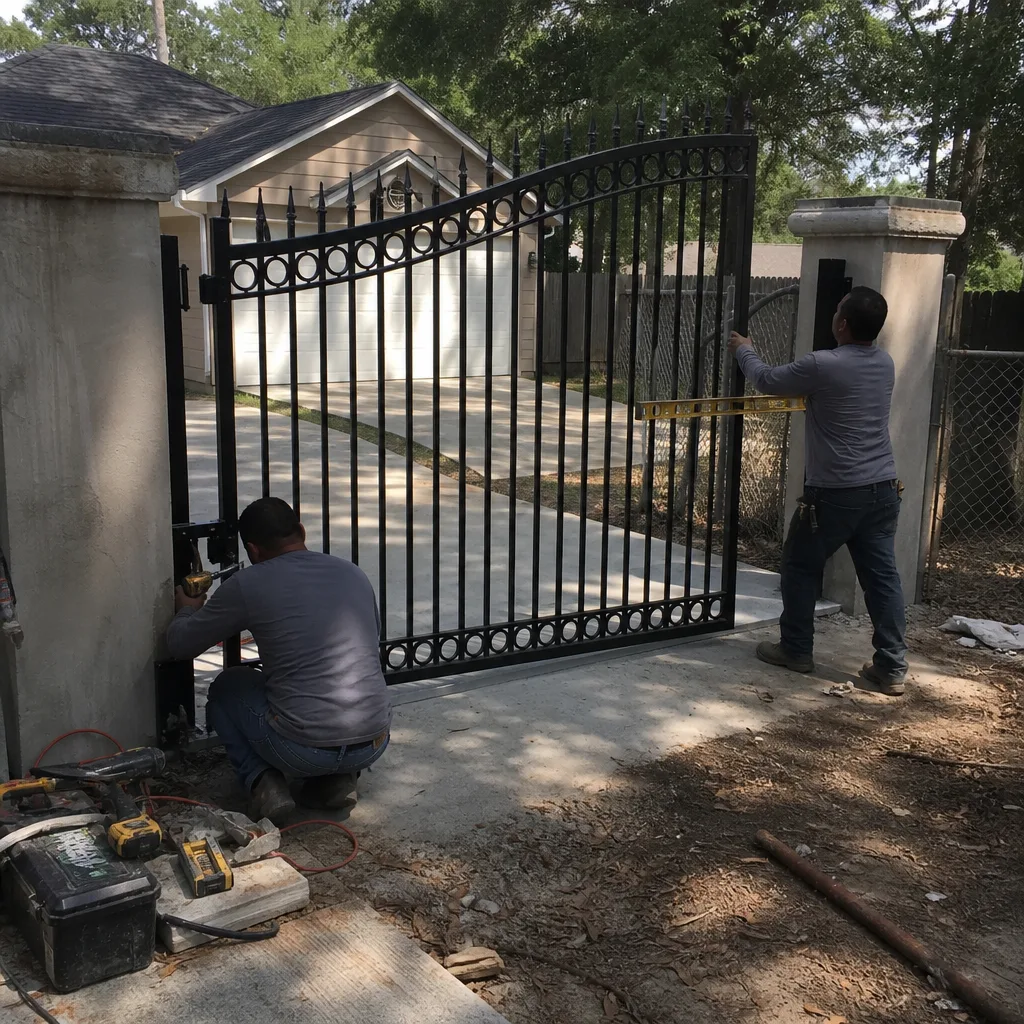
When a gate contractor finishes a maintenance visit, you receive an invoice and a handshake. That is not enough for Humble homeowners who want proof the checklist was actually done. Here is what to ask for, and why it matters.
1. A Dated Task List, Not Just a Price
Ask for a written breakdown of what was performed: “Lubricated both hinge pins with white lithium. Torqued hinge bolts to 35 ft-lbs. Recorded battery float voltage at 13.6V. Photographed limit switch position.” If the invoice only says “maintenance visit,” you paid for a promise, not a record. Under Gate Installation in Humble and repair work alike, a useful record itemizes what was touched and what was measured.
2. The Actual Measurement Values
Any maintenance visit on a motorized gate should include numbers: float voltage, limit positions, torque readings, chain or belt deflection. If the technician cannot produce a single number, they did not measure anything. That is a red flag.
3. A Photo Log Reference
Ask for photos of the wear points, taken during the visit. The best contractors do this automatically. Every Vance Gate Repair Humble visit includes a documented photo record of what was found, what was adjusted, and what was installed, left with the homeowner and filed in the job record. For professional Gate Repair services, this documentation is standard. It is not an extra. It is the evidence the work happened.
4. A Sign-Off with a Name
The technician who performed the work should sign the record and print their name. If something fails 90 days later, you know who to reference. If the company will not put a name on the page, that tells you something too.
A written sign-off template does not need to be complex. One page. Date, technician name, task list with measurements, photo list, signature. If a contractor resists this, ask them what they are protecting. In our experience, the contractors who document every visit are the ones who do not get called back for the same failure twice.
A Humble Seasonal Maintenance Schedule That Holds Up
Generic checklists say “quarterly.” Humble’s climate says otherwise. Here is a schedule that matches the actual conditions your gate faces, with the documentation task attached to each pass.
March: Pre-Humidity Baseline
Before the Gulf humidity locks in, complete your first rust-grade pass. Photograph all six reference points. Record limit positions and battery float voltage. Torque hinge bolts. Treat any surface rust with primer and note it. This is your clean-slate baseline for the year.
June: Light Mid-Summer Check
The gate has been through heat and humidity for two months. Check the photo-eye housings for moisture intrusion. Listen for new noise at the motor mount. Verify the chain or belt deflection has not changed. Add one paragraph to your log. No deep work required unless the notes show drift.
Late September or Early October: Post-Storm Rust Pass
Run the full five-zone rust check again. Compare your March photos side by side with current photos. Grade any new corrosion. Tighten hinge bolts to spec and record the torque. This is the pass that catches storm-season damage before the cooler months expose it as a mechanical failure.
December: Year-End Record Review
Do not just inspect the gate. Review the year’s log. Did one component require attention at every pass? That is a part asking to be replaced. Did the battery voltage creep down across the year? Budget for a battery. The year-end review is where your documentation pays out: you have four data points per component instead of one vague memory.
Four passes, about 45 minutes each, plus a log entry. That is the maintenance burden for a properly documented Humble gate. Compare that to a single emergency callout where a technician has to diagnose a failure cold, and the tradeoff becomes obvious.
Common Mistakes to Avoid
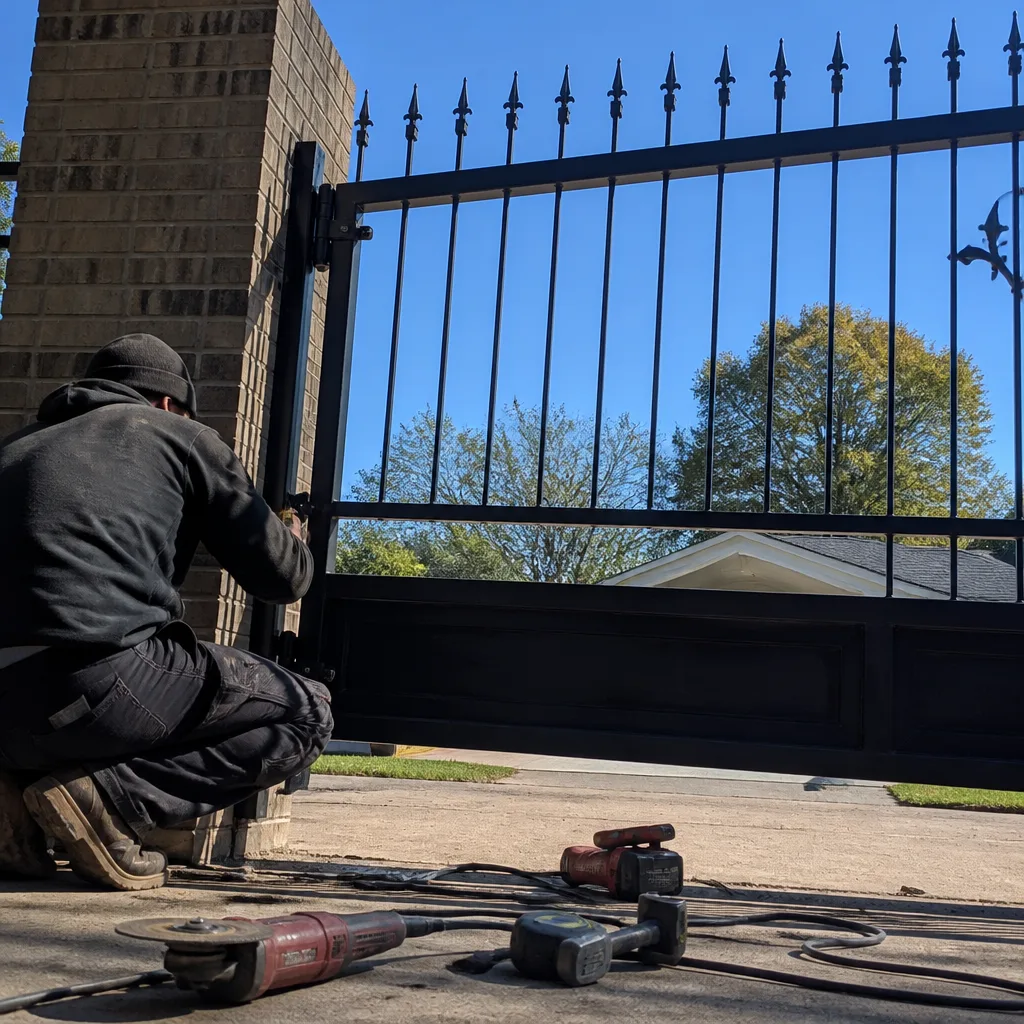
- Lubricating without cleaning first. Applying fresh grease over old, grit-loaded grease traps abrasive particles against the pin and accelerates wear. Clean the surface, then lubricate.
- Using WD-40 on hinges and rollers. It is a solvent, not a lubricant. It strips the existing coating and leaves the metal with less protection than it had before.
- Ignoring battery voltage because the gate still opens. A battery that tests low will fail when line power drops. In Humble’s storm season, that is a when, not an if.
- “Tightening” bolts without a torque wrench. Overtightening a hinge bolt can crush the bushing or strip the threads. Undertightening lets it back out. Neither is maintenance.
- Running the gate with a misaligned photo-eye by bypassing it. The photo-eye is a safety device. If it is faulting, find the misalignment or replace it. Bypassing it to “at least get the gate working” removes the one thing stopping your gate from closing on a child or a vehicle.
- Treating a maintenance visit as complete without a written record. If there is no paper and no photo, there is no proof. In a dispute, a verbal assurance means nothing.
- Doing nothing until the gate fails outright. Gates rarely fail suddenly. They degrade across months, and the degradation shows up in the measurements you were not taking. By the time the gate stops moving, the repair is usually a multiple of what the earlier fix would have cost.
When to Call a Professional
Record-keeping and light checks are within a careful homeowner’s reach. Some situations are not. If you see a snapped torsion spring, a cracked weld, a control board showing error codes you do not recognize, or a gate that makes a grinding noise you have not heard before, stop. Motorized gates carry real force, and the high-energy components, springs, cables, and motors, can cause serious injury if handled wrong. Do not attempt to adjust a spring or cable under tension yourself.
If your log shows a component degrading across three consecutive maintenance passes, that is also a professional call. The pattern tells you the part is done regardless of how it looks today. Vance Gate Repair Humble offers free estimates in Humble, call (346) 423-6136. Bring your maintenance log to the appointment. A technician who can see your baseline measurements will diagnose faster and with more confidence than one starting from zero.
Frequently Asked Questions
Run four maintenance passes per year: March, June, late September or early October, and December. The two deeper passes are the March pre-humidity baseline and the post-storm rust pass in early fall. Humble’s Gulf humidity and storm season make a generic annual schedule insufficient, especially for steel gates and motor-mounted hardware.
Record limit-switch positions, battery float voltage, hinge-bolt torque readings, and chain or belt deflection. Photograph the same six wear points at every pass. Without these baselines, later inspections cannot distinguish normal wear from drift that signals an approaching failure.
Yes. Every Vance Gate Repair Humble visit includes a documented photo record of what was found, what was adjusted, and what was replaced, left with the homeowner and filed in the job record. You can also explore more guides & resources on gate maintenance. The written price is delivered before any work starts, and no work proceeds without your sign-off on the scope. Call (346) 423-6136 to discuss a maintenance visit.
Corroded safety-edge and photo-eye wiring fittings are the most common, driven by Gulf humidity and storm-season moisture. These failures show up as intermittent gate reversals or refusal to close. Early signs include rust at the fitting and a fault that clears when the fitting is dried out.
No. Use a white lithium grease or a dry-film lubricant on metal-to-metal contact points. WD-40 is a solvent and water displacer, not a durable lubricant. It strips the existing coating and leaves the surfaces more vulnerable than before.
A basic documented maintenance visit in Humble typically runs between $95 and $185 for a single residential gate, depending on the motor type and the condition of the hardware. More involved work, like replacing a corroded hinge or a low battery, adds to that. Vance Gate Repair Humble provides a written price before any work begins, so there is no surprise invoice at the end. Call (346) 423-6136 for an exact quote on your gate.
The Bottom Line
A gate maintenance checklist is only as valuable as the evidence it creates. In Humble’s humidity and storm patterns, the difference between a gate that lasts 15 years and one that fails in five is often a matter of recorded measurements, dated photos, and rust treatments applied at the right time. Record baseline limit positions, battery voltage, and torque readings. Photograph the same six points every pass. Water the schedule to Humble’s actual climate, not a national pamphlet. And when a contractor finishes a visit, require a written sign-off with numbers and photos. Maintenance without documentation is just a walk around the driveway. Documentation is what keeps the gate moving and the repair bill small.
Written by Adrian Vance, Owner at Vance Gate Repair Humble, serving Humble since 2014.