
Last updated September 20, 2026
Free on-site gate assessment - hinges, posts, and your LiftMaster or Nice gate operator checked before anything is quoted
The assessment is free and the quote is the invoice.


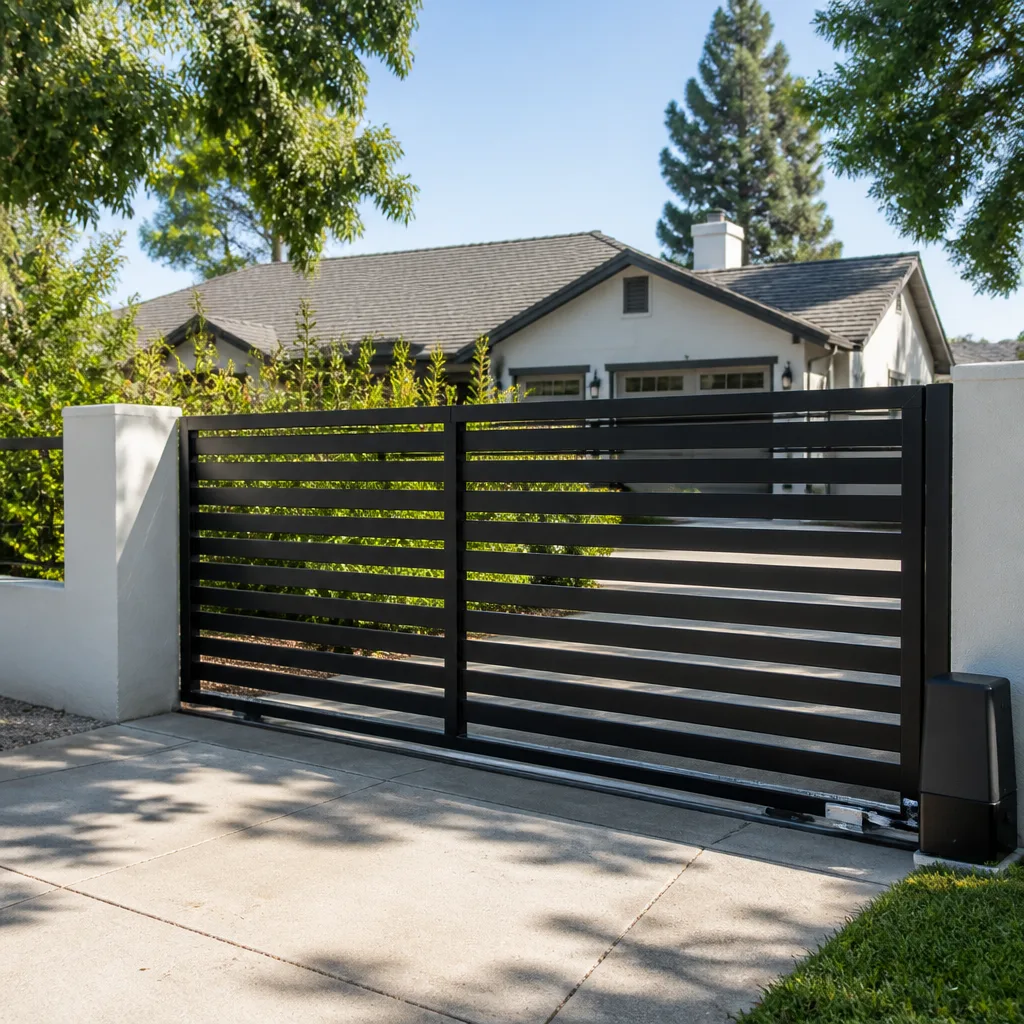

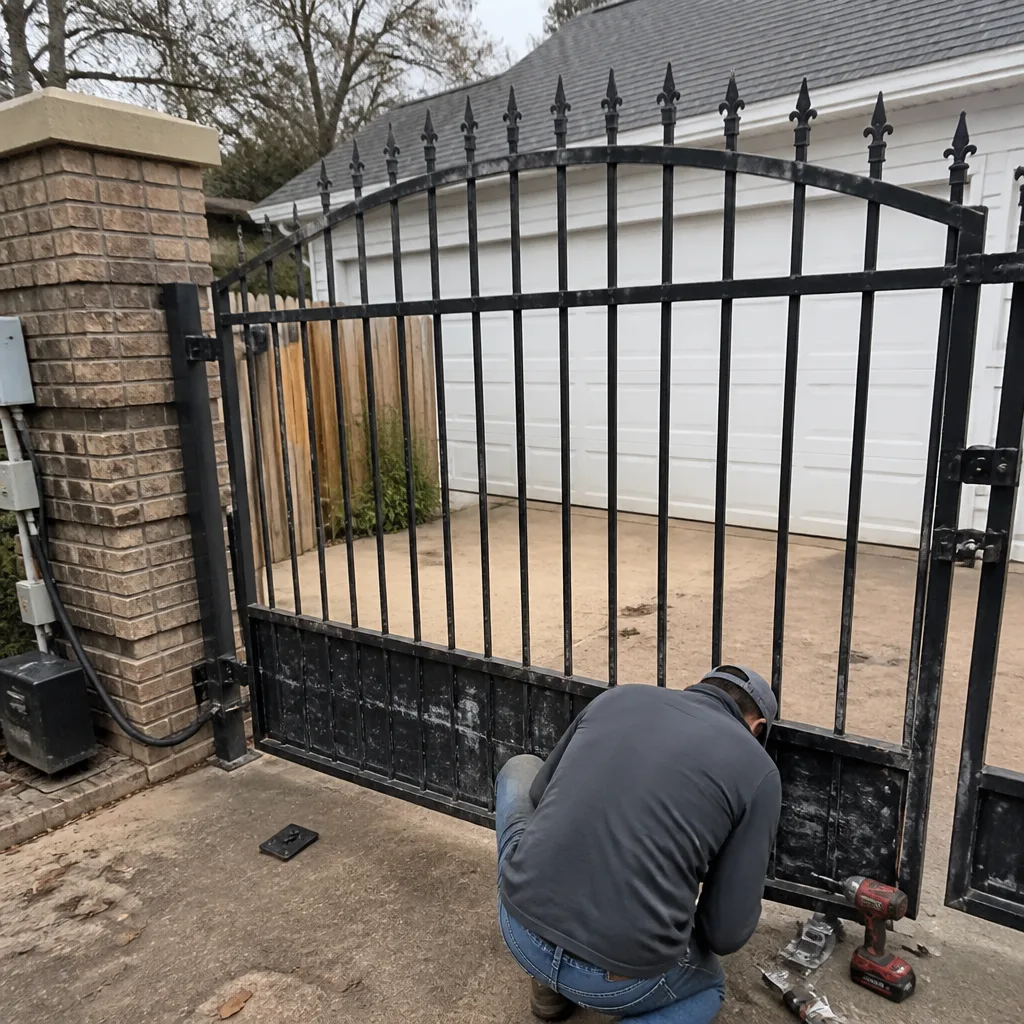 Before
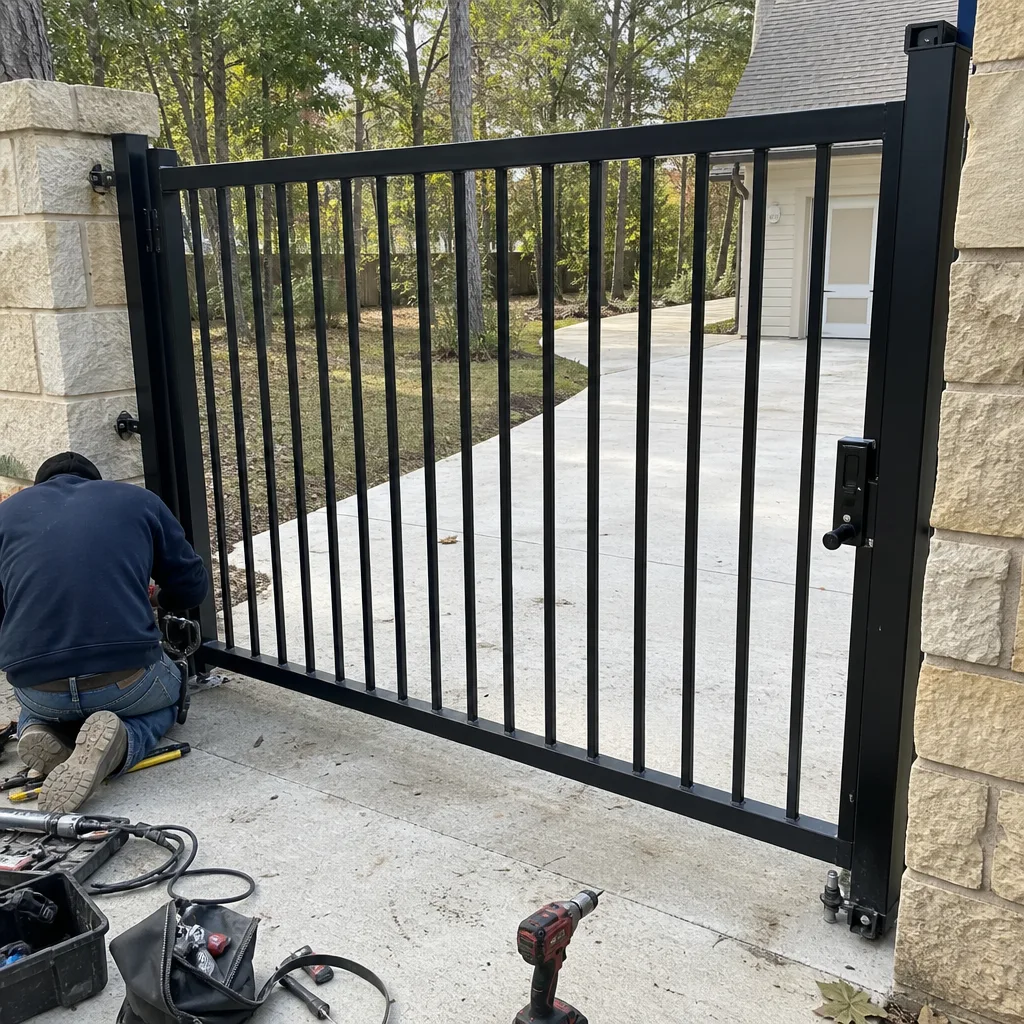 After
After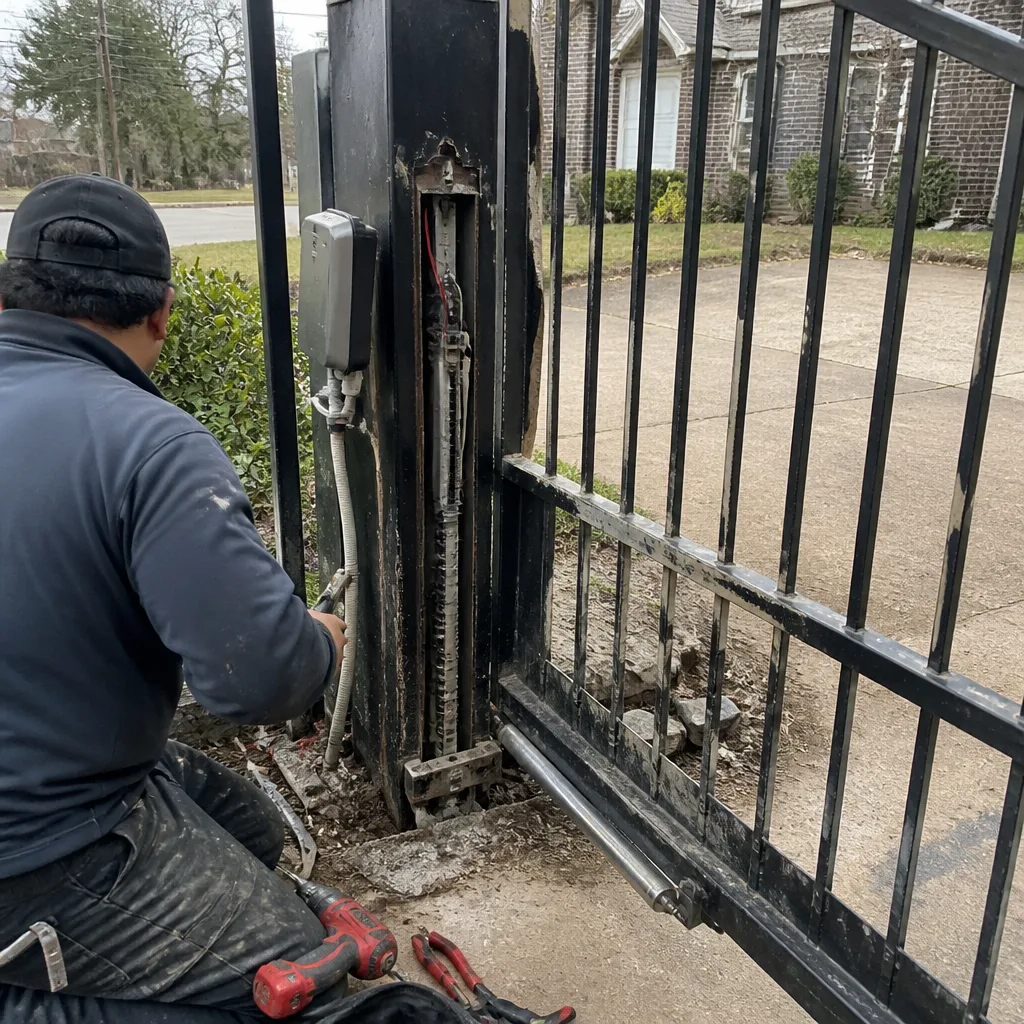 Before
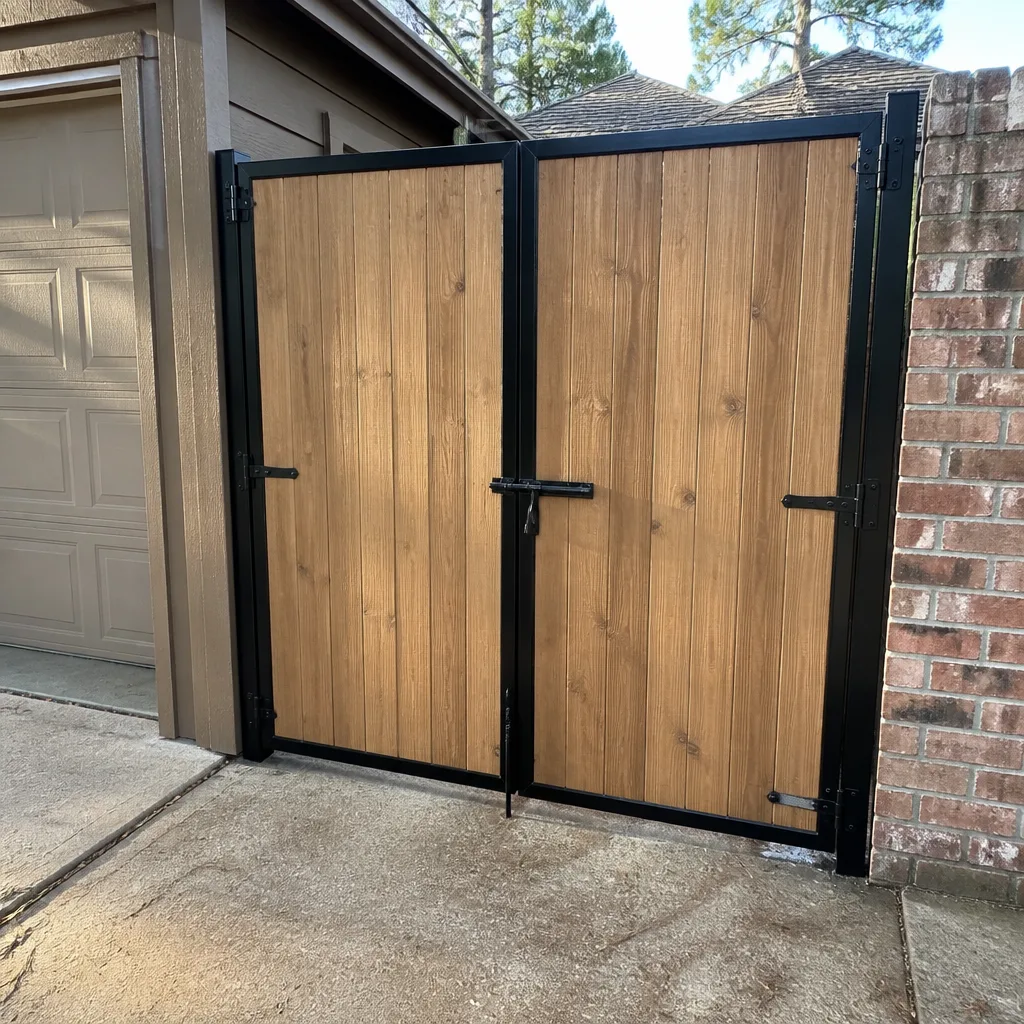 After
After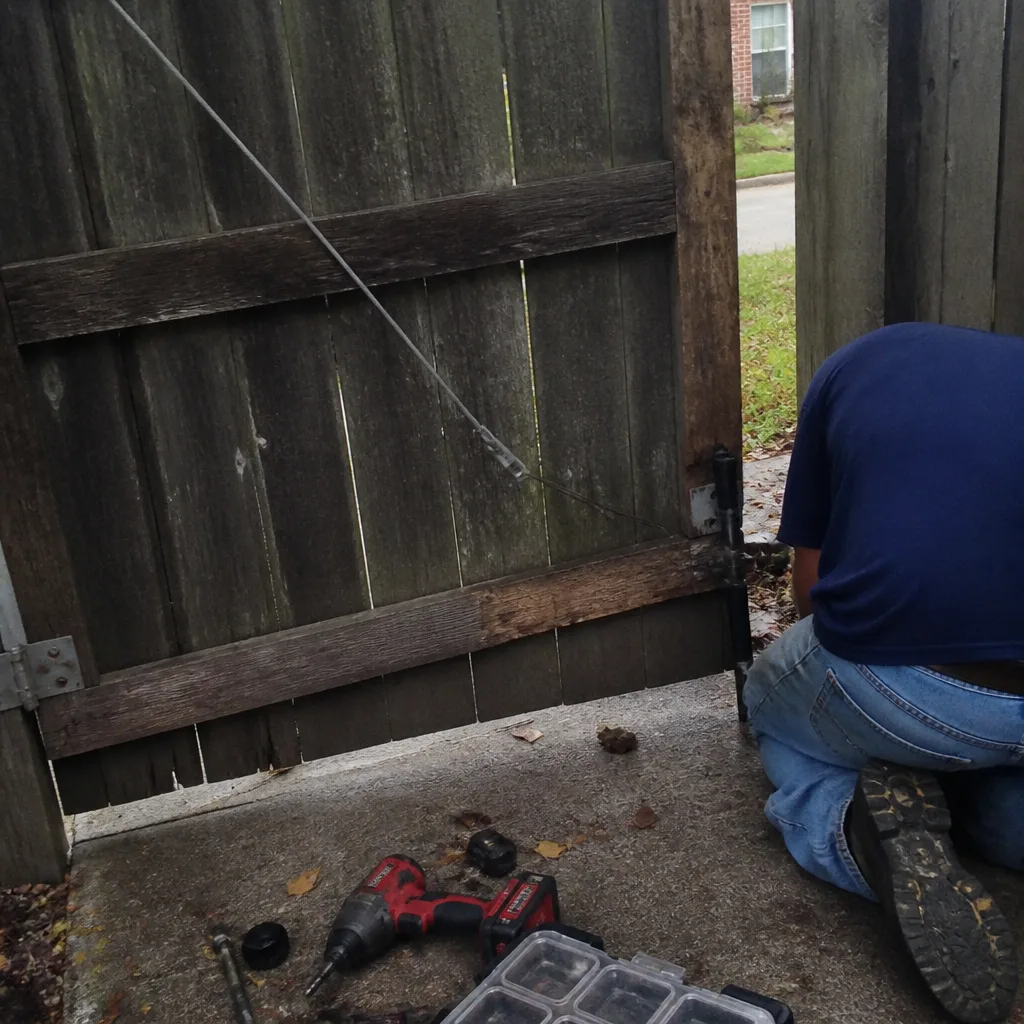 Before
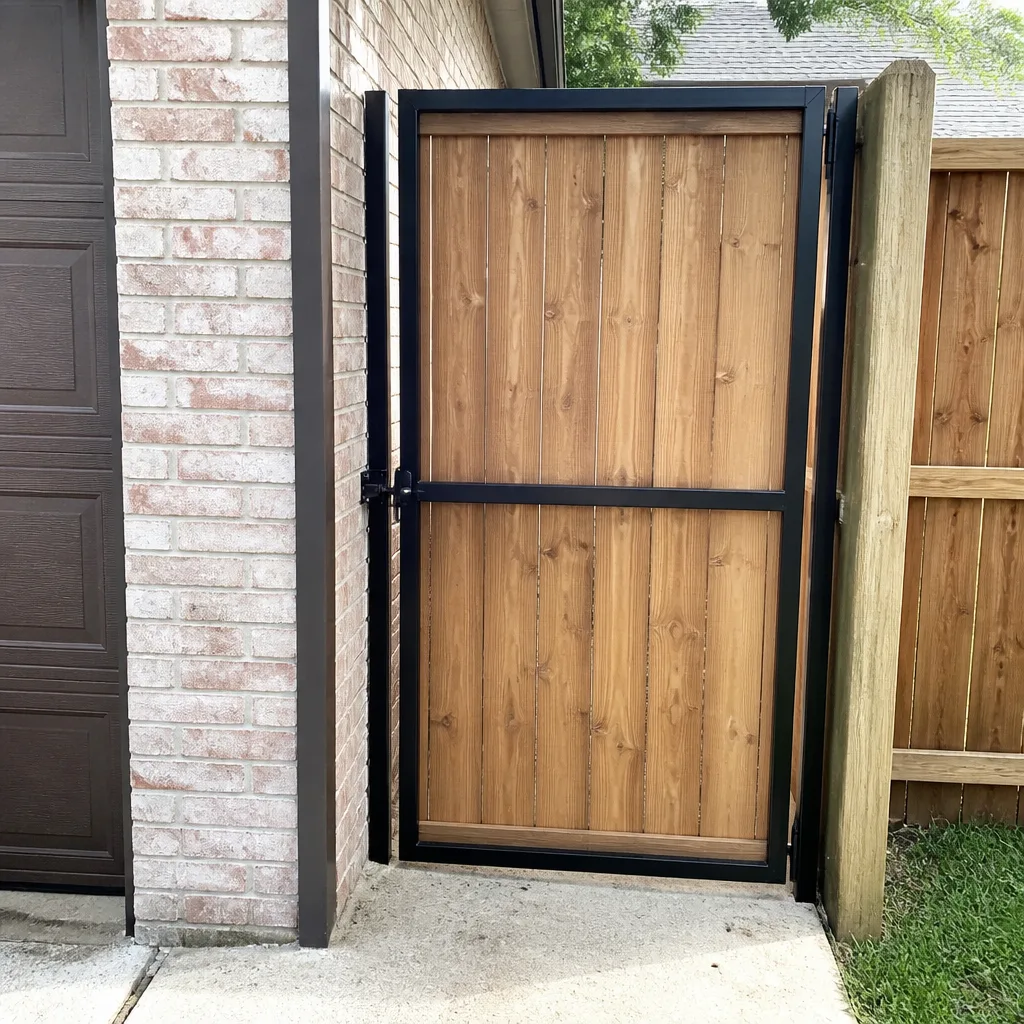 After
AfterDIY vs Professional Gate Repair: The Humble Homeowner’s Decision Guide
Here’s a number that might surprise you: a Humble homeowner replaced their own gate operator using a YouTube tutorial and saved $280 on labor. Eighteen months later, a different technician spent 90 minutes reverse-engineering non-standard wiring before touching the actual problem. That diagnostic labor cost $185. The documentation gap ate most of the savings. This guide and our more guides & resources explain why the DIY-versus-professional question isn’t really about skill level. It’s about whether the repair requires a documented baseline to be done correctly. By the end, you’ll know which repairs are genuinely safe for a careful homeowner in Humble, which ones create hidden liability, and what a professional repair should leave behind that makes future maintenance easier, not harder.
Quick Answer
DIY gate repair is the right call for mechanical tasks like hinge lubrication, minor track clearing, and remote reprogramming, which don’t alter the system’s electrical state. Professional Gate Repair services are the right call for anything touching wiring, operator boards, limit-switch calibration, or motor mounting, because those repairs create undocumented system state that makes every future repair harder and more expensive. If the repair requires knowing what the system looked like before you touched it, it requires a professional who will record what it looks like after.
Table of Contents
- The Documentation Gap: Why Most DIY Gate Repairs Fail Slowly
- What’s Genuinely DIY-Friendly: Mechanical Repairs That Won’t Haunt You
- Where DIY Creates Hidden Liability: Wiring, Limit Switches, and Operator Boards
- How to Evaluate a YouTube Gate Repair Tutorial Before You Pick Up a Tool
- What a Professional Repair Should Leave Behind
- Humble-Specific Factors That Change the DIY Calculus
- The Decision Rule: One Question That Resolves Almost Every Situation
- Common Mistakes to Avoid
- When to Call a Professional
- Frequently Asked Questions
- The Bottom Line
BeforeAfterThe Documentation Gap: Why Most DIY Gate Repairs Fail Slowly
Most DIY gate repairs don’t fail immediately. They fail slowly, months later, in ways that are expensive to diagnose. The reason is what we call the documentation gap.
When a professional technician services a gate, they leave behind a record. That record includes the make and model of the motor, where the limit switches were set, which wiring configuration was used, what part numbers were installed, and photographs of the finished work. When a homeowner does the same repair themselves, they rarely document any of this. They get the gate working, they put the cover back on, and they move on with their day.
The problem arrives later. When the gate fails again or a different technician is called in for unrelated work, that person has to reconstruct what the previous person did. This is called reverse-engineering undocumented system state. It takes time. In real terms, it costs between $80 and $200 in diagnostic labor before the actual repair even begins.
That’s the hidden cost of DIY gate repair. Not the risk of doing it wrong in the moment. The risk is doing it workably right but leaving behind a system that no one, including the next technician, can quickly understand.
This is where Vance Gate Repair Humble takes a different approach. Since 2014, Adrian Vance has applied a commercial access-control documentation habit to residential gates: every visit leaves a written record of what was found, what was set, and what was installed. The homeowner keeps a copy. The job file keeps a copy. No future technician has to guess.
What’s Genuinely DIY-Friendly: Mechanical Repairs That Won’t Haunt You
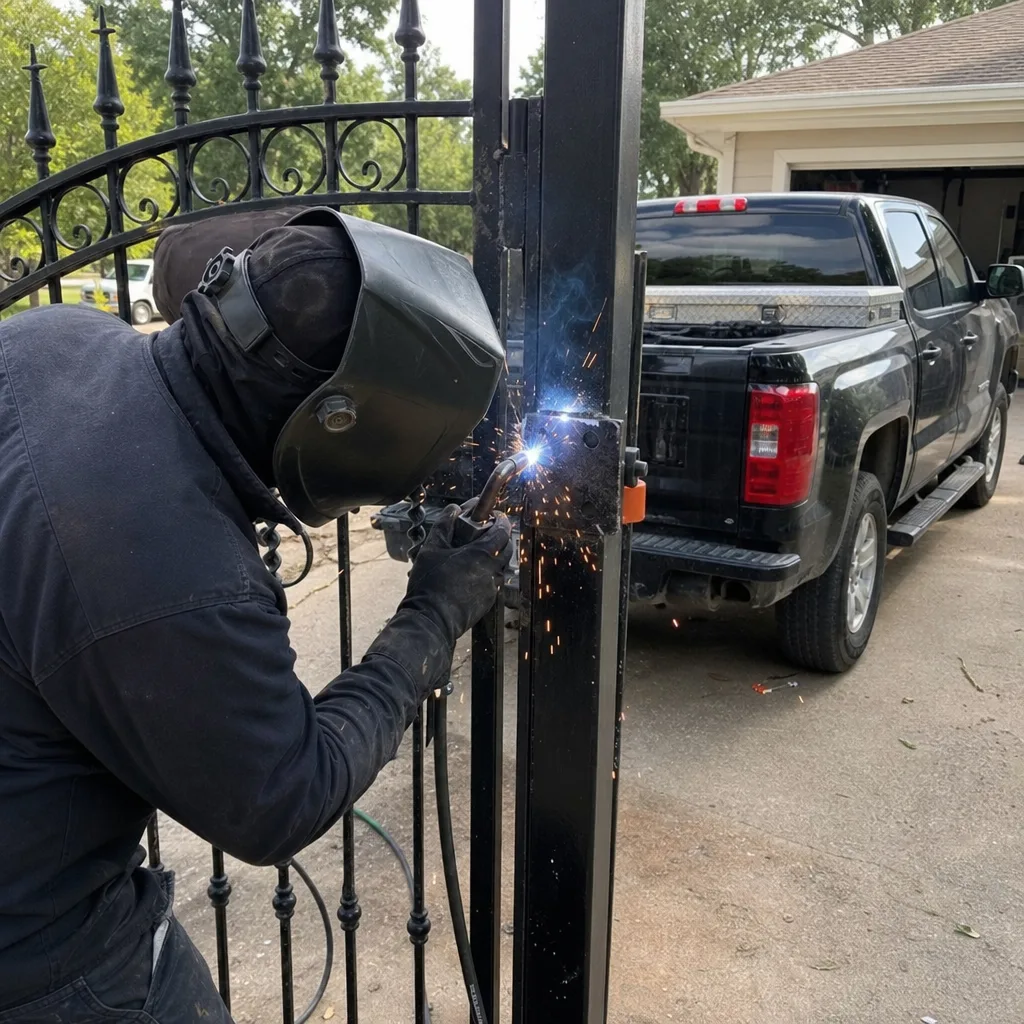
Let’s be straight about what a careful homeowner in Humble can handle without creating problems downstream. These are mechanical tasks that don’t alter the electrical state of the system. They’re safe, they’re effective, and they don’t require documentation because they don’t change how the gate operates.
Hinge Lubrication
Metal-on-metal wear is the most common cause of gate noise and slow operation in Humble, especially during humid summer months when rust accelerates. Lubricating hinges is genuinely straightforward: use a silicone-based or lithium-based lubricant (not WD-40, which is a solvent, not a long-term lubricant), apply it to the hinge pins and pivot points, and cycle the gate open and closed a few times to work it in. This is a 20-minute job that anyone can do safely.
Minor Track Clearing
Sliding gates collect debris in the track. Leaves, dirt, small rocks, and after a good Humble thunderstorm, mud. Clearing the track is a matter of removing visible obstructions and brushing out accumulated grime. If the gate still binds after clearing, that’s a sign of a deeper problem, likely wheel or track wear, which is worth a professional look.
Remote Reprogramming
Adding a new remote or clearing an old one from the system is a button-press sequence on most LiftMaster, FAAC, BFT, and Linear openers. The specific sequence varies by brand and model, but the owner’s manual usually includes step-by-step instructions. This doesn’t require opening the operator housing or touching any internal wiring. It’s programming, not repair.
Visual Inspection for Obvious Damage
Walking the gate line once a month to look for cracked wheels, loose bolts, sagging hinges, or misaligned photo-eyes is valuable preventive maintenance that any homeowner can and should do; see our Gate Repair Maintenance Checklist for Humble Homeowners. You’re not fixing anything. You’re catching problems early, before a small issue becomes a dead motor or a gate off its track.
These tasks share one trait: they don’t change how the system works. You’re not altering settings, rewiring anything, or moving mechanical stops. You’re maintaining what’s already there. That’s the line.
Where DIY Creates Hidden Liability: Wiring, Limit Switches, and Operator Boards
Here’s where the DIY calculus changes, and it’s not for the reason most people think. The danger isn’t electrocution, though gate operators do carry voltage that demands respect. The hidden liability is undocumented system state.
Electrical Connections
When you rewire a gate operator, even if you do it correctly, you’re making decisions about wire color, terminal placement, and connector type that the next person won’t know you made. Maybe you used a red wire for ground because that’s what you had on hand. Maybe you taped a splice instead of using a proper connector. Neither of those is visible once the housing is closed. They will, however, cost the next technician time to figure out.
Operator Mounting
Mounting a new gate motor involves precise alignment between the motor output and the gate’s movement path. Misalignment by even a few degrees doesn’t fail immediately. It causes accelerated wear on gears, chains, and brackets that shows up as a premature failure six to eighteen months later. The cost at that point is higher than if the job had been done professionally in the first place, as detailed in our Gate Repair Cost Breakdown: The Humble Homeowner’s Reference for 2026.
Limit-Switch Calibration
Limit switches tell the motor how far to travel before stopping. Set them too wide and the gate slams into its stops, stressing every component in the chain. Set them too narrow and the gate doesn’t fully close, leaving a gap that compromises security and lets pets out. Calibrating limit switches requires understanding the gate’s full travel path, the motor’s torque curve, and the specific requirements of the property. It’s the single most common DIY adjustment that we see done wrong in Humble.
Safety Sensor Alignment
Photo-eyes, the infrared beams that stop the gate if something crosses the path, must be aligned within a tight tolerance. A photo-eye misaligned by two inches may not trigger a fault code on the operator, but it also won’t reliably detect an obstacle. The gate works. The safety system doesn’t. And the homeowner won’t know until the gate hits something.
What these repairs share: the risk is not that you’ll hurt yourself in the moment. The risk is that you’ll leave behind a system whose behavior no longer matches its documentation. Every future repair starts from a false baseline. Every future technician has to spend time, and your money, reconstructing what should have been recorded.
Our position at Gate Motor & Opener in Humble is simple: if the repair requires knowing what the system looked like before, it requires a professional who will record what it looks like after.
How to Evaluate a YouTube Gate Repair Tutorial Before You Pick Up a Tool
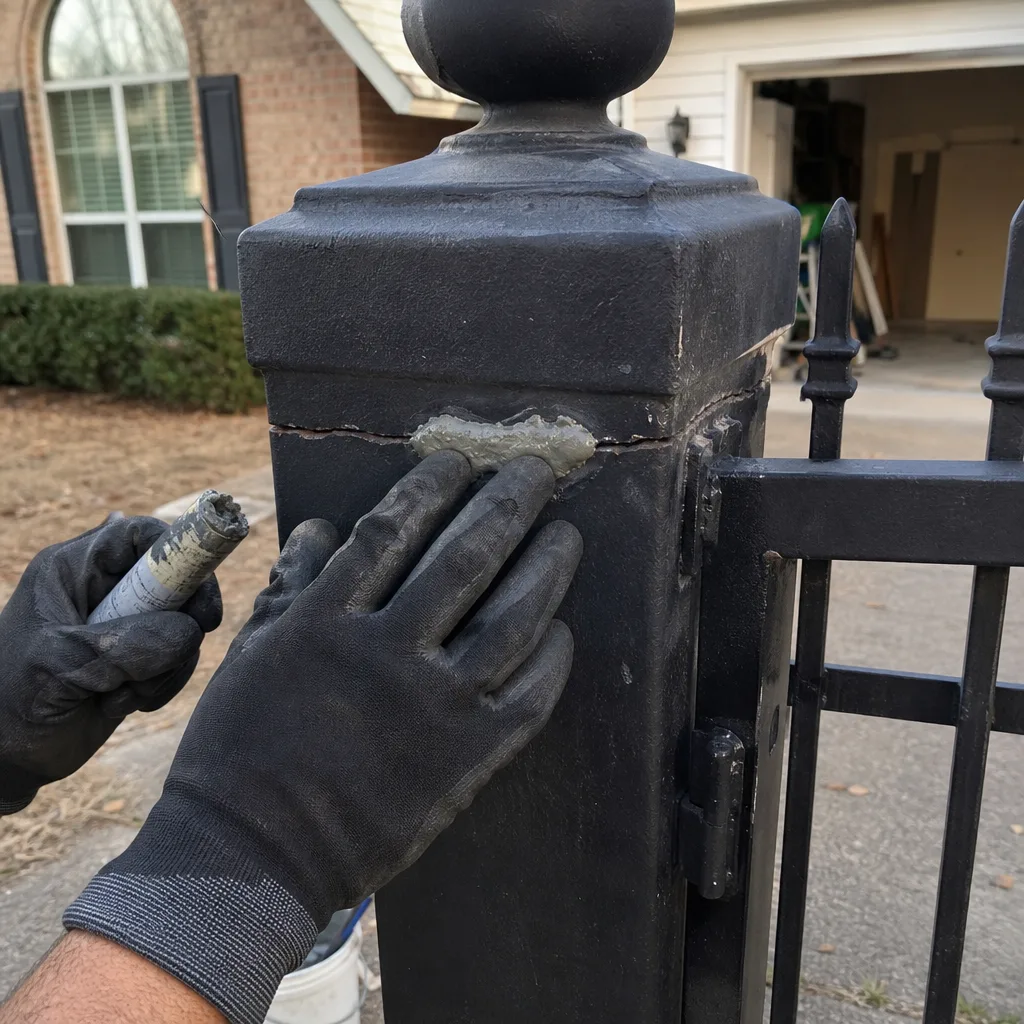
YouTube is full of gate repair tutorials. Some are excellent. Many are dangerous, not because the instructions are wrong but because they’re incomplete. Here’s how to evaluate a tutorial before you trust it with your gate.
Step 1: Does the Video Show the Full System Context?
A good tutorial starts by showing the complete gate system: the operator model, the type of gate (slide, swing, cantilever), the power source, and the safety sensors. It names the brand and model of everything involved. A bad tutorial jumps straight to the repair without establishing what kind of system it’s working on. If the video doesn’t tell you which motor it’s servicing, it’s not a service video. It’s a demonstration.
Step 2: Does It Show the Baseline State?
The best tutorials we’ve seen, and the ones we’d point a customer toward for simple mechanical tasks, start by documenting the current state. They show the existing wiring before disconnecting anything. They photograph or film the limit-switch positions before adjusting. They establish a “before” that can be restored if something goes wrong. If a tutorial doesn’t do this, it’s teaching you to work without a net.
Step 3: Does It Name Part Numbers and Tools?
Good tutorials are specific. “You’ll need a 13mm socket, a T25 Torx bit, and a replacement hinge bracket, part number LIFT-80-18753.” Bad tutorials say things like “just remove the old part and put the new one on.” The difference matters. Specificity is the mark of someone who has actually done the job.
Step 4: Does It Mention Safety Sensors?
Any tutorial that involves opening the operator housing, adjusting travel, or rewiring anything must address the safety sensors. If it doesn’t mention photo-eyes, edge sensors, or the safety circuit, it’s skipping the part of the job that prevents injury. That’s a red flag.
Step 5: Does It Explain What Could Go Wrong?
A trustworthy tutorial includes caveats. “If you hear a grinding noise after this adjustment, stop and check the gear alignment.” “If the gate reverses immediately after closing, the close force is set too high.” A tutorial that presents the repair as foolproof is written by someone who hasn’t seen enough failures.
In our experience, the tutorials that pass all five tests are rare. They exist, and they’re genuinely useful for the mechanical tasks we listed above. But for anything electrical or calibration-related, even a good tutorial can’t show you what you need to know about your specific system in your specific location in Humble.
What a Professional Repair Should Leave Behind
Here’s a standard that’s rarely discussed but changes the entire value equation: what should a professional gate repair actually deliver besides a working gate?
The answer should include at least three things. If a gate company gives you none of them, you’re not getting professional service. You’re getting an expensive handshake.
A Written Price Before Work Starts
This is non-negotiable. The flat price should be written down and handed to you before any tool leaves the truck. Not a verbal estimate. Not a range. A number, on paper, that both parties agree to. This is Haven Standard Clause 1: have it in writing. Gate Repair in Humble should always work this way. If a technician won’t put the price on paper before starting, find a different technician.
A Documented Photo Record
Every professional repair should leave behind photographs. What was found. What was adjusted. What was replaced. The new limit-switch positions. The wiring terminations. The part number stickers on anything installed. This is what commercial access-control technicians have done for years. It’s what Adrian Vance brought to residential gates starting in 2014. Under Haven Standard Clause 4, evidence on every job, this photo record is included at no additional charge.
Why does it matter? Because your next repair, whoever does it, starts from an accurate baseline. The documentation gap we described earlier? Professional repair closes it. That’s the real value. Not just a gate that works today, but a system that any future technician can understand in minutes instead of hours.
A Written Record of Part Numbers and Settings
Photographs capture visual state. A written record captures the rest: which limit-switch positions were set, what torque values were dialed in, which remote codes were programmed. This doesn’t have to be elaborate. A single page with the key values written down is enough. But it has to exist.
When we service a gate in Humble, the customer leaves with the photo record and the written settings page. The job file keeps a copy. Eighteen months later, when a different technician from any company opens that operator, they’ll know exactly what they’re looking at. That’s worth more than the repair itself.
Humble-Specific Factors That Change the DIY Calculus
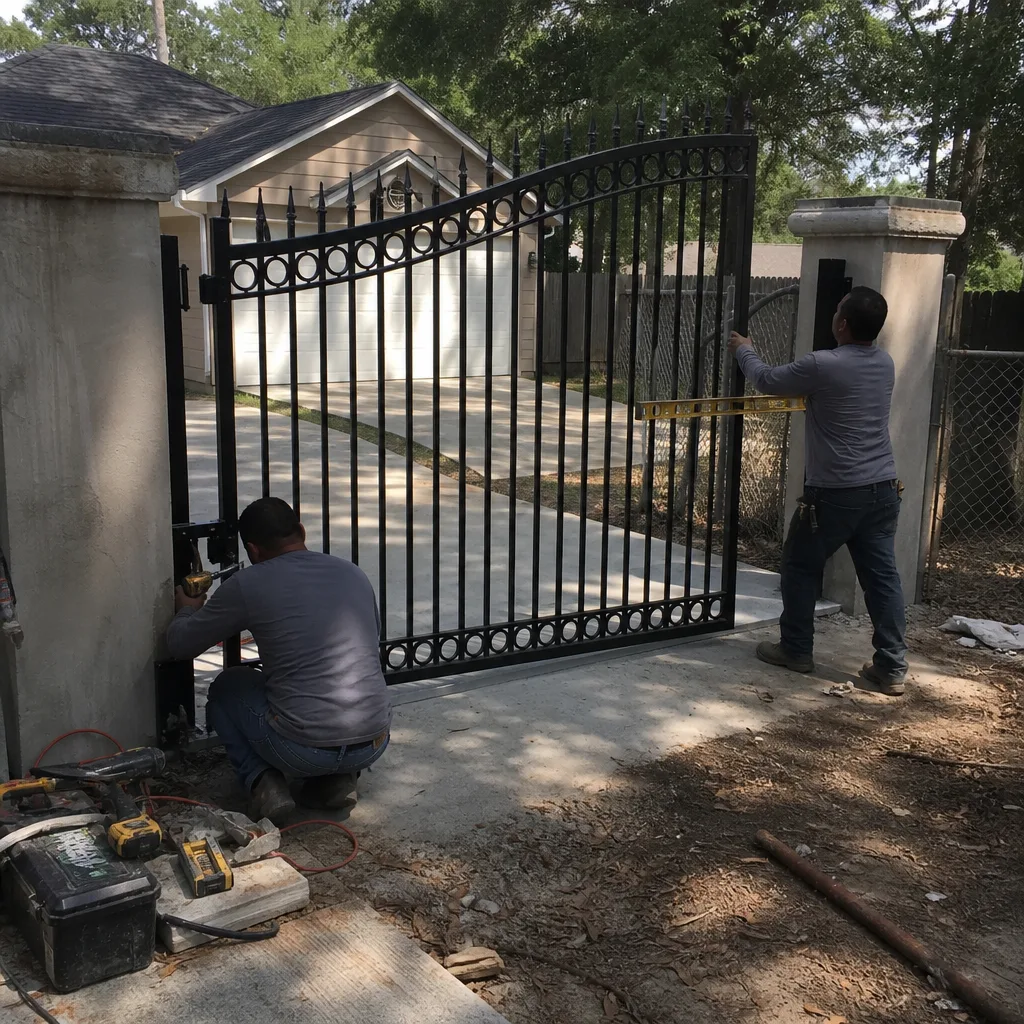
Humble’s climate. Humble’s housing stock. Humble’s growth patterns. All of these affect gate repair in ways that generic online advice doesn’t address.
Humidity and Corrosion
Humble sits in a subtropical climate zone. Average summer humidity levels hover around seventy percent, and the ground stays moist for long stretches after rain. For gate hardware, this means accelerated rust on unpainted steel, faster degradation of exposed wiring connectors, and increased strain on motors working against swollen, corroded hinges.
This is why hinge lubrication matters more in Humble than in a drier climate. It’s also why DIY repairs that use non-weatherproof connectors fail faster here than they would elsewhere. What works in a YouTube tutorial filmed in Arizona may not survive a Humble wet season.
Growth and Soil Movement
The Humble area has experienced significant residential development over the last decade. New construction means soil that’s still settling, concrete that shifts, and gate posts that can drift out of alignment over the first few years. A gate that installed perfectly level in year one may be binding by year three.
This is relevant to the DIY question because it means Humble homeowners are more likely than average to deal with alignment issues that masquerade as motor problems. The gate grinds, so the homeowner assumes the motor is failing. In many cases, the motor is fine and the post has shifted. That’s a diagnosis that requires experience with local soil conditions, not just gate mechanics.
Storm Season Damage
Humble sees its share of severe weather. Heavy wind moves gates. Lightning strikes take out operator boards. Flooding and standing water damage low-mounted electrical components. After a major storm, we see a spike in service calls for gates that stopped working overnight.
Storm damage is almost never a DIY repair. When lightning takes out a control board on a LiftMaster or a BFT opener, the repair involves board replacement, possible rewiring, and recalibration of every setting. There’s no documentation gap to worry about because the system is being rebuilt from scratch. That’s professional work, full stop.
If you’re in Humble and your gate stopped working after a storm, call us at (346) 423-6136. We’ll send a background-checked technician with a written price before any work begins.
The Decision Rule: One Question That Resolves Almost Every Situation
After thousands of gate repairs in the Humble area, and thousands of conversations with homeowners trying to decide whether to fix something themselves or call someone, we’ve distilled the decision down to a single question.
Does this repair require knowing what the system looked like before I touched it?
If the answer is no, it’s probably DIY-friendly. Hinge lubrication doesn’t require a “before.” Clearing a track doesn’t require a “before.” Reprogramming a remote doesn’t require a “before.”
If the answer is yes, it’s professional work. Recalibrating a limit switch requires knowing the previous setting. Rewiring a motor requires knowing the previous configuration. Adjusting safety sensors requires knowing the previous alignment. If you don’t know the “before,” then even if you stumble into a working “after,” you’ve destroyed information that someone, possibly you, will need later.
That’s the framework. It’s not about courage or capability. It’s about information. Professional gate repair isn’t just about fixing what’s broken. It’s about leaving the system in a documented state so that the next repair, the next adjustment, and the next technician all start from a known baseline.
If you’re uncertain which side of the line your particular repair falls on, Gate Installation in Humble is a good reference for understanding how systems should be built in the first place. That baseline understanding often clarifies whether a given repair is surface-level or structural.
Common Mistakes to Avoid
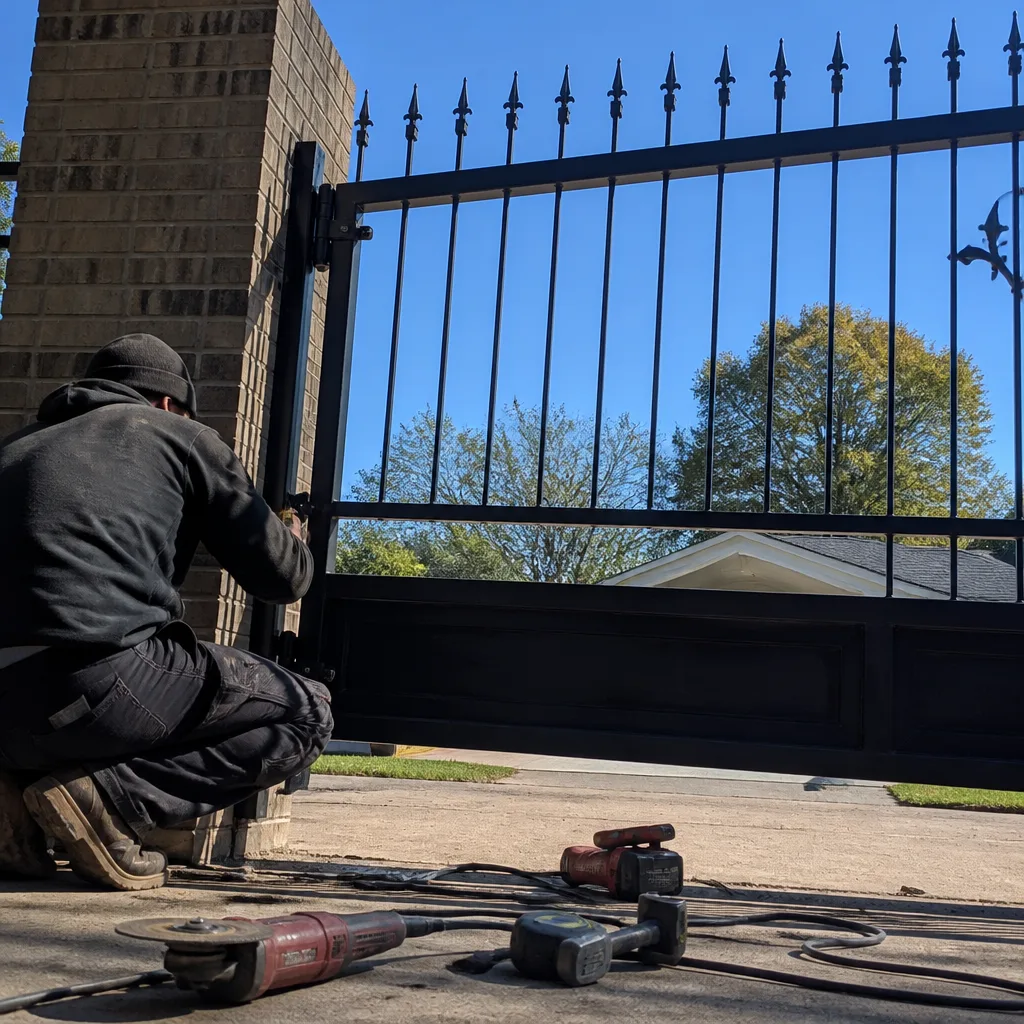
- Using the wrong lubricant. WD-40 is a solvent, not a lubricant. It’ll quiet a squeaky hinge for a week, then leave it drier than before. Use a silicone or lithium lubricant designed for metal-on-metal contact.
- Disconnecting wires without photographing them first. This is the single most expensive DIY mistake we see. If you disconnect a wiring harness without a photo, you’re betting your memory against a system you may not fully understand. Take the picture.
- Adjusting limit switches without marking the original positions. Limit switches control how far the gate travels. A small adjustment changes every stress point in the system. Mark the original position with a permanent marker before moving anything.
- Ignoring the safety sensors. A gate that works but doesn’t stop when something crosses its path is a liability, not a success. Test the photo-eyes and edge sensors after any repair, including ones that don’t involve the safety circuit directly.
- Replacing the motor before checking the alignment. In Humble’s shifting soil, a grinding gate is often a misaligned gate, not a failing motor. Replacing the motor won’t fix a post that’s moved. Diagnose before you spend.
- Accepting a verbal estimate. A professional gate repair includes a written price before work starts. If the technician won’t put it on paper, you’re accepting an open-ended commitment. That’s Haven Standard Clause 1, and it exists for a reason.
When to Call a Professional
Call a professional when the repair touches wiring, operator boards, limit switches, motor mounting, or safety sensors. Call a professional when the gate stopped working after a storm. Call a professional when you’ve tried a mechanical fix and the problem persists. Call a professional when you can’t identify the operator brand or model, because every diagnostic step from there is guesswork. Call a professional when the gate is heavy enough to injure someone and the repair involves supporting or removing it. Vance Gate Repair Humble offers free estimates in Humble, with the price written down before any work begins. Call (346) 423-6136.
Frequently Asked Questions
Yes, hinge lubrication is safe for any careful homeowner and doesn’t require opening the operator or touching any electrical components. Use a silicone or lithium-based lubricant, apply to the hinge pins and pivot points, and cycle the gate a few times to work it in.
Reprogramming a remote is a button-press sequence on most LiftMaster, FAAC, BFT, and Linear openers, and the owner’s manual usually includes the specific steps for your model. Replacing a destroyed or lost remote is similarly straightforward as long as you’re working with a compatible unit. This doesn’t require opening the operator housing.
Disconnecting wires without photographing the original configuration. When the gate fails later, the next technician has to reverse-engineer the wiring before addressing the actual problem. That diagnostic time typically costs between $80 and $200, which often exceeds the savings from the original DIY repair.
Not necessarily. In Humble, where soil movement and humidity are common, grinding is often caused by misaligned posts, corroded hinges, or debris in the track rather than a failing motor. A professional diagnosis will identify the actual source before any parts are replaced. Call (346) 423-6136 for an exact evaluation, estimates are free.
A written price before work starts. A documented photo record of what was found, what was adjusted, and what was installed. A written record of part numbers and settings. If a gate company delivers none of these, you’re paying for a handshake, not documentation.
Look for five things: full system context, a documented baseline state before any work, specific part numbers and tools, coverage of safety sensors, and honest caveats about what could go wrong. Tutorials that pass all five tests are usable for mechanical tasks. For electrical or calibration work, even a good tutorial can’t account for your specific system in your specific location.
The Bottom Line
DIY gate repair is the right call for mechanical maintenance that doesn’t change how the system operates. Professional gate repair is the right call for electrical, calibration, and mounting work that creates undocumented system state. The dividing line is information: if the repair requires knowing what the system looked like before, it requires a professional who will record what it looks like after. In Humble, where humidity, soil movement, and storm season add layers of complexity to gate systems, that documentation matters more than most homeowners realize. A written price before work starts, a photo record on every visit, and a written record of settings and part numbers are the difference between a repair and a liability. If you’re not sure which side of the line your repair falls on, call (346) 423-6136. We’ll help you figure it out, and the estimate is free.
Written by Adrian Vance, Owner at Vance Gate Repair Humble, serving Humble since 2014.